
Escape from Chunga Changa





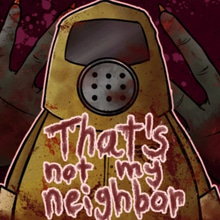
That’s Not My Neighbor is a tense horror inspection game on Kiz10 where you check IDs, compare suspicious details, catch disguised monsters, and decide in seconds who gets inside and who never should. (1080) Players game Online Now
 2.5 (77 votes)
 Share
Share
 Embed
Embed
That’s Not My Neighbor is a horror inspection game built around pressure, observation, and the kind of quiet fear that appears when something looks normal from far away but becomes wrong the second you study it properly. You are not running through dark corridors with a weapon. You are standing at a building entrance, checking documents, comparing details, reading faces, and trying to decide whether the person in front of you is a harmless resident or a creature wearing someone else’s identity badly enough to get caught. If you enjoy horror games online, observation puzzle games, and monster detection games where the danger hides behind small details, this is one of the strongest pages to push on Kiz10.
What makes That’s Not My Neighbor work so well is how little it needs to become unsettling. A face stands at the window. A card slides forward. A request to enter sounds normal. For a second, the whole job looks simple. Then you notice the eyes. Or the haircut. Or the height that does not quite match the whitelist. Or the smile that feels half a second too stiff. That is where the game becomes dangerous. It turns tiny inconsistencies into full panic because one mistake does not just lower a score. It lets the wrong thing inside.
The building itself helps a lot. You are not solving a puzzle in some abstract menu. You are acting like a guard in a place where normal routine has started rotting from the inside. The apartment block feels bureaucratic, tired, slightly ugly, and exactly right for a horror game built around paperwork and paranoia. The more ordinary the setting feels, the stronger the tension becomes when something in it stops behaving like a person should.
The whitelist mechanic is one of the smartest parts of the whole design. Instead of asking players to guess randomly, the game gives you tools and then forces you to actually use them. Names, apartment numbers, entry requests, and physical traits all matter. You are not only watching the person at the window. You are comparing realities. That structure gives the game real depth, because it rewards players who slow down and think instead of only reacting to whatever seems creepy first.
That’s Not My Neighbor online also works because every round becomes a psychological trap. The more correct calls you make, the more confident you feel. Then that confidence becomes the next weakness. A monster that almost matches the record starts looking safe because you are tired, rushed, or too willing to believe that most faces belong where they say they do. The game constantly pushes the player into that uncomfortable space where routine and fear begin fighting each other.
Another reason this page has strong SEO value is that it naturally fits several clear search intents. Players searching for That’s Not My Neighbor, neighbor monster game, ID checking horror game, spot the impostor horror game, doppelganger guard game, or play That’s Not My Neighbor on Kiz10 are all looking for the same promise: suspicious visitors, document checking, hidden monsters, and a horror loop built on observation instead of brute force. This title matches that promise extremely well.
The choice between the green and red buttons gives the whole experience real bite. Letting someone in feels risky because the wrong call could mean disaster. Rejecting or eliminating them feels equally stressful because the game constantly makes you wonder whether you just destroyed the innocent person you were supposed to protect. That moral uncertainty is a huge part of the tension. It is not only a puzzle about being correct. It is a puzzle about trusting your own judgment under pressure.
What really keeps players coming back is how clearly the game teaches them to look harder. The first few mistakes come from obvious things. Later ones come from details you almost missed. A tiny facial mismatch. A strange line in a document. A resident whose information is nearly correct except for one fatal inconsistency. That learning curve is what gives the game its long life. You do not just get faster. You get more suspicious, and that is exactly what the game wants.
Play That’s Not My Neighbor on Kiz10 if you want a free online horror puzzle game with document checks, doppelganger paranoia, tense decisions, and the kind of slow-building fear that makes one wrong face feel more dangerous than a whole room full of monsters. Read carefully, trust details over instinct, and never assume a friendly neighbor is actually your neighbor.
The smartest way to improve is to stop deciding too early. Good rounds come from checking the whitelist carefully, comparing names and physical details, and treating every mismatch as important until you can prove otherwise. In this game, hesitation is safer than confidence when the evidence still feels incomplete.
Because every mistake feels educational. You can usually see the clue you missed right after the round goes wrong, and that makes the next shift feel less like starting over and more like sharpening the one skill the game cares about most: suspicion.


Play Thats Not My Neighbor on your phone or tablet by scanning this QR code! It's available on iPads, iPhones, and any Android devices.


