🍳 A chef, a kitchen nightmare, and absolutely zero patience
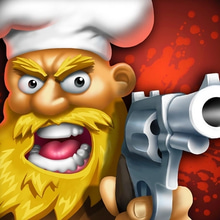
Bloody Harry drops you into a world where dinner is trying to eat you first. You control a stubborn, fearless chef who looks at a horde of zombies and evil vegetables and thinks, yeah… I can fix this with enough firepower. It’s an action game with that deliciously messy arcade energy: enemies pour in, your weapons talk louder than your worries, and every second is basically a negotiation with chaos. You’re not here to admire scenery. You’re here to survive wave after wave, scoop up money, and upgrade until the screen feels like it’s begging you to stop being so effective 😈🔫.
On Kiz10, it hits fast. No long setup, no slow burn. Just you, a lane of doom, and a growing parade of undead produce that seems personally offended by your existence. It’s weirdly funny and oddly intense at the same time. One moment you’re giggling at a zombie vegetable waddling forward like a cursed appetizer, the next you’re sweating because three waves just stacked and your best weapon is suddenly not “best” anymore 😬🥦.
🧟♂️ The waves don’t get smarter, they get meaner
The pressure in Bloody Harry isn’t about complicated puzzles. It’s about momentum. The game is built around enemy waves, and waves have moods. Early on, you feel confident. You’re landing shots, the pace feels manageable, you start thinking you’ve already “got it.” That’s when the game leans closer, smirks, and throws a bigger crowd at you like a surprise bill at the end of dinner 💀🧾.
Wave-based zombie survival has this special kind of tension. You’re always doing two jobs at once. Job one: destroy everything in front of you. Job two: don’t fall behind. Because the second you fall behind, the screen becomes a cluttered disaster and you’re aiming through panic, not precision. That’s when you start doing dramatic, unnecessary hero moves like spraying bullets at the wrong target because your brain screamed “DANGER” at full volume 😵💫.
🔫 15 weapons is a gift and a trap
Bloody Harry gives you a big toy box: lots of weapons, plus improvements that let you tune your build to your mood. Some days you want pure spray-and-pray energy, just turning the lane into a loud blur. Other days you want something that hits harder, cleaner, with fewer mistakes. The fun is that there’s no single perfect choice forever. A weapon that feels unstoppable now might start feeling slow later, and the game forces you to adapt without politely announcing it.
You’ll catch yourself making little tactical decisions that feel more serious than they should. Do I invest in damage now, or do I upgrade something that helps me survive longer? Do I grab the shiny new weapon because it looks cool, or do I keep upgrading the one that already fits my rhythm? It’s that classic action shooter loop, but with a goofy culinary apocalypse skin that makes it feel fresh 😂🍽️.
And yes, you will fall in love with one weapon, swear loyalty, and then immediately betray it the moment another one deletes a wave faster. Don’t feel guilty. That’s just survival economics 💸.
🥩 Money on the ground, danger in the air
Collecting cash is where Bloody Harry becomes sneaky. The game doesn’t just reward you for killing enemies, it tempts you with money during stressful moments. You’ll see coins and feel that itch: I should grab that. But grabbing cash at the wrong time is how you get overwhelmed. It’s the classic trap: you take one greedy step mentally, then the wave takes three steps physically 😭.
So the real skill is not just aim. It’s timing your greed. You want money because money becomes power, and power becomes survival. But you also want to stay alive long enough to spend it. This turns every run into a slightly chaotic rhythm game where your brain is juggling three thoughts: shoot, move, collect. It’s simple, but it’s not easy, especially when the screen is crowded and your instincts start yelling over each other.
🍅 Evil vegetables should not be this threatening
There’s something absurdly entertaining about fighting zombie vegetables. You’re basically battling the world’s worst salad bar. A normal person sees broccoli and thinks vitamins. Bloody Harry sees broccoli and thinks enemy unit, high priority, eliminate immediately 😤🥦.
That absurdity is what keeps the tone fun even when the action is intense. The game can feel brutal, but it never feels hopeless in that gloomy way. It’s more like a horror comedy where the punchline is always “you survived again,” and your reward is more enemies. The humor is in the contrast. You’re a chef. Your enemies are food-adjacent. Your weapons are ridiculous. And somehow it still feels like a legit zombie shooter because the waves are relentless and the stakes are immediate 🧟♂️⚡.
🎮 The flow state: when your hands know before your brain does
The best moments in Bloody Harry happen when you stop thinking in full sentences. You’re not narrating anymore. You’re reacting. You’re reading movement, snapping aim, adjusting position, and you don’t even realize you’re doing it until the wave ends and you breathe out like you’ve been holding your lungs hostage 😮💨.
This is the magic of a good survival shooter. It turns you into a little machine for a minute. Not in a robotic way, more in a “my reflexes woke up and chose violence” way. Your accuracy improves. Your decisions get sharper. Your upgrades start to feel like part of your identity. And then, right when you’re feeling comfortable, a tougher wave hits and reminds you that comfort is a temporary illusion 😅.
🧂 Tiny habits that make you last longer
If you want longer runs, treat your upgrades like a plan, not a reaction. It’s easy to upgrade randomly when you’re stressed, but random upgrades create random weaknesses. Try to build around how you actually play. If you’re aggressive, lean into damage and wave clearing. If you’re cautious, lean into survivability and consistency. The point is to become stable under pressure, because waves punish instability.
Also, don’t panic-fire just because the lane looks crowded. Panic-fire feels productive, but it creates misses, and misses create space for enemies, and space for enemies creates that horrible moment where you realize you’ve been busy but not effective 😬. Controlled aggression beats frantic chaos almost every time.
🔥 Why Bloody Harry is the perfect “one more run” game
Bloody Harry works because it’s quick to learn, hard to master, and satisfying in short sessions. It’s a browser action game that gives you instant feedback: good aim feels powerful, bad choices feel painful, and every upgrade feels like you’re evolving into a more terrifying version of yourself. The enemies might be undead vegetables, but your progress feels real. You start weak, you get stronger, you get cocky, you get humbled, you get stronger again. That loop is addictive in a way that doesn’t need fancy speeches or complicated systems.
If you like zombie games, wave defense pressure, weapon upgrades, and survival shooter chaos, this one scratches the itch fast. It’s goofy, it’s intense, it’s loud in your head, and it’s exactly the kind of action survival game you click on Kiz10 “just to test it” and then suddenly you’ve played five runs and you’re negotiating with yourself like, okay, last run… but like, a real last run this time 😭🔫🧟♂️.





 4.5 (49 votes)
 Share
Share
 Embed
Embed