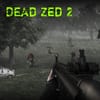
🌅 Day 1, minute 1, zero room for error The street is too quiet, the wind keeps tugging at the caution tape, and your barricade looks like it learned carpentry from a YouTube short. Then the first groan rolls over the asphalt and Dead Zed 2 begins properly: a first-person defense shooter where every bullet is a decision, every wave is a story, and the space between reloads feels longer than memory. You’re not racing through corridors; you’re rooted to a position that matters, reading silhouettes through dust, breathing by the front sight, and carving a safe zone out of a city that forgot the word.
🔫 Guns that speak in different verbs The starting rifle is a teacher: crisp iron sights, honest recoil, a pace that forces patience. Shotguns are courtroom verdicts—close range, short sentences, no appeal. SMGs stitch panic into control when the line wobbles. Marksman rifles make you greedy for headshots, asking you to squeeze rather than yank. Later toys flirt with overkill: drum mags for the moments you misjudged a wave, scoped beauties for the runners who think distance is a shield. Attachments and upgrades bite in subtle ways—faster reloads smooth the rhythm, upgraded barricades buy an extra breath, improved accuracy turns “maybe” into “yes” on the second zombie from the left.
🧠 The loop is brains, not just headshots You’re doing more than clicking skulls. Between waves you assign survivors to jobs, a quiet little strategy game couched inside the gunfire. Send one to scavenge parts, another to search for new recruits, a third to repair the barricade that just learned about physics the hard way. The day clock becomes your real antagonist. Do you risk a two-hour search and maybe return with a new rifle, or keep everyone home to make sure the western fence doesn’t retire permanently. The best runs find that spooky equilibrium where the fort is just fixed enough, the ammo just full enough, and your crew just big enough to make the next map feel survivable.
🏚️ Maps with moods and rude geometry Farmsteads with long sightlines reward patience and clean trigger pulls. Suburban blocks stack cars and mailboxes into sniper nests of opportunity. Industrial yards choke lines of fire with pallets and scaffolds so you learn to delete threats in the right order. City plazas add tall windows where spitters and runners pop in rude little cameos; you’ll start scanning glass like it owes you money. Some evenings ride in with rain ticking against metal; some mornings arrive in a fog that makes your scope feel like a superstition. The layout is never accidental—angles teach you, sight corridors judge you, and the best positions feel earned because you defended them.
🧟 Enemies who escalate on purpose Shamblers are your metronome—steady beats you can stack into perfect reload cycles. Runners ruin that comfort with angles and speed; miss once and you’ll hear your barricade complain in wood. Armored brutes soak damage and make you choose between wasting rounds or snapping to their knees for a quick collapse. Special types add spice: spitting pests that force target priority, zig-zaggers that laugh at lazy aim, late-game heavies who carry a memory of every reload you botched. The arsenal is balanced around those choices. Land headshots on the rank-and-file, use punchy rounds to crack armor, and never let a runner get to the plywood with your mag at half—because half magazines write sad stories.
🧰 Survivors, jobs, and the morale you pretend you don’t track Recruits aren’t stat bars; they’re temperament and utility wrapped in fear. A calm mechanic turns scrap into barricade health you can feel. A jittery scavenger returns with random gold one day and a bandage the next, and you’ll keep sending them anyway because hope is a habit. A decent shooter on defense shaves the panic off early waves, letting you reserve heavy rounds for the inevitable mistake. Assigning jobs becomes ritual: you stare at the clock, you stare at the boards, you send the brave ones out, and you talk to the rifle about how you’ll make it up to them if they come home without a magazine.
🎯 The art of the shot under pressure Breath in, exhale to the bottom, squeeze—sound familiar. Headshots are not optional style here; they’re economy. One round per skull is how you end the day with anything left in the stash. Center mass only pays when you’re using a shotgun at church-choir distance or a panic SMG sweep to delete a pair of sprinters. Learn to snap to knees on shielded heavies, to lead runners by a shoulder, and to hold fire when two heads overlap at different depths; one bullet, two problems solved. The game rewards that discipline in score and survivability, and your hands will start making those choices before your brain finishes the sentence.
🧪 Micro-tech that turns “close” into “clean” Toggle fire modes when the crowd changes texture—semi for discipline, auto for oh-no. Start reloads during the last two shamblers of a wave, cancel if a runner breaks cover; half a mag is better than a full reload you never fire. Stagger shots on parallel targets from left to right so recoil returns you to the next head naturally. If a brute is inbound, pop their legs first, then finish at leisure—time is a resource, and kneecaps are time banks. Assign one survivor to repairs every other wave; two back-to-back repair cycles cost you guns you’ll wish you had on the next map. And never waste the last second of a day—queue a short search even if it returns with nails; nails win fights you never see.
🛠️ Upgrades that feel like promises kept Barricade tiers aren’t just more HP; they change the cadence of waves, allowing you to absorb an early mistake and still keep the run elegant. Secondary weapons reframe problems: a revolver as a precision panic button, a pump shotgun as a “not today” chord for clustered fronts, a carbine that bridges the gulf between thrift and comfort. Scope upgrades aren’t vanity; they turn foggy mornings into solvable puzzles. Skill perks nudge the loop in quiet ways—a hair faster aim-down-sights that saves one runner per day, a scavenging bonus that adds the magazine you needed to pretend you weren’t worried.
🌒 Pacing that breathes, then bites Days hum: plan, assign, defend, reassign, repeat. Then a spike wave hits and your neat economy goes to pieces unless you pivot instantly. The game is kind about teaching, stern about mastery. Early locations are generosity with trigger time; midgame maps ask whether you learned to prioritize; late maps demand that you built a crew who can survive your optimism. When you finally string three clean days in a row with perfect resource use, the scoreboard isn’t the point—the calm in your hands is.
🔊 Sound that tells the truth faster than the UI Wind through shutters means a runner is about to round the corner on the right. A wet slap against plywood means your last miss chose its consequences. The crisp click of a locked bolt is equal parts panic and permission—panic because you forgot to count, permission because emergency sidearm drills exist for reasons. Headshots pop with a restrained ping; brutes grunt with a bass note that vibrates through your decisions. Play with headphones; your ears will rescue shots your eyes haven’t seen yet.
🎮 Clean controls, no excuses Mouse aim or thumbstick fine-tuning, Dead Zed 2 respects your inputs. Aim sensitivity sits in that sweet spot where micro-corrections happen without thought, and recoil climbs in patterns you can tame rather than fight. Weapon swaps are instant enough to be a tactic, not a hope. The UI whispers—ammo count, barricade health, survivor assignments—and then gets out of the way of the crosshair, which is where your day lives.
🏁 The hold-the-line moment End of wave, and it doesn’t know it yet. Three runners break from the bus stop, a brute lumbers center-lane, and a spitter begins that smug inhale behind a sedan. You snap left—pop, right—pop, center—knees, then skull. The spitter peeks and you erase the vowel forming in its throat. The barricade creaks, then quiets. Your survivor returns from a two-hour search with a grin and a part you didn’t dare ask for. You breathe for the first time in a minute. Dead Zed 2 on Kiz10 is exactly that cadence—pressure, choice, release—repeated until your aim grows calm and your little camp looks like a plan.
🌟 Why it sticks Because the shooting is honest, the management matters, and the maps speak in angles you can learn. Because every day is a solvable riddle if you respect the clock and your ammo. Because nothing beats the tiny miracle of a perfect headshot landing with one round left—and knowing you earned it.





 4 (20 votes)
 Share
Share
 Embed
Embed