Forget pizza night. If the lights are on, it’s only because the arena needs to see the bruises.
Five Fights at Freddy’s takes the whole haunted-restaurant idea and flips it into something dumb in the best way: instead of hiding, you’re trading punches with animatronics like it’s a cursed arcade cabinet somebody dragged out of storage. It’s not a clean, serious tournament fighter. It’s a rough, chaotic brawler with weird timing, goofy hit reactions, and that “why is this working?” feeling that keeps you pressing rematch.
What you’re actually doing
You pick a character, jump into a match, and try to drain the other fighter’s health before yours disappears. That’s it. The rest is pure mayhem: short combos that suddenly connect when you don’t expect them to, blocks that save you by a pixel, and rounds that swing fast when someone gets caught mashing at the wrong moment.
Some fights feel surprisingly fair. Others feel like the game is laughing at both of you. That’s part of the charm. You learn to take what’s reliable, ignore what’s bait, and lean into the nonsense when it’s on your side.
The cast hits different
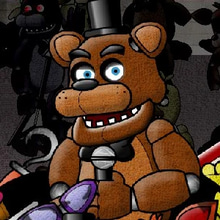
Even if you’ve seen these characters a thousand times in other FNAF-style games, here they behave like warped versions of classic fighters. Freddy tends to feel steady and heavy. Bonnie hits like a truck when you’re careless. Chica can turn a small opening into annoying pressure. Foxy usually wants to stay on you, fast and messy. Golden Freddy is the wildcard—sometimes calm, sometimes chaotic, and never fully predictable.
You don’t need a spreadsheet to have fun with it. Pick someone, play a few rounds, and you’ll feel their pace quickly: who wants to rush, who wants to punish, who wants to bait mistakes and cash out.
How a match usually goes
At first you’ll probably mash. Everybody does. Then you notice two things: blocking matters more than you expect, and spacing matters even in a “janky” game. Swing too early and you’ll eat a counter. Swing too late and you’ll get clipped by something you swear you blocked. Once you start playing slower—just a little—you land cleaner hits and your wins stop feeling like accidents.
If you want an easy rule: don’t throw three risky attacks in a row unless you’re already winning the exchange. One safe string, step back, block, punish. Repeat. It sounds boring, but in this game it still ends up looking ridiculous.
Modes and replay
Depending on the build, you’ll usually find a simple run through opponents, and sometimes extra options like versus play or a training area. The real replay value isn’t in deep systems—it’s in messing with different fighters, learning what each one can get away with, and figuring out the one move that feels unfair when it lands.
Look, sound, and the “haunted arcade” vibe
The visuals lean into low-poly horror and slapstick impact. Animations can be stiff, hits can look absurd, and the arenas feel like they were built for jump scares but repurposed for fistfights. You’ll get flickering lights, spooky backgrounds, and moments where the whole screen feels slightly off—in a way that fits the theme.
Sound is half the fun. Punches land with a crunchy metal clank, and the audio has that creepy carnival tone that makes every win feel like you shouldn’t be celebrating… but you are anyway.
Controls
On PC you’ll move, block, and attack with the keyboard. On mobile you’ll use on-screen buttons. The exact keys can vary by version, so if the game shows a control panel or hints, use those as your reference. Either way, the goal is the same: stay calm, block when you’re under pressure, and don’t chase every hit.
Why it’s worth a few rounds
Because it’s not trying to be perfect. It’s a fighting game wearing a horror mask, powered by chaos, and it’s fun precisely because it feels a little cursed. If you like FNAF-style characters and you want something faster than “survive the night,” step in, pick a fighter, and see how long you last.





 Share
Share
 Embed
Embed


