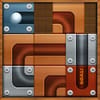
🧠 Click, Slide, Breathe
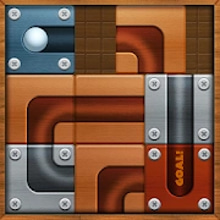
The grid looks polite until you touch it. One tile nudges, a lane opens, and your brain does that tiny spark thing it does when a pattern snaps into focus. Puzzle Ball is not a race so much as a conversation with momentum. You don’t drag the ball around like a toy; you arrange the world, let physics speak, and listen. When the sphere rolls, it commits. It hugs straights, banks into curves, and never pauses until something honest makes it stop. That promise changes how you think. You stop asking “where is the path” and start asking “what path will still be true at speed.” The difference is everything.
🟦 The Pleasure of a Clean Swap
A good move feels like a well-placed comma—quiet, necessary, and suddenly the sentence breathes. Slide a straight into alignment and the grid answers with a soft clack, a little approval for your foresight. Rotate a corner at the last moment before release and the ball glides through as if you rehearsed it for hours. The sensation you chase here isn’t fireworks; it’s inevitability. You set three pieces, exhale, tap go, and watch the run draw itself exactly the way you pictured it in your head. If the sphere stalls or overshoots, the board isn’t punishing you. It’s coaching your eye toward longer sentences, cleaner punctuation, smarter pacing.
🎯 Brain Versus Momentum, And Why Both Win
Lots of puzzles freeze while you plan. Puzzle Ball keeps breathing. The route you sketch must survive contact with movement. That’s the trick and the joy: a perfect diagram can still fail if the ball enters a curve too hot, or if a straight feeds an accidental loop. So you begin to plan like an engineer. Add a “runway” tile after tight bends to bleed speed safely. Place stoppers where a greedy cascade would otherwise turn your elegant path into a comedy sketch. You think in sequences—there, to here, at this speed—and suddenly the board feels like a little kinetic sculpture you’re tuning by ear.
🧩 Boards With Opinions
The early stages are a warm mug—simple lanes, friendly corners, easy wins that teach your fingers the grammar. Then the grid starts telling jokes. One-way gates allow flow forward but snub sloppy backtracks. Teleports look mischievous until you realize they’re anchors for bold shortcuts if you feed them from the right direction. Splitters turn your route into a choice: safe spiral for steady points or audacious diagonal that saves five moves if your timing is clean. Sticky plates shave a bit of speed so a too-sharp S-bend becomes possible with a little patience. Every new tile has a story, and none of the stories are mean; they’re invitations to think wider.
🔁 Learn Fast, Undo Faster
Iteration is the hidden power-up. You will nudge a tile, preview a gap, roll once to test cadence, then undo without guilt. That loop turns guesses into craft. A “failed” run becomes a scout—where did momentum die, where did it misbehave, which single swap would have converted the same energy into a win. Reset early when a plan smells wrong; protecting sunk cost is how neat grids become sticky traps. The board is generous with do-overs because the game wants to reward good ideas, not punish curiosity.
⚙️ Power Tiles as Verbs, Not Decorations
Boost pads are commas you place two beats before a challenge, not exclamation marks you smash into a wall. Use them to carry speed through a curve you would otherwise tiptoe, or to leap a boring segment so you can spend more moves solving the interesting one. Switches rewire gates elsewhere, which means you’re thinking in call-and-response: tap here now so over there is ready when the sphere arrives three seconds later. Color locks turn the path into a small, cheerful scavenger hunt—collect the key mid-run without losing your line. The best moments are pairings: a color bomb style tile fused with a line blaster analogue, a boost feeding a teleport, a switch timed so a just-opened gate catches the ball like a friend sliding a chair under you as you sit.
🧘 Tiny Habits, Loud Results
Work bottom-up when the board feels clogged; freeing the lowest ice or blockers maximizes generous refills above. Favor straight entries into corners; clipping a curve diagonally wastes speed and creates jitter where you wanted calm. Count tiles in twos as you plan—most elegant paths are built from repeatable little pairs that keep motion predictable. If you’re stuck, force a deliberate failure: run the bad plan and watch exactly where it dies. Nine times out of ten, the first death marks the first fix. And the quietest pro tip: after pressing go, take your hands off the board. Trust the setup. Mid-run improvisation is how clean lines become almosts.
🔊 The Board Talks, If You Listen
There’s a language in the soundscape. A tight, even tick across joints means your geometry is honest. A stutter tick means a corner met the ball off-angle and you should rotate it a beat earlier next time. The hush of a long straight tells you you’ve created runway; the bright little ding at the goal lands like a period you earned. With headphones, those cues become a metronome. Without them, they still sit above the music, guiding your rhythm without nagging.
🌈 Variety That Keeps You Awake
Narrow caverns ask for surgical swaps and a willingness to clear space before you chase flourish. Open valleys invite grand, sweeping lines that resolve in long satisfying glides. Windy peaks add diagonal refills that make vertical thinking feel fresh. Seasonal twists—lantern tiles that thaw nearby locks after a short chain, frost that reforms if ignored—push you to alternate priorities: unlock flow, then pursue the quota. Each ruleset rearranges your habits, which is how a cozy game stays lively.
🧭 A Gentle Strategy Loop You’ll Fall Into
Open space, plant a tool, harvest the benefit, repeat. Start by carving airflow so refills are kind. Craft one purposeful power tile—line clear for lanes, bomb for quotas, hammer for single hostages. Use it not to show off, but to create more space, which makes the next tool easier to place and aim. If the board clogs, pivot: a bottom vertical to re-oxygenate, a quick switch tap to stop a creeping drift, a small rescue that refreshes tile spawns and reveals better colors for your goal. You’re not optimizing in a spreadsheet sense; you’re gardening.
🎮 Why It Feels Good on Any Device
Mouse or finger, the input is the same clean verb: slide with intent. Tiles obey immediately, rotations snap politely, and the camera never gets in the way of planning lines two moves ahead. That trust—between hand and board—is why you can solve a level in a minute on a bus and still remember the solution an hour later like a tune you hummed twice.
💡 When to Be Greedy, When to Be Kind
Greedy you chases a five-match equivalent and collapses the wrong pocket. Kind you sets a safer corner first, then builds the flourish on solid ground. Greedy you fires a blaster across empty sky because it looks exciting. Kind you waits one turn so the same sweep erases two layers of trouble and nudges a relic into the exit. The scoreboard loves kindness dressed as restraint. Ironically, that’s also how you earn the biggest cascades—by preparing the stage, not demanding the show.
📈 The Progress You Can Feel
Yesterday you pushed tiles around until something worked. Today you see lanes, not pieces. You carve runways on purpose. You save a hammer because you know exactly which hostage tile deserves it three moves from now. Your clears end with spare moves and your stars appear without strain. That’s not the game getting easier. That’s your eye getting sharper and your hands getting quieter.
🏁 The Solve You’ll Remember
A rude layout: two locks, a teleport pointed the “wrong” way, a splitter that eats momentum, and exactly one spare straight. You try three bad ideas and laugh at each. Then you notice a lonely corner near the bottom and rotate it just once. The path breathes. You place the spare straight two tiles before a tight S so the ball lands flush, tap a switch mid-run so a gate opens the moment the sphere arrives, and feed the “wrong-way” teleport from the correct angle so it becomes the shortcut you suspected all along. The final glide hums like a secret you kept. The goal chimes. It looks like luck on replay. You know it was three quiet, correct choices in a row.
Puzzle Ball turns simple slides into little acts of engineering. It rewards foresight over fuss, momentum you planned over motion you beg to behave, and the patient pleasure of making a route that works not once, but every time. Think in motion, place tools with purpose, keep corners honest, and let small, disciplined setups blossom into those single-take runs that feel like they were always meant to happen—because you arranged the board so they were.





 4.1 (214 votes)
 Share
Share
 Embed
Embed