SEWER LIGHTS, SALTY DREAMS 🐟🌊
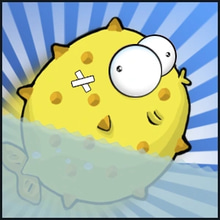
Tiny Balloon Fish starts with a problem that feels unfair in a very “video game” way: a tiny fish, trapped far from home, stuck in a place that smells like rust, shadows, and bad luck. The ocean is out there somewhere, huge and bright and free, but you’re not in the ocean. You’re in a cramped maze of pipes and tunnels, where every corner has a surprise and most surprises are the kind you’d rather not meet. It’s a puzzle skill game that plays like a nervous little escape story, except your hero isn’t a warrior or a genius detective… it’s a floating balloon fish trying not to get turned into lunch.
The core of the game feels deliciously simple: guide the fish forward, avoid hazards, stay alive. But then it starts layering that classic “small controls, big consequences” tension. You’re constantly balancing movement and timing, drifting through spaces that look safe until they suddenly aren’t. It’s the kind of game where you start calm, then you catch yourself holding your breath on a narrow passage because your fish is one wrong bump away from disaster. And the more you progress, the more you realize the sewer isn’t just a background. It’s the enemy. It’s a shifting obstacle course that wants you to panic.
FLOATING IS NOT THE SAME AS FLYING 🎈😅
There’s something funny about controlling a fish that behaves like it’s half underwater and half in a dream. You’re not blasting through levels like a rocket. You’re drifting, nudging, adjusting, reacting. Sometimes it feels smooth and you glide through a gap like you were born for it. Other times you misjudge a corner, tap a hazard, and instantly understand why the game is called Tiny Balloon Fish. Tiny is not just cute branding. Tiny is survival. Tiny is the difference between fitting through a gap and getting snagged on something sharp.
That movement style makes every section feel personal. It’s not about button-mashing. It’s about control. You learn to slow down when the screen looks suspicious, because the sewer loves to hide trouble where you least expect it. You learn to stop treating space like empty space and start treating it like a map you must respect. The best runs are the ones where you move with intention, like you’re quietly negotiating with the level instead of trying to overpower it.
THE SHARK PROBLEM 🦈🚫
And yes… the sharks. They’re the loudest reminder that this escape isn’t a gentle swim. The moment a shark appears, the mood shifts. Suddenly it’s not just about navigating traps, it’s about staying one step ahead of something that does not care about your feelings. Sharks in games have this special power to make you rush, and rushing is exactly how you make mistakes. Tiny Balloon Fish plays with that tension in a sneaky way. It puts you in situations where your instincts scream “GO GO GO,” but the smart move is often “GO… carefully.” Because the sewer is full of hazards that punish speed as much as they punish hesitation.
When you survive a shark section cleanly, it feels incredible. Not because you did some complicated combo, but because you kept your cool. You kept your fish safe in a space that was clearly designed to break your rhythm. It’s that quiet victory that makes you want to push forward again, even if the next tunnel looks worse.
TRAPS THAT FEEL LIKE MEAN LITTLE JOKES 🧷🌀
The traps in Tiny Balloon Fish don’t need to be dramatic to be scary. That’s the trick. A small spike, a narrow gap, a moving obstacle… suddenly you’re doing precision work with a character that wants to drift. The game creates tension through tight spaces and sudden timing checks. One section might ask you to thread through a corridor like you’re sliding a key into a lock. Another might tempt you into a “shortcut” that looks safe until you’re halfway in and realize the exit is tighter than the entrance. Classic.
What makes it fun is that it doesn’t feel like a punishment simulator. It feels like a learning loop. You fail, you immediately understand what went wrong, and you adjust. You start scanning the environment more carefully. You start anticipating where danger will appear. You begin to recognize patterns in the sewer layout, like the game is teaching you how to read it. That’s when it clicks: this isn’t just a fish game, it’s a focus game.
THE OCEAN IS A MOTIVATION ENGINE 🌊✨
A lot of skill puzzle games give you a goal that’s basically just “finish.” Tiny Balloon Fish gives you a goal that feels emotional in a small, silly way. The ocean isn’t just a destination. It’s a mood. You can practically imagine the fresh water, the open space, the freedom compared to these cramped pipes. The sewer levels make you crave openness, and that craving becomes your drive. Every time you squeeze past another trap, it feels like you’re buying a little more hope.
That’s why the game stays engaging even when it’s challenging. You’re not just chasing a score. You’re chasing the feeling of escape. You want that final run where everything goes smoothly and your fish finally reaches the big blue outside. The game makes you earn that moment, and that’s what makes it satisfying.
HOW YOU GET GOOD WITHOUT REALIZING IT 🧠🎮
The first few attempts usually feel clumsy. You bump, you overcorrect, you drift into danger like you didn’t mean to. Then something changes. Your hands start making smaller movements. You stop “pushing” the fish and start “guiding” it. You learn that gentle corrections are safer than dramatic ones. You learn when to pause and when to commit. And suddenly you’re doing it. You’re sliding through tunnels with confidence, slipping past hazards like you’ve memorized the air currents of the sewer.
It’s a nice kind of improvement because it’s not tied to upgrades or grinding. It’s tied to you. Your timing. Your patience. Your ability to stay calm while a shark is nearby and the tunnel narrows like it’s trying to squeeze your last nerve.
WHY IT WORKS SO WELL ON KIZ10 🕹️🐟
Tiny Balloon Fish is perfect for quick sessions because each attempt feels meaningful. You can play for a few minutes, make progress, and feel that “I’m getting better” spark. Or you can go full stubborn mode and keep retrying the same tricky section until you get the perfect run. The game supports both moods. It’s cute enough to be welcoming, but challenging enough to keep you engaged. And it has that satisfying arcade tension where a clean run feels like a tiny masterpiece.
By the time you reach the later parts, you’re not just controlling a fish. You’re controlling your own impatience. And when you finally slip past the last nasty trap and feel the path opening up, it’s one of those browser-game wins that hits harder than it should. Tiny fish. Big relief. 🎈🌊🐟





 Share
Share
 Embed
Embed