🌌🚀 Cold Launch, Warm Chaos
The sling creaks, the stars breathe, and a little round bird becomes a comet with an attitude. Angry Birds Space isn’t just “fling at pigs but far away”; it’s a pocket universe where gravity is a toy, not a law, and every level is a neon planetarium daring you to write on it with curved trajectories. You’ll skim force fields, slingshot around moons, and ambush smug pork bunkers from angles that would make your math teacher high-five a telescope. The first time a shot loops behind a planet and taps a helmeted pig in the back like “boo,” you’ll understand: space is geometry wearing fireworks.
🪐🧭 Gravity Bubbles, Or Why Straight Lines Are Boring
Planets wear shimmering halos—their gravity wells—like invitations. Dip a feather into one and the path bends; commit and the arc becomes a spiral that rewrites your plan midair. The predictor line shows a polite first draft; the second act happens inside the bubble, where speed bleeds, curves tighten, and your “eh, good enough” becomes “oh wow that worked.” Stack two halos and you get a slip lane, a secret freeway of physics that flips direction without asking permission. Treat each bubble like a musical note: touch, slide, release; the board hums when you’re in key.
🐦✨ Birds Reimagined For The Void
All the familiar flock returns with space swagger. Blue splits into a tight, glass-chewing constellation that pops domes like soap. Yellow becomes a micro-meteor—tap to reignite mid-flight and spear stone with a petty smile. Red is still truth in feathers: no gimmicks, just momentum and menace; perfect for turning slow-spinning forts into still life. Bomb channels a vacuum shockwave—detonate near hinges to coax an entire ring into graceful collapse. Ice bird is mischief incarnate: freeze an orbit of junk, then flick anything through and watch a snowstorm of points drift across the galaxy. Each tap is timing, not panic—the longer the arc, the later the decision.
🏗️🛰️ Fortresses That Forgot Earth Exists
Out here, pigs build like dreamers. Rotating scaffolds, tethered crates, vacuum bridges, meteor ice shelves; some structures spin lazily, others pulse with magnets that nudge debris into new orbits after contact. The trick is sequencing the tumble. Nudge a counterweight, wait exactly one beat for the platform to align, then split a bird through a gap that didn’t exist five seconds earlier. Space hands you patience as a weapon; use it to make clever feel inevitable.
🎯🌠 Trick Shots Worth Naming
The Orbit Backstab: graze a small moon, ride the bend, and tag a shielded pig from behind. The Halo Kiss: skim the gravity rim so lightly you exit with speed, ricochet off debris, and land a two-for-one domino. The Apogee Pop: plant a bomb at the top of its orbit so shrapnel rains across an entire ring. The Figure-Eight: thread overlapping wells for a path that looks like handwriting and plays like a highlight reel. Space rewards audacity wrapped in restraint—big ideas, tiny adjustments, chef’s-kiss timing.
🧠📐 Read The Sky Like A Mapmaker
Zoom out, breathe, and annotate with your eyes. Where do planets overlap? Which hinge, if broken, would make the rest embarrassed? Look for “hinge pigs”—the oinks standing on load-bearing jokes. Aim first not to win, but to learn: a soft scout shot tells you how debris drifts, how fast a platform spins, which bubble steals too much speed. Then commit. Think in arcs, not lines; in seconds, not tiles. If you’re missing by inches, you’re probably entering a bubble too deep—or not deep enough. Adjust by a hair, not a speech.
🧪🌬️ Environmental Shenanigans (Your New Best Friends)
Solar gusts push paths by just enough to turn near misses into museum pieces. Magnetic asteroids whisper at metal—park a bomb next to a steel plate and let the magnet do free work. Geyser vents puff rhythmically; time a pass so the bird catches a breath of lift, not a slap of delay. Frozen fields reduce friction, so slabs keep rotating; send an early shot to set the clock, a late shot to collect the prize when alignment sings. Space is a metronome. Play on beat.
🛠️💡 Micro-Habits Of Pilots Who Three-Star For Fun
Breathe out on release; calm hands draw cleaner parabolas. Tap abilities later than your instincts in low-G—momentum lingers. When a planet rim keeps stealing your speed, scrape it deliberately; shallow entry equals stylish exit. Use ice as a brake, not just a blast—freeze a spinning arm so yellow can deliver a perfect line. Herd debris: a gentle red to push, a blue split to sweep, then bomb for punctuation. And if a level shouts “no way,” launch away from the target; let gravity loop you back like destiny with manners.
🔊🎵 Space Sounds Like Confidence
Glass chimes crisp, wood popcorns in warm clicks, stone thuds with a satisfying planet-thump. Enter a gravity field and the music leans in; hit a slingshot lane and percussion ticks like a guidance computer clearing its throat. When chain reactions start, layers stack—tiny synths, a whoosh, then the polite gasp of a fortress realizing it’s now modern art. Misses are soft and instructive; hits feel like applause. Headphones add tiny cues—wind hiss near vent timing, a magnetic hum when metal drifts—which is basically cheating that everyone is invited to use.
🎮🧭 Modes, Stars, And That Perfect Run
Galaxies arc from tutorial-friendly to deviously elegant: wide curves, then tight orbits, then overlapping wells that demand grown-up aim. Standard clears are generous; three-star clears are poems. Daily sectors remix a handful of planets into compact challenges, great for a coffee-length orbit. Hidden trinkets twinkle in rude places—off-screen, behind a loop, inside a bubble that needs an indirect nudge. Nab them for extra brag, because bragging is a valid fuel.
🧩🔧 When Your Brain Needs A New Orbit
Flip the launch side. A right-to-left mind gets fresh lines left-to-right. If a hinge won’t break, stop hitting it; break the support feeding it weight. Delay blue’s split until glass flexes, not before; early splits scatter, late splits sculpt. If the predictor lies to your heart, send a sacrificial tester with the tiniest power—watch how it curves through the mess of bubbles, then scale the shot up. Space is honest; you just need better questions.
♿✅ Clarity That Respects Eyes And Thumbs
High-contrast toggles thicken gravity halos and predictor lines without shouting. Color-safe palettes keep ice and glass distinct at a glance. A subtle vibration pip (where supported) confirms a clean release; another tick hums when you cross a halo edge, a micro-coach for timing brains. Assists never give you the solve; they give you better vision to earn it.
🌈🌌 Vibes: Candy Nebulas, Serious Physics
Backgrounds glow like watercolor galaxies; particles trail from debris in tasteful stardust; pigs float in little helmets that make their eventual pop cartoon-gentle. UI stays out of the way. It’s playful without clutter, scientific without homework, and the exact amount of smug every time a plan bends a planet and the planet agrees.
🎯🪙 Personal Challenges That Make Sessions Sing
Set tiny missions: one-bird a ringed level, land a full orbit before first contact, freeze an entire rotating arm and shatter it with a single yellow tap, snag a hidden trinket using only backdoors. These micro-goals sharpen reads and turn “just one level” into “okay, three more galaxies.”
🏁🌠 Last Sling, Perfect Arc, Silence… Pop
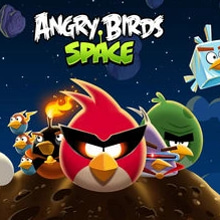
Zoom out. Pick a hinge, not a face. Trust the dotted line as a suggestion and gravity as your co-author. Let the shot leave on the breath-out, tap when the curve feels alive, and watch the sky sketch your idea for you. Debris begins its slow ballet, pigs make their surprised squeak, and the scoreboard blinks stars like a constellation you just named. Then do it again, because space is generous and your aim is getting loud. Angry Birds Space on Kiz10 turns orbits into paintbrush strokes and stubborn forts into stories—each puzzle a small cosmos that rewards the player who believes curves are just straight lines with better taste.





 Share
Share
 Embed
Embed