The first thing you remember is falling. Not in a dramatic, arms flailing way, but in that slow strange way dreams use, where gravity feels delayed and the world is just a blur of stone and echo. When you finally stop, there is no impact, no pain, only cold. Your spirit opens its eyes in a place that is not quite a dungeon and not quite a void, a labyrinth of stone arches suspended in endless darkness. Somewhere far above, an ancient portal burns with pale light. One gateway. One exit. And only one traveller can use it. 👁️🗨️🌀
You are not a warrior here. You have no sword, no gun, no armour. You are a fragment of who you used to be, trapped in the limbo of forgotten realms. The stone walls around you whisper with memories that are not yours, the air tastes of dust and old magic, and every corridor feels like it has been waiting centuries just for you to arrive. To return home you will need to wake the portal, piece by piece, by feeding it secrets, relics and the truth about what really happened to this place.
The path to that truth is not a straight line. The passages twist like thoughts you tried to forget. One corridor curves into another, then drops away into a hall lined with statues whose eyes follow you. A staircase seems to climb upward, only to loop back under itself and deposit you somewhere deeper. Each new area feels like the inside of a different memory: a crumbling chapel with shattered stained glass, a library drowning in dust and chains, a bridge that hangs over nothing but fog. Every room is a question you have to answer before it lets you go.
You never walk alone. The limbo is crowded with things that used to be souls and now are something else entirely. Some appear as drifting shadows that cling to the edges of your vision. Others stalk the hallways on too many limbs, wearing broken faces like masks. These demons cannot be beaten by charging straight at them; this is not that kind of game. Here, survival is a quiet art. You study their patterns, listen to their footsteps, watch how they react when a torch flickers or a chain rattles. Then you slip past when their gaze turns away, or lure them into traps carved into the stone long before you arrived. 😈
Mystical relics become your lifeline. They are scattered across the realm like breadcrumbs left by someone who understood exactly how cruel this place could be. A cracked amulet lets you see hidden runes on the floor that warn of pressure plates. A shard of mirror shows the true shape of a demon that appears harmless. An ancient key hums softly when you are close to the door it fits, even if that door is disguised as a blank wall. Each relic comes with its own rules, and part of the challenge is learning when to use them and when to save them for a worse moment you can feel coming.
Puzzles are woven into the architecture itself. A row of statues leans at odd angles; their shadows hide a sequence you need to copy. A series of bells hangs over a chasm; strike them in the wrong order and the floor crumbles, in the right order and a bridge unfolds from the dark. Sometimes the solution is as simple as paying attention to the scratches on the walls. Sometimes you realise the room has been telling you the answer since the moment you stepped in: a pattern in the torches, a missing brick, a faint symbol repeated just enough times to feel uncomfortable. 🧩
The deeper you go, the more the story tightens around you. Ghostly echoes appear at the edge of your path — pieces of conversations that happened long ago, arguments between mages and guardians, cries of those who never escaped. You start to recognise names, then faces, then motives. The missing documents of this place aren’t papers; they’re fragments of memory carved into stone and sealed inside relics. As you gather them, a picture forms: why the portal was built, who tried to control it, and what price they paid for trying to break the rules of death.
And always there is the promise and the threat of that single portal. It hangs above the labyrinth like a silent moon, pulsing with slow, patient light. As you activate its seals one by one, the realm responds. Corridors shift. New traps awaken. The demons grow bolder, as if they can feel the escape route solidifying and hate you for it. You begin to suspect the most uncomfortable truth of all: you are not the only spirit trying to reach the gate. Somewhere else in these stone veins, other lost souls may be moving, choosing, betraying. Not all of them want you to succeed.
Escape from the Portal plays with that idea of choice in a quiet but sharp way. More than once you are forced to decide between helping another trapped presence or using the opportunity to move ahead alone. You might free a fading soul from a cursed relic, knowing their release will awaken something worse in the next room. You might steal power from a guardian who begs you not to, making your own path easier while the realm grows more hostile for anyone behind you. The game never needs to shout at you about morality; it just lets the consequences catch up in unexpected corners.
Some of the most memorable scenes come when brute cleverness is not enough. A demon that fills an entire chamber, immune to your usual tricks, forces you to think in sideways logic: perhaps the room itself can be turned against it. A puzzle that seems unsolvable until you realise you have to deliberately fail in a certain pattern to reveal its second layer. A corridor that loops over and over until you stop running and start listening for the one sound that doesn’t repeat. Little moments like this create that satisfying click in your mind, the feeling of being perfectly in tune with a world that is trying to trick you.
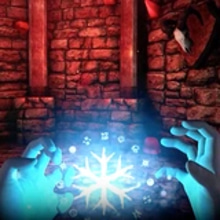
The atmosphere does a lot of heavy lifting. Torches spit ghostly blue flame, books whisper when you pass, distant doors slam as if the realm is rearranging itself out of sight. You hear dripping water where there is no ceiling, wind where there is no opening, the faint echo of a heartbeat that might be yours or might belong to the portal itself. Music rises and falls with your progress: a low hum when you are creeping past something that should not see you, a rising chant when you are about to unlock another seal, a sudden sharp silence whenever the game wants you to realise you are in real danger. 🎵
Moment to moment, the gameplay sits on that edge between exploration and tension. You are encouraged to look into side passages, search behind cracked pillars, step onto suspicious balconies just to see what might be hidden. At the same time, every detour risks running into a demon patrol or activating a trap you did not spot in time. You learn to read the environment as a language. A certain kind of carving on the wall means there is a secret nearby. A cluster of bones means this room has already punished someone less careful than you.
All the while, you carry the central question pressing against your ribs like a physical weight: if there is really only room for one traveller through that portal, what happens when someone else reaches it first. Will you push past them Will you accept being left behind Will you find another way Or will the realm itself make the choice for you
On Kiz10, Escape from the Portal slides straight into the heart of horror puzzle fans who love atmosphere as much as mechanics. It is not about cheap jump scares; it is about that slow, tightening feeling of walking through a place that remembers too much. Every riddle you solve, each demon weakness you discover and every relic you claim pulls you closer to the final decision the game has been hinting at since the first step.
One portal. One chance. One spirit who refuses to stay lost. If you like your horror with brains, mystery and the constant sense that the walls themselves are watching, this is the journey that will keep you wandering long after you finally step through the light. 🕯️🌀





 Share
Share
 Embed
Embed