📹 The night begins when the house remembers you
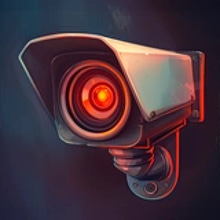
The shift clicks in without fanfare: a chair slightly turned, a painting you don’t recall, a cup that’s never been there. I’m on Observation Duty is horror by inches—a surveillance game where the monsters are continuity errors and your job is to notice before they notice you. You cycle cameras through lonely rooms, file anomaly reports, and try not to blink when the hallway stretches like taffy or the fridge door smiles. It’s not loud horror; it’s the kind that settles behind your eyes and asks, are you sure that lamp was facing left.
🗂️ Your toolkit is a cursor, a clock, and a gut feeling
On your desk: a monitor, a row of room tabs, and a report console that looks ruthlessly unimpressed. You watch the feed, submit the anomaly type, pick the room, and hit send. If you’re right, the world snaps back with a soft thump—like reality re-seating itself. If you’re wrong, the board blinks “No anomaly” and your confidence drops a floor. Reports have a cooldown measured in heartbeats, so mistakes cost more than pride. The clock nudges forward; you’re aiming for sunrise, which is less a time than a dare.
👁️ Anomalies have rules, then they don’t
At first, changes are polite. An extra apple appears on the counter. A book vanishes. A chair rotates a smug thirty degrees. Then the catalog grows teeth. Objects swell or shrink. Walls breathe. Doors forget which side the hinges belong to. Lights pulse like they’re practicing Morse for help. Camera distortion stretches the room into a funhouse corridor where perspective limps. Intruders show up—sometimes obvious, sometimes a silhouette whose posture screams nope. Certain presences stare back, and you learn the difference between uncomfortable and unacceptable. Your report menu gives categories—Object Movement, Extra Object, Disappearance, Distortion, Light Anomaly, Intruder, Other—and “Other” becomes your favorite good-luck charm.
🏠 The house has a personality and bad habits
Rooms aren’t just backdrops; they’re characters. The Kitchen is honest, all straight lines and tidy counters—great for catching a new plate, terrible when the toaster unplugs itself with intent. The Living Room hoards clutter like a magpie; memorize the couch pillows or suffer. The Corridor is a hum of subtle shifts; the further the camera is from truth, the more the walls lean to whisper. The Bathroom loves mirror jokes. The Bedroom is where gravity goes weird and you swear the bedspread sighed. Outside cams offer comfort until the sky decides to, gently, not be the right sky.
🎯 Learn the baseline, then trust the itch
The first minute is reconnaissance. Count chairs without counting. Clock the painting themes. Remember where the rug corners sit. Your brain builds a shadow-map and anything that bumps the outline becomes a tickle behind your eyes. That’s the itch you chase: the sense that a shadow dragged itself two pixels sideways. You will click report on vibes alone and be right more often than your self-esteem allows. Pattern recognition is your superpower; humility is your battery.
⏱️ Pace is the real antagonist
Nothing on the feed is urgent until all of it is. Anomalies stack quietly; miss too many and the system warns of “imminent failure,” which feels like the building clearing its throat before an operatic mistake. Your tempo matters. Linger just long enough to scan each room, then move on. Most losses are not from missing one huge change—they’re from hanging out with a painting you liked while the bathroom auditioned for a glitch parade. The game isn’t cruel; it’s punctual.
🧠 Micro-rituals that keep you alive
Run a loop and give each room a single sentence. Kitchen: three mugs, fruit bowl, single knife. Hallway: two frames, one stool, short runner. Living room: five books, plant tilted left, remotes crossed. Saying it locks the picture; anything off rings like a wrong chord. Use “corner scan”—let your eyes touch each corner before the center; many intruders love edges. When a room looks “too perfect,” tag it in your head; perfection hides the one missing glass. If a feed feels off and you can’t name it, file Distortion or Other and move—gut-checks save more nights than pride.
🕯️ Fear by whisper, not scream
The soundscape is a throat that refuses to clear. Vents hum, fluorescent tubes buzz in a key you’ll memorize, and the distant outside cam wears wind like a coat. When an intruder arrives, the audio doesn’t shout; it subtracts. You’ll notice what’s missing—the fan that stopped, the refrigerator that lost its purr—and realize the silence is focused on the exact room you were planning to check next. Headphones turn tiny clues into choreography: a soft thud one room over, the wet scrape of something that didn’t ask permission.
🧩 Difficulty curves with your competence
Early shifts are generous—clean baselines, anomalies that introduce themselves politely. Later nights steal that safety. The house swaps props between rooms, so your memory has to flex not just “what’s there” but “where that thing belongs.” Cameras might blink—one frame of snow—and return with an angle that’s 3% wrong, just enough to reset your internal map. Reports take a breath longer. New categories arrive with the tone of a manager who believes in you too much: abyss presence, camera malfunction, painting anomaly that’s technically a whole new painting with teeth you reluctantly admire.
🧰 Tools that feel like manners, not cheats
Hints exist, but they whisper. A soft UI glow after a streak of correct reports. A briefly highlighted prop when you mouse past and hesitate—only in assist mode, only after the house already tried to eat you. Toggling high-contrast outlines helps distinguish “missing thing” from “I invented minimalism.” None of it plays the game for you. The challenge remains your attention, not your cursor speed.
😈 The intruders deserve their own paragraph
Most of the time you’re a librarian for furniture. Then the feed catches a person-shaped argument with reality. Some stand still with the patience of a locked door. Some move wrong. Some are too close to the camera, like the lens is a bone they want to gnaw. You file Intruder with fingers that hit keys too hard, and the room snaps clean with a sound that could be relief or regret. You never get used to it. That’s the point. The job is noticing; the fear is personal.
🌙 The sprint from 5 AM to sunrise
There’s a moment when the clock flips to 5-something and the house decides you’ve earned a finale. Anomalies stack faster, mischief overlaps, and your meticulously calm loop becomes a waltz done at a dead run. The trick is to trust your map. Don’t freeze on anything small while something big breathes in another room. File two correct reports in a row and the pace becomes survivable again. Then the chime you’ve been falling toward all night lands, gentle as a dish placed correctly on a shelf. Sunrise isn’t victory music; it’s a normal room staying normal for three seconds. It feels like a miracle.
🧠 Why this horror hits different
Jumpscares are cheap calories; this game serves slow protein. It trains a part of your brain that lives under language. You don’t remember “third book, blue spine,” you remember the space where blue should be and isn’t. That’s why the dread lingers after you close the tab—you go to your own kitchen and a chair facing the wrong way earns a double-take. The game rewires you lightly. You will forgive it.
🧷 Accessibility with taste
Color-safe UI options keep reports readable, font sizes scale for longer sessions, and an optional subtle “tick” plays each time you flip rooms to encourage a healthy cadence. Vibration cues on supported devices buzz for verified reports so you can look away for a sip of water without losing the thread. Assist mode never names anomalies, it only gives you time back you were already about to earn.
🌐 Why it’s perfect on Kiz10
Instant in-browser loading means you can start a shift during a break, then promise yourself you’ll stop after one sunrise (you won’t). Inputs feel crisp—camera cycling is snappy, reports submit without hiccup, and restarts are so fast your stubbornness stays warm. Share a link, compare room baselines with friends, argue about whether the hallway rug was always that long. The house will be happy to prove both of you wrong.
🔔 Final note before you clock in
Take one slow tour at the start. Name the rooms out loud. Trust the itch more than the list. When the feed hisses, check the corners. When your gut says Other, believe it. And when the kitchen chair turns an inch, breathe like you meant to catch it. I’m on Observation Duty is proof that horror can be quiet and still take your pulse hostage. Load it on Kiz10, sit down, and decide whether reality stays the way you left it. Eyes open. Don’t blink unless you’re sure.





 Share
Share
 Embed
Embed


