Briefing At Dusk 🎯🗺️
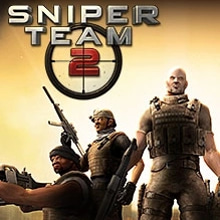
The map spreads across the table like a problem you actually want to solve. Four vantage points, overlapping fields of view, multiple convoy routes, and civilians who wander into places they shouldn’t. Sniper Team 2 doesn’t waste time turning you into a hero with a magic rifle. It hands you a squad, a mission clock, and a radio that crackles with partial information. Your job is not to be dramatic. Your job is to be correct. Rotate to the right position, read wind and distance, steady the pulse, and decide—now—whether this shot belongs to you or to one of your teammates who has the better angle. When the first wave stirs dust on the far road and the light starts to fade, the game clicks into that rare rhythm where anticipation is half the fun.
Four Scopes One Brain 🧠🔭
You’re never just “the sniper.” You’re also the switchboard. Each operator has strengths—one steadier under pressure, one faster on target transitions, one with cleaner glass for distant work, one with the patience of a stone. The trick is to feel those personalities through the controls. Swap to the rooftop if the alley turns noisy. Slide to the warehouse window when trucks block long lines. A good run feels like conducting, each position a section in an orchestra. When you string it together—tap, swap, confirm, swap back—the mission breathes easier. You will start by reacting to red pings on the HUD. You will end by knowing where the next problem will appear two beats before it does.
Contact Reports And Little Lies Enemies Tell 👣🌬️
Targets in Sniper Team 2 are not paper silhouettes. Patrols hesitate before crossing open ground. Spotters lean a shade too long over railings. Gunners telegraph with a shoulder set that says “next second I’m up.” Even vehicles have tells—the engine note dips before a stall, the brake lights pulse before a pivot. Learn the language and the map stops feeling random. You begin to pre-aim at empty space, not out of guesswork but because pattern recognition has finally moved from your eyes into your hands. There’s pleasure in that. It’s not flashy. It’s earned.
Shots That Matter More Than They Sound 🔊📏
A good sniper game makes audio do real work. Here, the world runs on small truths. A gust through scaffolding adds a nudge to your hold. A clink on corrugated metal is an angle you didn’t see. When you’re late, the radio doesn’t yell; it goes quiet for a half second, and that silence feels like disappointment you’ll fix on the next volley. You start reading echoes to measure range, listening for how the environment answers your report. Long shots slap then roll. Alley shots crack and die. Your brain builds a table you’ll never write down.
Mission Flow That Rewards Calm 🚦🧭
Every operation has a heartbeat. Early minutes are recon. You scan, you tag, you hand off to the teammate with the cleaner lane. The midgame is problem management. A van arrives early, or a rooftop door opens when your plan says it should be closed. This is where players panic and spray. Don’t. Pick the threat that breaks your defense if left alone and solve only that. Let the rest breathe until the line stabilizes. Endgame is cleanup in a rising wind. Your team’s fatigue shows up as small aim sway, your own as impatience. This is where discipline wins. Slow your exhale. Let the reticle settle one more cycle. The shot is still there.
Guns As Tools Not Trinkets 🧰🔧
Upgrades are seductive, but the real power is understanding what each piece does for the job. A heavier barrel isn’t “better”—it’s quieter movement inside the scope at the cost of slower transitions. A hotter load gives you a flatter path but punishes bad trigger control. The scope with extra magnification makes long shots feel easy until crowds move and you lose peripheral awareness. There’s no perfect build; there’s a build that fits tonight’s mission. The game quietly nudges you toward professionalism: prepare for the scenario, not your ego.
Wind Math Without The Homework 🌬️➕
You don’t need a ballistics degree. You need habits. Read flags, laundry lines, dust. Use the crosswind hash as a story, not a rule. Half a mil for the lazy breeze pushing left to right, a hair more when foliage leans in agreement. Elevation matters when a shot dives into a street canyon and air does weird things; compensate less than you think. Practice holding off instead of dialing unless you have time for a clean turret change. The design keeps the math human. After a few missions you’ll start talking to yourself like a calm coach: “Quarter right. Hold shoulder. Break on the beat.”
Civilians And The Weight Of Restraint 🚶♀️🛑
The hardest shots in Sniper Team 2 are the ones you don’t take. Civilians wander into crossfires, frantic allies stagger into lanes you just cleared, and sometimes the angle simply isn’t safe. Passing a shot feels wrong the first time, like you wasted an opportunity. Later you realize restraint is the muscle that wins campaigns. Find a better angle. Swap to the teammate who sees the alley from above. Force the enemy to move with a warning shot into metal if the rules of engagement allow it. You’re not playing for highlights; you’re playing for a mission debrief that doesn’t mention collateral.
Set Pieces You’ll Tell Friends About 📣💥
There’s a convoy ambush where you stagger brakes with two near-simultaneous hits on lead and trail vehicles, then watch the middle bunch up like a trapped accordion. There’s a market rush where a single lantern shot blacks a corridor long enough to reposition. There’s a night op where rain makes everything louder and you realize that, for once, noise is cover. And there’s the classic rooftop duel—glint versus glint—where you win not by twitch but by breaking vision with a pivot, then reappearing in a window your opponent forgot existed. None of it feels scripted because you earned those beats by reading the map correctly.
Tiny Habits That Make You Look Like A Pro 🧠✨
Breathe out and break at the bottom of the curve. If you miss, call your correction to yourself out loud so your hands learn faster. After every third shot, cycle to another position even if you think you’re safe—complacency is louder than gunfire. When moving the reticle across a crowd, lead your eyes with the scope, not the other way around; the brain hates playing catch-up. And always rescan your last impact point; you’ll spot the latecomer who heard the noise and wants to be the problem.
Difficulty That Rises Like A Good Radio Story 📈📻
The campaign escalates without spikes. New enemy types don’t arrive with boss-music swagger; they creep into the roster and force better choices. Shields make you think angles instead of center mass. Heavies turn your timing window into a negotiation. Spotters punish greedy repositioning. The balance stays fair because the game gives you tools as often as it gives you trouble—better glass, steadier rests, and squadmates who earn their keep if you trust them.
Why This Works So Well On Kiz10 🌐💙
You don’t need a launcher or a driver update to feel competent here. The mission loop is click, brief, deploy, solve, debrief. Inputs stay crisp when the screen fills with motion, and the browser doesn’t get in your way when you’re juggling four scopes under a clock. It’s friendly to ten-minute sessions where you practice wind holds and even friendlier to long evenings where you replay a map just to shave a mistake you can’t stop thinking about. Kiz10 turns tactical patience into a pleasant habit.
The Debrief You Want To Earn 📝🎖️
The best feeling in Sniper Team 2 isn’t the triple feed or the clutch slow-motion save. It’s the quiet debrief where your accuracy is tidy, civilian casualties read zero, and the squad status says “ready.” That’s the victory this game is built for—the kind of competence that doesn’t demand applause. You close the tab thinking about one shot you passed and one you took that felt perfect. Tomorrow you’ll come back for another map, another wind to learn, another chance to move the crosshair only as much as needed and not a fraction more.



 2 (102 votes)
 Share
Share
 Embed
Embed


