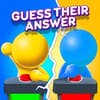
𝗚𝗨𝗘𝗦𝗦 𝗧𝗛𝗘𝗜𝗥 𝗔𝗡𝗦𝗪𝗘𝗥 — 𝗧𝗥𝗜𝗩𝗜𝗔, 𝗕𝗨𝗧 𝗧𝗛𝗘 𝗖𝗥𝗢𝗪𝗗 𝗜𝗦 𝗧𝗛𝗘 𝗥𝗘𝗔𝗟 𝗕𝗢𝗦𝗦 🧠🎤
Guess Their Answer isn’t the kind of quiz game where you calmly recall facts like you’re sipping tea in a library. It’s more like being thrown onto a noisy game show stage where the correct answer isn’t always the smartest one… it’s the one most people would blurt out first. That’s the twist, and it changes everything.
On Kiz10, this trivia game is built around prediction and speed. You’re not only competing against computer opponents—you’re competing against “the audience,” the invisible crowd logic that decides what counts as a winning response. It becomes a mind game: you try to think like everyone else while also thinking faster than your rivals. One second you’re confident, the next you’re typing the most obvious answer in human history with sweaty fingers because the timer is laughing at you. 😅
The match structure is clean and punchy: three tough questions across mixed topics, a race to input likely answers quickly, and a scoring battle where each round feels like a mini duel. If you win, you earn in-game currency. And that currency isn’t just a number—it’s your ticket to cosmetics and skins, the fun little trophies that say, “Yes, I out-thought the machine.”
𝗧𝗛𝗘 𝗚𝗔𝗠𝗘𝗣𝗟𝗔𝗬 𝗛𝗢𝗢𝗞: 𝗣𝗢𝗣𝗨𝗟𝗔𝗥𝗜𝗧𝗬 𝗢𝗩𝗘𝗥 𝗣𝗘𝗥𝗙𝗘𝗖𝗧𝗜𝗢𝗡 ⚡📝
Most trivia games reward accuracy. Guess Their Answer rewards alignment. The best answer is often the one that feels almost too simple. The kind of response your brain tries to skip because it wants to be clever. But clever can be dangerous here. If the question asks something like “Name a fruit,” you could type something rare and technically correct… and still lose to someone who typed “apple” instantly. The game pushes you to think in mainstream patterns.
That’s what makes it addictive. You start learning how the game “thinks.” You begin anticipating what answers will score well, which categories tend to have obvious top responses, and when it’s worth being slightly creative versus when you should just slam the most common option like a buzzer hit.
And because speed matters, you’re constantly balancing two instincts: accuracy and momentum. If you hesitate too long to craft the “perfect” answer, your opponent may already be stacking points with quick crowd-pleasers. It’s trivia with pressure, and the pressure is the fun.
𝗧𝗛𝗥𝗘𝗘 𝗤𝗨𝗘𝗦𝗧𝗜𝗢𝗡𝗦, 𝗧𝗛𝗥𝗘𝗘 𝗠𝗜𝗡𝗜 𝗕𝗔𝗧𝗧𝗟𝗘𝗦 🥊❓
The three-question format keeps the pacing sharp. There’s no endless quiz marathon where you get tired and start guessing random letters. Each question feels like a distinct round, a fresh chance to outsmart your rivals. If you mess up one round, you still have time to recover. If you dominate early, you still need to stay focused because the last question can flip the whole match.
The computer opponents add that satisfying rivalry energy. They’re not real people, but they’re designed to feel competitive enough that you get the emotional experience of “I’m going to beat you this time.” And when you do beat them, it feels earned because you weren’t just recalling knowledge—you were predicting crowd behavior under time pressure.
It also makes the game perfect for short sessions. You can jump in, do a match, earn currency, unlock something, and bounce. Or you can go into “one more round” mode and suddenly you’ve played ten matches chasing the perfect run.
𝗗𝗔𝗜𝗟𝗬 𝗤𝗨𝗜𝗭 𝗖𝗛𝗔𝗟𝗟𝗘𝗡𝗚𝗘: 𝗔 𝗥𝗘𝗔𝗦𝗢𝗡 𝗧𝗢 𝗖𝗢𝗠𝗘 𝗕𝗔𝗖𝗞 📅🔥
The daily quiz challenge is the kind of feature that quietly hooks you. It gives you a reason to return and prove you’re still sharp. Even if you’re not in the mood for long play, the daily challenge is a quick flex. You show up, you test your prediction skills, you grab your reward, you leave like you just won a tiny mental trophy.
Daily challenges also make the game feel alive. Instead of repeating the same feeling, you get new prompts that keep your brain from going on autopilot. And because the game isn’t just about facts, every new question feels like a new social puzzle: “What would most people say?”
𝗖𝗢𝗦𝗠𝗘𝗧𝗜𝗖𝗦 𝗔𝗡𝗗 𝗦𝗞𝗜𝗡𝗦: 𝗦𝗧𝗬𝗟𝗘 𝗙𝗢𝗥 𝗬𝗢𝗨𝗥 𝗕𝗜𝗚 𝗕𝗥𝗔𝗜𝗡 🎭💰
Winning earns currency, and currency buys cosmetics and skins. That might sound small, but it’s powerful motivation in a trivia game because it gives your success a visible reward. You don’t just win “points.” You win stuff. You get to decorate your identity in-game, which makes progression feel personal.
And cosmetics do something else: they turn repeated matches into a collection chase. Even if you’ve already mastered the rhythm, you’ll keep playing because you want the next unlock. The game becomes half trivia competition, half “I want that look” progression loop, which is a perfect pairing for quick match games.
𝗛𝗢𝗪 𝗧𝗢 𝗪𝗜𝗡 𝗠𝗢𝗥𝗘 𝗢𝗙𝗧𝗘𝗡: 𝗧𝗛𝗘 𝗖𝗥𝗢𝗪𝗗 𝗠𝗜𝗡𝗗 𝗧𝗥𝗜𝗖𝗞 🧠⚙️
The best strategy is to answer like you’re the average person in a hurry. Go for the most common response first. If you have time, then try a second common variation. Don’t waste precious seconds trying to be unique unless the question clearly invites multiple “valid” popular answers.
Another trick is to think in categories. If the prompt is about foods, colors, animals, sports, or countries, you already know the handful of answers most people default to. Train yourself to grab those instantly. The game rewards that kind of quick pattern recognition.
And if you ever freeze, pick the safest obvious answer and move on. In Guess Their Answer, a fast “decent” guess often beats a slow “perfect” guess that arrives too late.
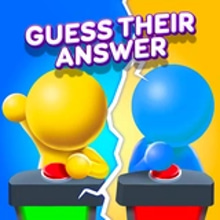
Guess Their Answer on Kiz10 is a fast, competitive trivia game where you win by predicting the crowd, typing quickly, and outscoring your rivals across three intense questions. Earn currency, unlock cosmetics, and tackle the daily quiz to prove your brain is both smart and speedy. 🧠⚡🏆



 2 (159 votes)
 Share
Share
 Embed
Embed