𝐖𝐄𝐋𝐂𝐎𝐌𝐄 𝐓𝐎 𝐓𝐇𝐄 𝐂𝐀𝐁𝐈𝐍 𝐓𝐇𝐀𝐓 𝐃𝐎𝐄𝐒𝐍’𝐓 𝐋𝐈𝐊𝐄 𝐘𝐎𝐔 🏚️🌲
Horror Escape Story: 99 Nights doesn’t greet you with a gentle tutorial or a friendly “press this to win” vibe. It greets you with wood that groans like it’s complaining about your existence. A cabin in the woods. A scream you can’t ignore. A door you shouldn’t open. And that moment where you break into the attic and the floorboards snap shut behind you… yeah, that’s the game telling you, politely, that you’ve already made several poor decisions.
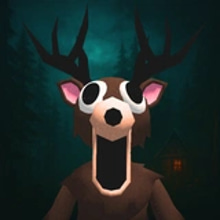
You’re in first person, which makes everything feel too close. The hallway isn’t a hallway, it’s a tunnel of creaks. The corners don’t feel like geometry, they feel like ambush opportunities. And the legend hanging over everything is just awful in the best way: a deer that stands upright, moves like a person, and hunts like it has all the time in the world. It’s not a “jump-scare carnival” kind of horror. It’s tension horror. The kind that makes you walk slower, not because the game forces you to, but because your instincts start whispering, easy… easy… don’t stomp.
𝐓𝐇𝐄 𝐓𝐖𝐎 𝐎𝐁𝐉𝐄𝐂𝐓𝐈𝐕𝐄𝐒 𝐓𝐇𝐀𝐓 𝐅𝐄𝐄𝐋 𝐋𝐈𝐊𝐄 𝐀 𝐃𝐀𝐑𝐄 🎯🗝️
The mission is brutally clear: free the hostage, then leave the house. That’s it. Two tasks. Simple on paper, nasty in practice. Because between you and those goals is a house that behaves like a trap, a set of riddles that want your attention, and a predator that punishes noisy confidence.
The hostage is a missing boy with a tiny dinosaur hat, which is such a weirdly specific detail that it becomes this emotional anchor in the middle of the dread. You’re not just snooping for fun. You’re trying to get someone out. So every time you hesitate, you feel that pressure: move, think, move again. But move carefully. Because the cabin is a puzzle box with teeth, and the deer thing doesn’t care about your good intentions.
What makes it addictive is that you’re constantly switching modes. One moment you’re scanning shelves for an item. The next you’re staring at a lock like it personally insulted you. Then you hear a sound and your brain goes cold. Not dramatic cold, practical cold. The kind that says, hide now, ask questions later.
𝐒𝐓𝐄𝐀𝐋𝐓𝐇 𝐈𝐒 𝐍𝐎𝐓 𝐀 𝐎𝐏𝐓𝐈𝐎𝐍, 𝐈𝐓’𝐒 𝐓𝐇𝐄 𝐀𝐈𝐑 𝐘𝐎𝐔 𝐁𝐑𝐄𝐀𝐓𝐇𝐄 🫥👣
A lot of players think stealth means crouching once in a while. Here, stealth feels like a lifestyle choice. You learn the house the way you learn a dangerous neighborhood: which rooms have quick exits, which corridors are too long, which doors lead to safety and which doors lead to regret.
The deer predator is the kind of threat that changes your posture. You stop running around like a tourist. You start moving with purpose, checking angles, leaving doors in positions that make sense, thinking about sound. You’ll have moments where you’re holding an item, trying to decide if it’s worth keeping, and then you hear something and suddenly inventory management becomes the least important thing in your life. Your priorities become very primal, very fast.
And the game is mean in a fair way. If you rush, you’ll get punished. If you wander without a plan, you’ll waste time and expose yourself. But if you’re patient, if you use your ears, if you keep your movements clean, you start feeling clever. Not superhero clever. Survivor clever. Like you’re surviving by being careful, not by being stronger.
𝐓𝐇𝐄 𝐇𝐎𝐔𝐒𝐄 𝐈𝐒 𝐀 𝐏𝐔𝐙𝐙𝐋𝐄, 𝐁𝐔𝐓 𝐈𝐓 𝐀𝐋𝐒𝐎 𝐌𝐄𝐒𝐒𝐄𝐒 𝐖𝐈𝐓𝐇 𝐘𝐎𝐔 🧩🕯️
The riddles and object hunting are the glue that holds the fear together. You’re searching for keys, tools, clues, anything that makes the next barrier click open. But it’s never just “find item, use item, done.” The cabin makes you work for it. You’ll collect something and then realize you still need to figure out where it belongs. You’ll find a clue and it will feel obvious… until it isn’t, because panic is not a great brainstorming partner.
This is where the game’s pacing gets sneaky. It lets you calm down just enough to focus, then it reminds you you’re not alone. That rhythm is nasty and brilliant. Focus, dread, focus again. You start doing small rituals without realizing it, like closing doors behind you, scanning the floor, checking corners twice. You’re basically training yourself to treat the environment like a living opponent.
And when you solve something, it feels genuinely satisfying, because you didn’t solve it from a safe menu screen. You solved it inside a hostile space that could turn dangerous at any second. That makes every successful step forward feel earned.
𝐈𝐍𝐕𝐄𝐍𝐓𝐎𝐑𝐘 𝐏𝐀𝐍𝐈𝐂 𝐀𝐍𝐃 𝐓𝐇𝐄 𝐀𝐑𝐓 𝐎𝐅 𝐍𝐎𝐓 𝐓𝐇𝐑𝐎𝐖𝐈𝐍𝐆 𝐘𝐎𝐔𝐑 𝐇𝐎𝐏𝐄 🧰😬
Your inventory is not a magical backpack of infinite comfort. It’s a set of choices. What do you carry? What do you drop? What do you throw when the situation gets ugly? And yes, sometimes you can throw items with force, which sounds cool until you realize your aim under stress is… questionable. We’ve all been there. You try to be tactical, and instead you toss something like a panicked raccoon. It happens.
Discarding items, selecting the right tool quickly, interacting at the right time, using the hint when you’re stuck, all of that becomes part of the survival loop. The game even gives you the option to adjust difficulty, which is honestly a relief, because some nights feel like the cabin is personally offended by your existence. If you want pure suffering, you can chase it. If you want to learn the space and enjoy the tension without getting demolished, you can tune it.
Also, small thing, but important: audio. This game loves audio. The whispers, the creaks, the subtle cues that something is moving. If you turn sound off, you’re basically choosing hard mode with blindfold vibes. Keep the audio on, tweak sensitivity so you can look around smoothly, and suddenly you’re not just stumbling. You’re hunting for your own escape route.
𝐍𝐈𝐍𝐄𝐓𝐘 𝐍𝐈𝐍𝐄 𝐍𝐈𝐆𝐇𝐓𝐒 𝐅𝐄𝐄𝐋 𝐋𝐈𝐊𝐄 𝐀 𝐌𝐀𝐑𝐀𝐓𝐇𝐎𝐍 𝐎𝐅 𝐅𝐄𝐀𝐑 🕰️🦌
The “99 nights” idea gives the game this long-haul dread. It’s not just one scare and done. It’s endurance. You start thinking in sessions, in survival streaks, in careful progress. Early on, you’re learning where things can be, how the cabin flows, where you can hide without feeling trapped. Later, you start moving with more confidence, but the game doesn’t let you get too comfortable. It keeps pressure alive. It keeps you checking.
And that deer monster, the upright not-quite-human thing, becomes your mental shadow. Even when you don’t see it, you feel it. You’ll be solving a puzzle and suddenly wonder, am I safe right now, or am I just lucky? That question becomes the soundtrack.
When you finally start closing in on the hostage objective, the tension sharpens. Because now the stakes are real. You’re not collecting random items anymore. You’re making the rescue happen. Then comes the escape, and escape is never calm in a horror game. Escape is messy. It’s sprinting, turning too fast, bumping into things, realizing you forgot something, then realizing you do not have time to go back. Your heart goes up, your hands get slightly sweaty, and you start making decisions you’ll laugh at later. Like slamming a door and immediately crouching in the worst hiding spot imaginable. Then it works, somehow, and you feel like a genius for five seconds. That’s the flavor.
If you’re into stealth horror, escape room logic, first-person tension, and that relentless “one house, one monster, one chance” vibe, this game on Kiz10 is a nasty little thrill. It’s fear you can play with, solve through, and eventually outsmart, if you keep your head and stop sprinting into the obvious danger like a horror movie extra.





 Share
Share
 Embed
Embed