🏫🕯️ The bell rings, the lights lie
The first thing you notice is how the hallway hums after hours, that thin electric whine old schools make when they’re keeping secrets. Lockers stand like closed mouths. A banner from last semester sags as if it’s tired of pretending. In Horror School: Detective Story, you arrive as a calm professional with a notepad and a steady hand—and within five minutes you’re a heartbeat in a haunted blueprint, chasing whispers through classrooms where the projectors flicker like nervous eyes. Every scene is a diorama of dread, every click a decision you will defend to yourself later.
🕵️♀️🔎 Your case, your pace, your evidence
This is a point-and-click investigation sharpened by horror timing. You scan, you hover, you listen. A desk drawer sticks on purpose. A science lab pipette glints at the wrong angle. A faculty photo hides a scissor-slit in the frame and a signature scratched out with the careful fury of someone who knew what they were erasing. Mouse or tap is all you need: touch a thing to test its story; touch it again to argue with it. Every room is a layered puzzle where nothing is just set dressing. You’re never forced to sprint or mash; the panic comes from what you choose to touch next, and what touches back.
🎚️📜 Choose the nightmare’s weight
Before you step inside, you choose the complexity: a lean mystery with bright breadcrumbs, a thornier web with contradictory artifacts, or the full faculty meeting from hell where clues contradict and alibis overlap like bad wallpaper. The easier mode teaches the school’s grammar—symbol locks, pattern notes, taped floor codes, the recurring motif of the missing bell. Higher modes respectfully lie to you in ways that good mysteries should. The satisfaction doesn’t come from guessing; it comes from proving your hunches to a room that would rather not be proven.
🔐🧩 Locks that remember your name
The puzzles aren’t abstract, they’re institutional. The music room key isn’t in a chest; it’s in a trumpet case with a practice chart that doubles as a cipher. The home-ec oven door is jammed not by a ghost, but by a recipe card wedged inside, the spilled measurements secretly mapping the combination to the chemistry cabinet. You’ll trace graffiti arrows in the stairwell to recreate a teacher’s schedule on a blackboard grid, slide yearbook letters until a motto lines up, and set classroom clocks to “impossible” times so a maintenance panel thunks open in shame. Every solution feels like the building finally admitting what it did.
👥🗣️ Voices that don’t quite line up
You don’t meet chatty ghosts; you meet accounts. A disciplinary slip absolves a student everyone suspects. A guidance counselor note confesses concern in ink that doesn’t match the signature. An old exam key contains a prize question that never appeared on any test, which means someone built an answer before the problem existed. In fragments and sticky notes, the faculty becomes a choir of alibis. You assemble, you trim, you test chronology against the way dust lies on a shelf. The detective work is human even when the hallways aren’t.
🌫️🔦 Atmosphere that hedges the truth
Lighting does half the storytelling. Nurse’s office fluorescence buzzes like an interrogation lamp on low power, while the art room breathes with soft, theatrical spill that makes every canvas look like it’s tilting toward you. Rain pecks at windows in music, not noise. The janitor’s key ring murmurs behind a door that no longer locks properly. When the gym’s exit sign stutters, it’s not a jump scare—it’s a metronome for your nerve. The game refuses cheap shocks; it prefers the long exhale, the slow camera drift, the clue you re-read because the pen pressure in the final letter looks like a hand shaking.
🧠🧭 Detective mindset, not monster math
Play like a professional. Label everything in your head. When you open a cupboard, close it—states matter, and the school notices. If a clue feels wrong, press on its edges; misdirection here is motive, not malice. Take the long route through the hallway after you move a heavy object; echo changes will tell you if the room behind you accepted your edit to the world. The best runs develop rituals: three passes left to right, zoom on irregular textures, pause on framed documents, check floor reflections for missing legs. It sounds obsessive until the science lab window shows an empty tripod casting a shadow and you realize the camera is on the desk, so who took the photo?
🗝️📌 Tiny techniques the case files won’t list
Break codes with context before you break them with math. An “8” carved into a locker isn’t part of a numeric lock if the school’s pep banners all use block letters—think jersey numbers, not combinations. When you hear the faint static near the PA speaker, click the guidance office roster; names alphabetize themselves wrong in exactly one place, and that tells you which drawer to pry. If a door is jammed from the other side, look for a slim gap under the frame and slide a hall pass into it—the lamination is stiff enough to nudge the latch. Screens with lots of circles? Count the ones missing, not the ones present. And if a poem on the wall feels like it was written by a tired adult, scan for acrostics; teachers love to hide apologies they can’t say out loud.
🕰️⏳ Tension you can schedule
Some scenes breathe; others tick. Timed segments aren’t twitch traps—they’re pressure cookers designed to make you choose which truth to rescue first. When the auditorium projectors overheat, you have enough moments to cross the balcony or to pull the breaker, not both. What you pick changes which path opens later. Those choices aren’t “gotchas,” they’re character: your detective becomes the sort of person who saves equipment or the sort who kills the power and listens to darkness, and the school responds accordingly.
👂🎧 Audio that whispers instructions you don’t realize you heard
Play with sound on. The hum in the science wing has a missing frequency that matches the length of the periodic table roll-down shade. The choir room’s reverb tail is a hair longer in front of the wrong cabinet. A distant shoe scuff repeats every fourteen seconds, which is how you know the security camera is panning, not a person pacing. The soundtrack leans into restrained strings and classroom percussion turned uncanny—triangle pings, ruler taps, the brush of chalk dust. It’s music you solve with.
🗺️🔁 A campus that unfolds instead of unlocking
You’ll circle back constantly, but nothing feels like backtracking. Returning to the library with a teacher’s quote reshapes the stacks; the books you need are suddenly obvious, their spines forming the first letters of a sentence you refused to read earlier. The gym office mirrors reflect a bulletin board you can’t see from the floor, and the phone number pinned there works only after you’ve restored a fuse you didn’t know fed the switch. Each revisit is a second layer of understanding, the same room telling a different truth because you finally learned the language.
🧩🕯️ Endgames that honor your evidence
When the final scene arrives, it doesn’t twist the knife for fun; it folds the paper until all the creases meet. Your choices shape whether the culprit is confronted, redeemed, or turned into an unresolved file that the school files under “renovation.” Multiple outcomes aren’t about color swaps—they’re about which facts you decided were most important. The ending isn’t just what happened; it’s what you chose to believe, and what the building let you prove.
🎬📓 The moment you become the rumor
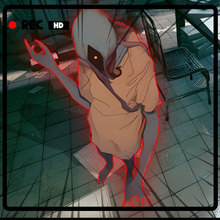
A thunder roll softens to a purr while you stand alone in the auditorium wings, one hand on the rope that controls the curtain, the other on a note you found inside the piano bench. You tug, the stage hushes, and the projector blinks to life on a blank screen that isn’t blank anymore. The footage is a static camera, a hallway at 3:11 a.m., a figure you recognize by posture alone. You click pause right as the figure pockets a key that never existed in any inventory screen. Your breath shakes once. You rewind, note, cross-reference the clock above the water fountain, and a door in your head opens. When you walk back into the light, you know exactly which classroom will accept your knock.
🌟 Why this case crawls under your skin—in the best way
Because Horror School: Detective Story is horror that trusts your brain. It doesn’t push you down a corridor; it invites you to notice what other players will miss and rewards you with revelations that feel earned, not gifted. The puzzles are tied to the world, the scares are earned by implication, and the interface is a single promise: click wisely. On Kiz10, it becomes a perfect night-shift ritual—tense, smart, generous with atmosphere, and respectful of the oldest mystery of all: a building that remembers everything, and a detective who refuses to forget.





 Share
Share
 Embed
Embed