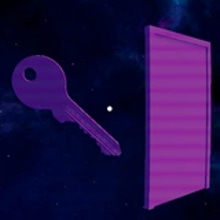
The place looks like a memory that someone scrubbed too clean. Fluorescent buzz, carpet the colour of old lemonade, wallpaper that repeats until your eyes get tired of being eyes. Lost Dream is horror without the usual loud mask; it’s the kind that sits beside you and asks if this corridor has always been here. You move because standing still feels like agreeing with the wrong idea. Somewhere, a door needs a key. Somewhere, a stairwell leads up and then down and then up again, like a thought you can’t finish. You don’t save, because dreams don’t. You learn, because people do.
🕯️ Threshold spaces and the hush between sounds
Liminal rooms are not just backdrops. They are pressure. You step from one empty office to a pool-blue hall to a service tunnel that still smells like dust and distant chlorine, and the shift resets your spine each time. The lights hum like they’re pretending to be calm. The air conditioner clicks in a rhythm your brain dresses up as footsteps. Lost Dream uses the ordinary to make you doubt which direction is yours, and it works because it refuses to wink. Nothing jumps at you until your thoughts do.
🗝️ Keys, locks, and the arithmetic of routes
Finding keys isn’t a scavenger hunt; it’s route design. A key isn’t useful where you find it. It’s useful where you are going to remember to use it. You start building a mental map with tiny anchors: a noisier light over a junction, a stain that looks like a country on a carpet square, a vending machine with two buttons missing. Every loop redraws the maze, not literally, but in how you understand it. The moment you realize three “different” corridors are the same corridor wearing new clothes, progress accelerates like a thought finally phrased correctly.
👂 Sound as compass, silence as trap
You stop listening for monsters and start listening for systems. Vents murmur louder near shafts that connect floors. Elevators wheeze when power is live somewhere close. A lock makes a polite throat-clearing click when you stand at the right angle with the right key. Silence, true silence, is the dangerous thing. It means you’ve walked outside the game’s language and into dead air where your sense of direction starves. When that happens, you backtrack to the last place with a hum and begin again—because the hum is the map.
🧭 Micro-navigation in macro-empty rooms
The trick to big empty spaces is to make them small on purpose. Hug right walls on your first pass to guarantee a full loop. On your second, cut diagonals across atriums to test for hidden doors that align with off-center seams. Use “landmark ladders”: pick a far pillar, walk to it, then choose the next pillar, and so on, so your brain stops worrying about the vastness and starts counting in bites. When you enter a new zone, stand still for three seconds and list five things you’ll recognize later. It calms the nerves and primes the eyes.
🧠 Anxiety management as an actual mechanic
Dreamcore horror is half level design, half your breathing. Lost Dream plays fair with that. It doesn’t sprint you into panic; it lets unease accumulate in manageable spoons. When your pulse lifts, you make rules. Touch every wall on the left until the room count hits five. Only turn after a light that flickers twice. Say the landmarks out loud if you must. The act of choosing a method becomes a rope you can pull yourself along with. The game invites this kind of self-handholding because it knows that surviving the vibe is part of the puzzle.
🔑 Inventory with intention, not hoarding
There’s no satisfaction in carrying a trunk of everything. There’s sharp pleasure in carrying exactly what matters. Keys align with palettes and textures—brushed steel belongs to service doors, brass to administrative spaces, painted blue to the pool wing. Once you learn the grammar, wrong doors stop wasting time. The rare multi-use item earns its weight by opening short cuts that stitch two safe loops together. When you drop a spent key in a familiar hallway, the floor feels kinder because you’ve reduced the noise inside your head.
📐 Patterns that don’t shout but don’t lie
Dream spaces drift, but rules persist. Yellow-tinted carpeted grids favour rectangular loops with one sneaky diagonal. Concrete service levels prefer long straights with mirrored branches. Water areas lean into U-shapes that look like O-shapes until you trace them twice. The game never prints these truths on a wall; it lets you earn them by noticing. Once you do, the dread shrinks just enough that curiosity takes the wheel again. The horror never leaves. It just makes room for competence.
🏃 Movement as a measurement tool
You can walk mindlessly and get nowhere, or you can walk like a surveyor and carve the place open. Count steps between landmarks to sense loop size. Time the return from a dead end; if it’s longer than the approach, the geometry hides a bend you missed. When you find a long corridor, sprint a third of it, then stop. If you feel smaller rather than closer, it’s a visual trick—mark the entry and leave. If you feel closer, commit; long lines often gate real progress. It’s funny how often your legs know the truth before your eyes do.
🧪 Risk choice, reward choice
There are always two appetites at war: curiosity and safety. Pushing into a too-quiet stairwell might cost your bearings, but it might also be the only way to skip a whole loop of nonsense. Sticking to your trusted route protects your sanity and your map but starves progress. The joy is noticing when to switch. After two dry loops, take the rude door. After a lucky key streak, play conservative and bank the new exits you’ve learned. Lost Dream respects that you are piloting a nervous system, not just a character.
📝 Mental breadcrumbs that actually work
Simple habits feel like magic here. Always turn left at the first fork in a fresh zone to guarantee you’ll touch every branch once. Leave doors open in “complete” rooms and closed in “mystery” rooms to signal your future self. Assign nicknames to zones—Mint Office, Loud Vent, Blue Hall—that tie a sensory hook to a place on your map. If you’re stubborn about it for ten minutes, your brain starts retrieving these labels under pressure, and suddenly the dream stops being a smear.
🪞 The way dread changes once you’re competent
Something lovely happens around the hour mark. The same hall that scared you thirty minutes ago becomes a corridor you stride through with a purpose that feels like defiance. Your walking speed isn’t faster. Your mind is. Fear hasn’t left, but it has learned to sit in the passenger seat while the part of you that solves problems drives. Dreamcore horror rewards that shift uniquely well; it lets unease stay as colour while giving agency the wheel. It feels grown-up and strangely tender.
📱 Controls and readability that honour the vibe
Inputs are quiet, which is perfect. You don’t want a twitch shooter; you want a deliberate walker with precise turns that let you interrogate corners without smearing your view. The camera breathes gently. UI elements stay small and clean so the environment can do the talking. On a phone, swipes don’t oversteer; on keyboard, micro-corrections land exactly where you expect. The whole presentation trusts you to do the noticing, and that trust makes you better at noticing.
🎧 Put on headphones and let the rooms teach
Tiny things become tools. Buzz intensity hints at distance to a transformer room. A soft dripping means the pool wing is near. Duct rumble implies a vertical connection—the stairwell you want is likely one room over. Footfalls ring brighter over hollow spaces, which sometimes masks hidden voids behind maintenance panels. Once you treat audio as signage, Lost Dream stops being a maze and turns into a radio you can tune.
🌙 Why this belongs in your Kiz10 rotation
Because it is scary in the adult way, the way that asks you to be brave without asking you to be loud. Because progress is a feeling you earn in your chest before you see it on a screen. Because unfinished dreams beg for one more lap and completed ones collapse into a sleepy smile. Because a game that doesn’t let you save can still feel kind if it makes every lost run contribute to a smarter next one. Lost Dream does that, again and again, until the threshold spaces start to feel like a language you speak.
⭐ The moment you’ll remember
You’re sure you’re looping. The carpet stain country reappears. The hum pitches up. The vending machine blinks the wrong number. You sigh, then you notice the light over the service door is flickering in threes, not twos, and a brass key in your pocket finally has a place to matter. Click. A stairwell sighs alive. Down you go, into a new floor that smells like a swimming lesson from years ago, and everything is wrong in exactly the way you needed. That’s Lost Dream: a new room earned by paying attention in the old ones.





 4 (152 votes)
 Share
Share
 Embed
Embed


