𝗧𝗵𝗲 𝗧𝗿𝗮𝗶𝗻 𝗗𝗼𝗲𝘀𝗻𝘁 𝗦𝘁𝗼𝗽 𝗔𝗻𝗱 𝗡𝗲𝗶𝘁𝗵𝗲𝗿 𝗗𝗼 𝗧𝗵𝗲𝘆 🚂🌵
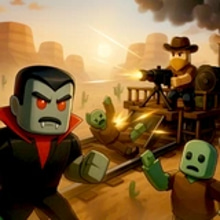
Obby vs Zombies Dead Rails drops you into that kind of nightmare that looks cool from far away and feels personal up close. The Wild West is usually all sunsets and dust and swagger, right. Not here. Here the horizon is a warning, the rails are the only promise of direction, and your armored train is basically a rolling argument with the end of the world. You are moving fast, you are under pressure, and you quickly learn a brutal truth. If you treat this like a casual ride, the ride will end you.
The best part is how immediate it feels. No slow intro, no polite tutorial that pats your head. You hear trouble, you see shapes moving in the distance, and suddenly you are aiming down sights while the train rattles beneath your feet like it is daring you to miss. Zombies come in waves that do not care about your reload timing, bandits show up with the confidence of people who never met consequences, and the only thing between you and a very embarrassing defeat is your aim, your choices, and the upgrades you bothered to build.
𝗙𝗶𝗿𝘀𝘁 𝗣𝗲𝗿𝘀𝗼𝗻 𝗙𝗶𝗿𝗲𝗳𝗶𝗴𝗵𝘁𝘀 𝗧𝗵𝗮𝘁 𝗙𝗲𝗲𝗹 𝗟𝗶𝗸𝗲 𝗦𝘄𝗲𝗮𝘁 🔫😤
The shooting has weight. You feel recoil. You feel the rhythm of reloads. You feel that tiny panic when your magazine runs dry at the exact moment a threat decides to sprint. The game loves that moment. It builds tension by making you respect your weapon instead of treating it like a magic wand.
And because everything happens around a moving train, your brain is doing extra math without asking permission. Targets shift. Angles change. The landscape slides by and the enemy lines bend with it. You start leading shots, adjusting, breathing, then snapping your aim to something that matters more. A bandit with a clean angle. A zombie type that will break the line if it gets close. A cluster you cannot allow to become a swarm. It is constant pressure, but it is the fun kind, the kind that makes you sit forward without noticing.
𝗧𝗵𝗲 𝗨𝗻𝗱𝗲𝗮𝗱 𝗔𝗿𝗲 𝗡𝗼𝘁 𝗔𝗹𝗹 𝗧𝗵𝗲 𝗦𝗮𝗺𝗲 🧟♂️🧠
One of the sneakiest things about this game is how it uses variety to keep you honest. Different zombie types change how you prioritize. Some are slow, classic and stubborn, meant to soak your attention until you forget the real danger behind them. Some move differently, forcing you to aim faster or reposition mentally. Some exist purely to punish hesitation. You know that moment when you think, I can reload now, I have time. And the game answers with a sudden rush and you realize you misread the tempo. Yeah. That.
Bandits add another layer because they do not behave like mindless threats. They show up like opportunists, taking angles, firing back, making you choose between clearing the undead pressure and shutting down a human problem before it snowballs. You are constantly switching modes. Zombie control. Bandit removal. Back to zombies. Back to bandits. And all of this while the train keeps rolling like a heartbeat.
𝗬𝗼𝘂𝗿 𝗧𝗿𝗮𝗶𝗻 𝗜𝘀 𝗔 𝗕𝗮𝘀𝗲, 𝗔 𝗪𝗲𝗮𝗽𝗼𝗻, 𝗔𝗻𝗱 𝗔 𝗣𝗿𝗼𝗯𝗹𝗲𝗺 🛡️🚋
The train is not just scenery. It is your lifeline and your responsibility. You add modules, build defenses, and configure it like you are turning a fragile ride into a fortress that can actually take a hit and keep moving. Turrets. Missiles. Traps. Defensive pieces that feel satisfying because they change the whole mood of a fight.
At first, your train feels exposed. You are basically patching holes with determination. Then you start upgrading, and suddenly you have control points. A turret watching a side angle. A trap that turns a rush into a mistake. A module that makes you feel like you planned this instead of surviving it by luck. The more you build, the more you start thinking like a commander rather than a passenger with a gun. 😅
And the choices matter because you cannot just slap everything everywhere and call it strategy. Different module setups create different playstyles. You might go heavy on turrets so you can focus on precision shooting. Or you might build more traps and let the train do the dirty work while you handle the high priority threats. Or you might go aggressive with explosive options and turn the rails into a moving thunderstorm. Either way, it feels personal, like your train becomes your signature.
𝗟𝗼𝗼𝘁, 𝗖𝗿𝗮𝗳𝘁, 𝗥𝗲𝗽𝗲𝗮𝘁, 𝗣𝗮𝗻𝗶𝗰 𝗔 𝗟𝗶𝘁𝘁𝗹𝗲 🎒⚙️
Looting and crafting are where the game turns into a delicious loop. You find scarce resources, you make equipment, you upgrade what matters, and you head back into the chaos stronger than before. It sounds simple, but in practice it becomes this constant internal conversation. Do I spend now. Do I save. Do I craft something reliable or gamble on something that might carry the next run.
Exploration moments feel like breath between punches. You look around, you grab what you can, you think you are safe for two seconds, and then you remember what game you are playing. The world is hostile. The world is unpredictable. The world is basically waiting for you to relax so it can surprise you. So you loot fast, you craft smart, and you keep moving because standing still is how stories end in this kind of setting.
𝗪𝗲𝗮𝘁𝗵𝗲𝗿 𝗔𝗻𝗱 𝗠𝗮𝗽𝘀 𝗧𝗵𝗮𝘁 𝗗𝗼 𝗡𝗼𝘁 𝗖𝗮𝗿𝗲 𝗔𝗯𝗼𝘂𝘁 𝗬𝗼𝘂 🌧️🌪️
Random maps and shifting weather give every run a slightly different bite. Sometimes visibility feels clean and you get confident. Sometimes the world looks uglier, darker, harsher, and suddenly your aim feels like it has to work harder. You start noticing how small environmental changes affect your decisions. Where you stand. What lane you watch. Which weapon feels safer. Which module choice suddenly becomes the reason you survive.
That unpredictability keeps it from becoming routine. Even when you understand the core loop, the world still has ways to shake your rhythm. It makes you adapt. It makes you improvise. And it makes victories feel earned because you did not just memorize a path, you responded to the run you were given.
𝗧𝗵𝗲 𝗢𝗯𝗯𝘆 𝗙𝗲𝗲𝗹 𝗜𝘀 𝗥𝗲𝗮𝗹, 𝗘𝘃𝗲𝗻 𝗜𝗻 𝗔 𝗦𝗵𝗼𝗼𝘁𝗲𝗿 🦶🔥
There is an obby energy in how you move and react. The train is a moving platform, the battlefield shifts, and you are constantly making quick decisions with your feet as much as your hands. You are not just aiming, you are positioning. You are stepping into better angles. You are avoiding danger zones. You are adjusting to the pace of the fight like your body is part of the strategy.
That is what makes it feel different from a standard zombie shooter. It is not only about who you shoot, it is about where you are when you shoot. Timing and placement matter. Your mistakes are not always missing a shot. Sometimes the mistake is standing in the wrong place when the world decides to get loud.
𝗧𝗵𝗲 𝗠𝗼𝘀𝘁 𝗦𝗮𝘁𝗶𝘀𝗳𝘆𝗶𝗻𝗴 𝗠𝗼𝗺𝗲𝗻𝘁 𝗜𝘀 𝗪𝗵𝗲𝗻 𝗬𝗼𝘂𝗿 𝗧𝗿𝗮𝗶𝗻 𝗙𝗶𝗻𝗮𝗹𝗹𝘆 𝗙𝗲𝗲𝗹𝘀 𝗜𝗻𝘃𝗶𝗻𝗰𝗶𝗯𝗹𝗲 🏆🚋
At some point, after enough upgrades and enough narrow saves, you hit a run where your setup clicks. Your turrets cover the ugly angles. Your modules protect the weak points. Your weapon feels consistent. Your reload timing feels natural. The enemies still attack, but the panic lowers. You are not scrambling anymore. You are controlling the fight.
And that moment is addictive. Because once you taste it, you want it again, but higher, harder, cleaner. You want a tougher map. You want worse weather. You want more enemies just to prove your train can handle it. That is the loop. Not endless grinding, but the desire to perfect your survival machine one run at a time.
Obby vs Zombies Dead Rails on Kiz10 is fast, tense, and satisfying in that way only a good survival shooter can be. You ride the rails, you defend a moving fortress, you loot and craft under pressure, and you build a train that starts as a fragile hope and slowly becomes a legend. Now load in, listen to the tracks, and keep the dead off your rails. 🚂🔫🧟♂️





 Share
Share
 Embed
Embed