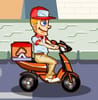
🍕🚴 The shift starts small… then the town gets hungry
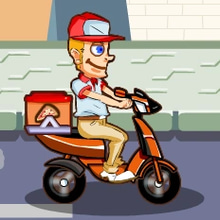
Pizza Delivery throws you into that very specific kind of chaos where you’re “just delivering food” but the streets act like they’ve never heard of brakes. You’re the delivery guy, you’ve got a bike, you’ve got a route, and you’ve got customers who somehow expect their pizza to arrive five seconds ago. On Kiz10, it plays like a fast delivery game with simple controls and a sneaky, addictive loop: ride to the customers, collect coins for tips, keep moving, and don’t waste time drifting around like a tourist. It’s the kind of game that looks easy until you realize the challenge isn’t the distance… it’s the rhythm. You’re constantly deciding how aggressive you can be without turning your run into a slapstick crash montage. 😅
There’s something funny about how quickly you start caring. At first it’s “okay, deliver a pizza.” Then it becomes “deliver it clean, deliver it fast, and grab every coin on the way because those tips are basically your pride.” The map turns into a little pressure puzzle. The shortest route isn’t always the safest route. The coin trail isn’t always worth the detour. The customer marker looks close… until you realize you’ll have to cut through a messy stretch and your timing gets weird. That’s the energy: quick decisions, tiny risk, constant motion.
🛣️💨 Streets, shortcuts, and the temptation to be reckless
Pizza Delivery is at its best when you stop treating the road like a straight line and start treating it like a playground with consequences. You’ll see coin lines that invite you to drift off your main path. You’ll see a quicker lane that feels like the smart move… until you remember you’re on a bike and the city loves surprises. The game gently pushes you into that classic delivery fantasy: you’re not just commuting, you’re threading a route, squeezing time, and trying to look cool while doing it.
And yes, you’ll have those moments where you overcommit. You go for a coin that’s slightly out of the way, you lose your clean line, and suddenly you’re late by a second that feels like a year. That’s what makes it replayable. Mistakes are usually your fault in a very clear way, which is dangerous, because “clear fault” makes you want to retry instantly. You can feel the better run in your hands before you even restart.
🪙😈 Tips are shiny lies that still matter
Coins in Pizza Delivery aren’t just decoration. They’re the game’s way of turning a simple objective into a high-score chase. Delivering the pizza gets you forward progress, but collecting coins gives your run a second layer of meaning. It turns each route into a decision: do you take the safe path and deliver quickly, or do you chase coins and risk slowing down? The smart player does both… but only when it doesn’t break the flow.
That flow is everything. Once you build a smooth route, your bike feels lighter, your timing feels cleaner, and the game suddenly feels like a satisfying sprint instead of a stressful scramble. You’ll start recognizing patterns: where coin clusters usually appear, where you can safely grab a line without losing momentum, where the “greedy detour” always ends in regret. The funniest part is that even after you learn those patterns, you’ll still go greedy sometimes, because the coin trail is basically bait with a sparkle filter. 💰✨
🧠🚴 Momentum is the real currency
Here’s the secret: the fastest deliveries don’t come from constant aggression, they come from consistency. If you keep your bike moving smoothly, you spend less time correcting and more time progressing. You stop making little hesitations. You stop wobbling around. You aim your movement like you’re drawing a clean line across the street. Pizza Delivery rewards that kind of calm control. It’s not a heavy simulation, but it still has that arcade truth: sloppy movement wastes time, and wasted time turns easy routes into tight ones.
You’ll also feel how your mindset changes mid-run. When you’re calm, you take better routes. When you’re stressed, you take worse routes. Stress makes you chase the wrong coins, overcorrect your position, and drift into awkward angles that slow you down. The game doesn’t need complicated mechanics to create pressure; it just needs you to care about being efficient. And you will care, because the moment you get a clean streak of deliveries, you’ll want to keep it perfect. That desire for perfection is the trap… and also the fun. 😅
📦🍕 Deliveries feel like mini checkpoints, not just errands
Each drop-off has a satisfying “mission complete” feeling. You reach the customer, you get your reward, and the game immediately nudges you forward again. It’s a tight loop: ride, deliver, collect, repeat. That rhythm is why Pizza Delivery works so well on Kiz10. It’s quick enough to play in a short session, but it’s also sticky enough that you’ll keep going because you always feel like the next run can be cleaner.
There’s a tiny cinematic vibe to it too. You’re the rider cutting through the city with a job that never ends, trying to keep your pace while everything around you feels slightly chaotic. It’s not a story-driven game, but your run becomes a story anyway. Early deliveries feel confident. Mid deliveries feel like a hustle. Late deliveries feel like a “don’t mess up now” moment where you start playing tighter and your hands get a little more tense. Then you slip once, you lose flow, and suddenly you’re in recovery mode. That rise and fall is what keeps the game alive.
😵💫🚦 The chaos moment: when you’re almost done and you get greedy
Every player hits the same wall: you’re doing well, you’re collecting coins, you’re delivering on time, and your brain starts thinking you’ve solved the game. That’s when you make the classic mistake. You go for one more coin line. You take one extra detour. You try to squeeze a shortcut that doesn’t fit your current position. And now you’re scrambling, trying to rebuild momentum while the delivery target sits there like a silent judge.
The real skill is learning to respect the “good enough” route. Not every coin is worth it. Not every detour is smart. The best run is the one where you keep the pace, keep deliveries clean, and collect coins that naturally fit your line. That sounds obvious, but in the moment it’s hard, because the game keeps offering you tiny temptations. And those temptations are what make the difference between a calm run and a messy one.
🏁🔥 Why Pizza Delivery feels so replayable on Kiz10
Pizza Delivery is the perfect example of a simple browser game that rewards real improvement. You get better by learning routes, controlling momentum, and making smarter choices under pressure. You stop treating the bike like a toy and start treating it like a tool. You read the street ahead instead of reacting late. You collect coins without losing your line. You deliver faster because you’re cleaner, not because you’re frantic.
And when you finally pull off a run where everything flows, where you’re delivering and collecting like it’s effortless, you’ll feel that satisfying “okay, I’m actually good at this” moment. Then you’ll restart to chase an even better run, because your brain now believes the perfect delivery streak is possible. It might be. It might also end becauses you saw one shiny coin and forgot who you were for a second. 🍕😈











 Share
Share
 Embed
Embed