📺 Static in the dark and something watching back
Screen Head sounds like the kind of game that should begin with a bad idea. A hallway too quiet. A flicker where no flicker should be. A room lit by cold screen glow and that ugly little feeling in your stomach that says, yes, this is absolutely going to get worse. That is exactly why the title works. It already carries horror in its bones. Not loud horror at first. The stranger kind. The modern kind. The kind where technology stops feeling useful and starts feeling cursed.
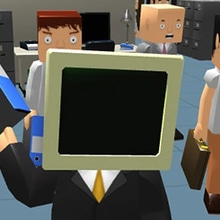
On Kiz10, a name like Screen Head instantly suggests a survival horror experience built around tension, pursuit, and the ugly thrill of being trapped with something that should not exist. Not a normal monster. Not a simple ghost. Something more specific. More wrong. A creature with a screen for a face is unsettling in a very direct way. It takes something familiar, cold light, static, display glow, and turns it into a threat. That is good horror design. It corrupts ordinary things. It makes the player look at harmless objects and suddenly distrust them.
And that mood does a lot of work. Even before the game starts fully showing its hand, the title creates questions. Is this thing hunting you? Is it watching through walls? Does it react to movement, light, sound? Does the screen glow mean danger is close, or does the danger arrive before the glow? Those little questions are fuel. Horror games live on them. They do not need to explain everything immediately. In fact, it is better when they do not. The fear comes from the gap between what you know and what you are about to find out.
👁️ The monster is not just scary, it feels wrong
That is the key with a concept like Screen Head. Wrongness matters more than noise. Anyone can make a monster tall, loud, or ugly. But a monster with a screen-face lands differently because it feels unnatural in a new direction. Mechanical, human, dead-eyed, modern, maybe even glitchy. It suggests a horror villain that is not simply chasing you with brute force, but infecting the atmosphere of the whole game. Every room with a monitor suddenly feels suspicious. Every burst of light feels personal. Every shadow with a rectangle in it becomes a potential disaster 😅
That kind of design would make the gameplay more tense even if the controls stay simple. Horror is not always about complexity. Sometimes it is just about pressure. Walking into the next space and knowing something may be waiting there. Hearing a noise and trying not to overreact. Running only when you absolutely must. Opening doors like each one contains a negotiation with fate. Screen Head sounds perfect for that style of browser horror. Immediate danger, strong visual identity, and enough mystery to keep the player tense the whole way through.
And honestly, that tension is what makes these games addictive. Not “relaxing fun” addictive. The other kind. The kind where you tell yourself one more room, one more try, one more attempt to get past that section that almost broke your nerves last time. Horror games are brilliant at turning discomfort into momentum. You want to stop because the pressure works. You keep going because the pressure works even better.
🏃 Run, hide, improvise, regret
If Screen Head plays like a survival horror chase game, and the title strongly points that way, then one of its biggest strengths would be the simple act of movement under fear. Walking is different in horror. Running is different. Turning around is different. Every basic action becomes charged because the environment is hostile and the monster feels active, not decorative. You are not just moving through a map. You are negotiating with risk.
That is where the best moments happen. The close escape. The door shut one second too late. The accidental glance down a corridor that reveals exactly what you did not want to see. The kind of moment where your plan disappears and instinct takes over. Good horror games create these tiny stories constantly. You remember them afterward in fragments. “I opened the wrong room.” “I heard it before I saw it.” “I thought I was safe and obviously I was not.” That is the texture players come for.
Screen Head has the kind of title that could support all of that beautifully. The monster itself becomes the center of the experience, but not in a cartoonish way. More like a moving problem wrapped in visual dread. That is strong material for Kiz10, where a horror game benefits from having an instantly readable threat. If the enemy is memorable, the fear starts earlier. You do not need a giant lore dump. The screen-faced creature already did the introduction.
💡 Why the setting matters almost as much as the monster
A game like this only gets stronger if the environment leans into the same mood. Empty rooms. Broken lights. industrial corridors. abandoned buildings. Maybe screens humming when they should be dead. Maybe static sounds creeping in before the monster appears. The best horror spaces do not just look dark. They feel contaminated. Like something has happened there, and the player has arrived too late to stop it. Screen Head practically demands that kind of setting.
That is important because horror is not only jumpscares or chases. It is expectation. The room before the scare matters. The silence before the pursuit matters. The slow realization that the place itself is helping the monster matters. A screen-headed creature inside a generic bright arena would lose power. Put that same creature inside a place full of dead electronics, flickering panels, and strange signal noise? Now we are talking. Now the idea starts breathing.
And the beauty of that approach is that even simple exploration becomes tense. You are not looking for the next objective only. You are checking corners, listening for movement, questioning whether the light source ahead is safe or a trap. Horror games become much better when they can make the player doubt ordinary navigation. Screen Head sounds built for exactly that feeling.
⚡ The fear gets sharper when you think you understand it
One of the most reliable tricks in horror is letting the player think they know the rules. The monster follows sound. Fine. The monster appears near screens. Okay. The monster only attacks in certain areas. Great. Then the game twists one assumption, just one, and suddenly your confidence dissolves instantly. That is when horror becomes memorable.
A title like Screen Head can play with that beautifully because the concept already suggests unstable behavior. Static. interference. visual distortion. Maybe the creature appears where signals are strongest. Maybe it mimics safety through light. Maybe the glow in the distance is not helping you at all. These little possibilities make the game more interesting than a basic run-and-hide formula. The monster becomes part psychological, part physical. You are not only escaping a body. You are escaping a presence.
That is the kind of experience horror fans love on Kiz10: a clear threat with enough weirdness to stay fresh. You want the fear to be understandable, but never fully comfortable. Too much clarity kills dread. Too little kills engagement. Screen Head, by title alone, sits in that sweet middle space where imagination can do half the job.
🧠 A horror game that attacks the nerves, not just the player
The strongest thing about Screen Head is that it sounds like a horror game with identity. Not just another monster in another hallway. A specific image. A specific kind of discomfort. A face replaced by a glowing screen is memorable because it feels both empty and expressive at the same time. That contradiction is creepy. It can stare without eyes. Communicate without humanity. Approach without ever feeling alive in the normal sense. Excellent nightmare fuel, really.
And when a horror game has a strong central image, everything around it becomes more effective. The footsteps matter more. The lighting matters more. The chase matters more. Even failure becomes more memorable because the thing catching you is not generic. It is that creature. That shape. That ugly rectangle of light coming through the dark like a warning your brain understands before your logic does.
🏆 One more door, one more mistake
Screen Head feels like the kind of online horror game that wins through atmosphere, pursuit, and a monster concept strong enough to haunt the whole experience. It turns modern visual noise into fear, and that alone gives it an edge. If the gameplay leans into hiding, escaping, and tense exploration, then the title and premise already do half the work of making the player uneasy before the first real scare even lands.
If you enjoy survival horror, monster chase games, dark exploration, and browser horror that relies on tension instead of empty noise, Screen Head is the right kind of nightmare for Kiz10. It sounds eerie, direct, and deeply committed to making every lit screen feel like bad news. You do not just play a game like this to win. You play it to see how long your nerves stay useful. And in horrors, that is usually a much better question.





 3.8 (45 votes)
 Share
Share
 Embed
Embed


