Bite First, Think Later 🦈🌊
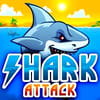
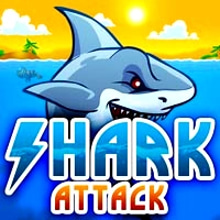
Shark Attack throws you into the water with one simple instruction written between the waves: survive. You’re not a heroic diver, not a cute mascot, not a peaceful fish trying to vibe. You’re a shark with a job, and that job is eating, breathing, and staying alive while the ocean quietly loads a slingshot full of problems and aims it at your face. On Kiz10, it plays like a classic survival action game with a predator twist. You swim, you hunt, you balance your resources, and you learn very quickly that the sea has rules… and it loves to punish players who forget them.
The fun starts with how immediate it feels. There’s no slow warm-up where you’re safe. The moment you start moving, you feel the pressure. Your shark needs food. Your shark needs air. Your shark needs to avoid the kind of underwater hazards that look harmless until they aren’t. And because you’re always juggling those needs, you’re never just “swimming around.” Every movement is a decision, even the small ones. Do you go deeper for better prey or stay near the surface to breathe? Do you chase something fast or take the safer snack? Do you squeeze through that gap… or do you remember that nets exist and regret exists too?
The Ocean Has a Clock and It’s Loud ⏱️😬
Shark Attack is the kind of survival game where you can’t drift on autopilot. The hunger pressure keeps you active. The air management keeps you honest. And your health bar, that fragile little truth-teller, reminds you that the ocean doesn’t care how confident you felt ten seconds ago. It’s a constant loop of tiny emergencies. Not exhausting, just thrilling in that arcade way where your brain is always scanning: food, air, danger, escape route.
You’ll notice that when you’re doing well, you feel unstoppable. You’re gliding through the water, grabbing prey cleanly, popping up for air at the right moments, and thinking, okay… I get it now. That’s when the game tries to humble you. A jellyfish drifts into your path like an innocent lantern. A bomb sits there looking like background decoration. A fishing net waits in the most annoying spot possible, right where you wanted to pass because it looked like the cleanest route. Shark Attack loves that exact moment when your confidence rises faster than your caution.
Hunt Like a Predator, Not Like a Panic Button 🐟💨
There’s a difference between hunting and chasing, and Shark Attack teaches it with brutal clarity. Chasing is emotional. Chasing is sprinting after prey because your hunger bar is screaming and you feel cornered. Hunting is calm. Hunting is picking targets that make sense, moving efficiently, and leaving yourself enough breathing room to react when the sea throws something sharp at you.
The best runs happen when you start thinking like a real predator: clean routes, smart angles, and quick bites instead of long, messy pursuits. You don’t want to waste oxygen on a dramatic chase if you can collect two or three easy snacks on the way. You don’t want to throw yourself into risky zones when your health is already low. It’s weirdly strategic for such an easy-to-start game. The ocean becomes your map, and you start noticing how everything connects: safe feeding areas, dangerous traps, and the shortest paths back to air.
Air Is Your Boss and It Doesn’t Negotiate 🌬️🧠
Air management is what turns Shark Attack from a simple “eat things” game into a real survival challenge. You can be doing great and still lose because you got greedy underwater. You’ll see a juicy target, dive a little longer, and then realize you’ve pushed it too far. That’s when panic shows up, and panic is where mistakes breed. You rush upward, clip a hazard, get slowed down, maybe get caught in a net, and suddenly it’s not a cool predator fantasy anymore, it’s a desperate scramble with your brain yelling “SURFACE NOW!” while your shark moves like it’s dragging a backpack full of regret.
Once you accept that air is part of the route planning, the game gets smoother. You start doing shorter dives. You start eating in clusters. You start surfacing earlier than you think you need to, because you learn the hard lesson: waiting until the last second is basically asking the ocean to invent a new way to ruin you.
Jellyfish, Bombs, Nets… The Sea’s Little Pranks 🪼💣
The hazards in Shark Attack aren’t there just to look threatening. They shape how you move. Jellyfish are the classic “touch this and you’ll regret it” danger, and they’re especially nasty because they can appear in places where you’d normally glide without thinking. Bombs feel like a sudden burst of punishment, the kind of threat that turns a calm swim into a flinch. Fishing nets are the most insulting, because they don’t just hurt you, they trap you. They take your control away for a moment, and in a survival game, losing control is basically losing your dignity.
What makes these hazards interesting is how they force you to balance speed with caution. If you swim too slowly, hunger and air become a problem. If you swim too fast, you slam into something dumb. Shark Attack becomes a game of controlled aggression. You’re supposed to be dangerous, but you’re also supposed to be smart. The ocean rewards players who are bold with their routes but careful with their angles.
That “One More Bite” Trap 😈🍖
Every good survival game has a signature mistake, and Shark Attack’s is the “one more bite” decision. You’re fine, you’re stable, you’re not even in trouble, and then you see prey drifting just a little deeper or a little closer to a hazard zone. Your brain goes, I can grab that. It’s quick. It’s safe. And then it isn’t.
Sometimes you’ll survive the greedy bite and feel like a genius. That’s dangerous, because it teaches you the wrong lesson. You’ll try it again later, but the ocean changes the timing slightly. The jellyfish is closer. The net is placed differently. Your air is lower than you realized. And suddenly your great run ends because you couldn’t resist being just a little bit more efficient. It’s funny in the moment, honestly, because it feels like the sea is mocking you. But it’s also what makes the loop addictive. You don’t just want to restart. You want to restart and prove you can be smarter than your own impulse.
The “Flow State” Run 🌀🦈
When Shark Attack clicks, it feels amazing. You start moving like you belong there. You eat cleanly without overcommitting. You surface before panic starts. You dodge hazards without dramatic swerves. The ocean feels less like a trap and more like a playground you understand. That’s the flow-state run, the one where you stop reacting late and start planning early.
And that’s why it works so well on Kiz10. It’s quick to enter, but it has depth in the way survival pressure always creates depth. You can play casually, sure, but the game quietly invites you to improve. Cleaner routes. Better risk decisions. Smarter air timing. Less greed. More control. It turns a simple shark survival fantasy into a tight arcade challenge that feels personal, because your biggest enemy isn’t the jellyfish or the nets… it’s your own stubborn confidence.
Why Shark Attack Still Hits Hard 🏝️🎮
Shark Attack is simple, fast, and surprisingly tense. It’s perfect if you like action survival games with resource management, quick danger, and that constant feeling of “I’m okay… I’m okay… I’m NOT okay.” You’ll get a little adrenaline, a little comedy, and a lot of replay value because every run ends with the same thought: I could’ve survived that if I didn’t do that one stupid thing. And that thought is basically the heartbeat of the game. On Kiz10.com, it’s an easy recommendation for anyone who wants a shark game that feels like a real survival loop instead of a slow sandbox. Swim smart, bite fast, breathe sooner than you think, and try not to get trapped in a net like a legendary predator who forgot the ocean has hobbies. 😅🦈












 4.7 (18 votes)
 Share
Share
 Embed
Embed