The first night feels almost normal. A quiet house, soft lamps, a bottle on the counter, a tiny child in yellow staring up at you with eyes that do not blink quite enough. You are just the nanny. You are here to feed the baby, change diapers, put him to bed and go home with a funny story about a weird gig. Then the lights flicker, a toy moves by itself and the hallway seems longer than it was a minute ago.
That is the exact moment when The Baby in Yellow Original stops being a simple babysitting job and turns into a slow drip of psychological horror. The game never shouts at you. It whispers. It lets the house breathe behind you. It waits until you are comfortable holding the baby before it starts bending reality one tiny step at a time 👶💛
A babysitting job that feels wrong from the start 👶😨
You see the world through the nanny eyes in first person, which makes every small detail feel personal. The couch, the kitchen, the hallway to the nursery, the door that should be closed but now stands a little open. Your hands pick up the bottle, your hands lift the baby, your hands turn off the lights in the bedroom while that yellow outfit glows faintly in the dark.
Tasks are boring on paper. Prepare a bottle. Bring the child to the changing table. Put him back to sleep. But something is off in every routine. A painting seems tilted differently each time you pass. A door that creaked loudly before now opens in total silence. The TV shows unsettling images when you did not touch the remote. The game feeds you this unease slowly, like a lullaby that gets more dissonant with each verse.
You catch yourself thinking the worst sentences. Did the baby just smile at the wall. Was that toy always sitting there. Why does the house feel bigger when I carry him down the stairs. Those little questions are the real monsters here 😵💫
A house that rearranges itself when you blink 🏚️👁️
The setting is a modest home, but it behaves like a living puzzle. Corridors stretch a little too far. Corners feel darker than the light level should allow. Sometimes a door that led to a simple bathroom before now opens onto something else entirely. The layout never becomes absurd enough to break immersion, but it shifts just enough to make you doubt your own memory.
You will walk from the living room to the nursery dozens of times. Each trip feels slightly different. A picture on the wall, a shadow at the end of the corridor, the low hum of a light bulb that was silent earlier. The house becomes a character, curious about you, watching how long it can play with your sense of direction before you notice.
There are moments when the architecture openly rebels. Hallways looping into themselves. Stairs that drop into pitch black. Doors that slam shut behind you with a timing that feels almost intentional, as if the building is amused by your confusion. Those scenes hit harder because you spent so much time in the normal version of this space. The game weaponizes your familiarity and uses it against you 😈
Taking care of something that might not be human 👶💛🕳️
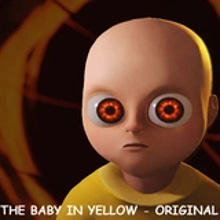
The baby at the center of all this is both adorable and deeply wrong. One second he looks like any sleepy child, heavy in your arms, head lolling to the side. The next second he is sitting somewhere he should not be, eyes bright and fixed on you, expression unreadable. He vanishes from the crib without a sound. He appears in rooms you never carried him into.
You still have to take care of him. That is the disturbing part. You keep doing the tasks even when you are sure he is not just a child anymore. You feed him, rock him, pick him up after he falls in strange places. The game places you in this uncomfortable role where you are both caretaker and potential victim. You cannot simply drop him and run. The tasks pull you back into contact with him again and again.
Sometimes his actions feel like tests. He stares at doors that should not open. He drops toys in strategic places. He watches your reactions when something impossible happens in the next room. You start to wonder who is really being observed here, the baby or you.
Puzzles, keys and unsettling little quests 🧩🔑
Under the horror layer there is a clear quest structure. You receive small objectives that sound harmless and then twist slowly. Go to the kitchen. Pick up the bottle. Find where the child went this time. Locate the source of that strange noise. Explore the basement. Each step calls for observation and curiosity rather than brute force.
You notice clues in notes, scribbles, objects placed at odd angles. A drawing by the baby might hint at a route. A symbol on the wall might return later on a locked door. The house hides answers in plain sight, and the game trusts you to pay attention. There are no giant arrows telling you what to press. You piece things together from visual hints and the rhythm of the night.
Solving a puzzle is rarely about typing a code once and leaving. Often the solution forces you deeper into the house, into places you wish you could ignore. A cracked door in the hallway. A room that was locked during earlier nights. A corridor that feels much longer when you walk it with the lights off. The reward for solving each mini quest is progress, but also another perspective on how badly this place is slipping out of reality.
Sound that crawls under your skin 🎧😱
If you play with headphones, The Baby in Yellow Original feels ten times heavier. The audio design leans on small noises instead of constant screaming. A bottle clinks on the counter with too much echo. The house groans quietly when you pass under door frames. Wind rattles somewhere outside even when the windows are closed.
The baby itself has a sound vocabulary that becomes more disturbing over time. Normal cries suddenly cut off. Laughter appears in the wrong room. Footsteps tap quickly across the floor when you know nobody else should be moving. Sometimes the game lets silence stretch just long enough that your own heartbeat becomes part of the soundtrack. Then a single noise breaks it and you feel your shoulders jump.
There are not many cheap jumpscares. Instead, the dread builds because you start to anticipate noises that do not come, then get caught off guard by sounds you were not expecting at all. The house almost seems to breathe in your ear, especially in narrow staircases and the nursery with its soft, heavy air.
Reality bending around everyday objects 🕯️📺
One of the strongest tricks here is how ordinary things become threatening. A toy on the floor that moves slightly between visits. A painting that now shows a different scene. A TV that flips through channels too fast, landing on images that feel like they were never meant for children at all.
You start treating normal objects like suspects. The crib, the changing table, the light switches, the baby bottle, the doors and cupboards everything feels like it might be next on the list of things that behave wrong. The game never goes full surreal cartoon. It stays just close enough to reality that each change hits harder. You could almost believe this is a real house, that you really are walking through it at night, that you really did see that chair move a few centimeters by itself.
The more you notice, the more the game rewards that paranoia. Tiny environmental details shift from night to night. You see patterns in the chaos, hints buried in the wallpaper, messages implied by which doors are locked and which ones suddenly are not. It makes every replay feel slightly new because now you are looking at the same furniture with different suspicion.
For horror fans who like slow dread more than loud screams 👻💛
The Baby in Yellow Original belongs right at home on Kiz10 for players who prefer atmosphere over nonstop attacks. It borrows some tension from classic indie horror and some structure from escape quests, then mixes both into a night of watching over a child who might be more dangerous than anything outside the front door.
You are not collecting weapons and storming through enemies. You are carrying a baby bottle down a hallway that feels too long. You are turning out the nursery light while a tiny silhouette watches you from the pillow. You are walking back through the living room and realizing you do not remember leaving that door open. All of this unfolds at a pace that gives your imagination time to get involved, which is where the real horror lives.
If you enjoy unsettling houses, strange children, and stories where reality bends quietly until it breaks, this game is an easy pick. It is perfect for a late night session with lights low, volume up and your cursor hovering nervously over every door. And when you finally reach the bunker of an ending the game promises for those who push through its mysteries, you may catch yourself glancing at every yellow toy in your own home a little differently than before 👶🏚️✨





 Share
Share
 Embed
Embed