🪵 Tiny clacks, big brain
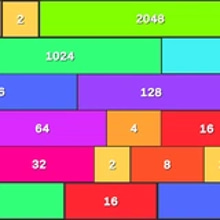
The first stick drops with a polite clink, a little wooden rectangle wearing the number 2 like a name tag. It lands, scoots, and looks at you like, well, now what? 2048 Sticks takes the familiar “merge to bigger numbers” dream and smuggles in physics, angles, and a dash of mischief. Instead of a flat grid, you’re juggling columns, ramps, and subtle slides. One more drop aligns two 2s, they kiss, and suddenly there’s a 4, glowing like it just realized it can vote. The board answers with a soft chime. Your brain does a stretch. Okay—one more.
🎯 The grammar of merge, but with splinters
You still chase 2→4→8→16→… all the way to that smug 2048, but sticks are longer than square tiles, so orientation matters. A vertical piece locks a lane; a horizontal one bridges gaps; an angled piece is chaos wearing a smile. Matching numbers touching edge-to-edge fuse instantly, but corner-to-corner doesn’t count. Every merge nudges neighbors, sometimes creating accidental combos that make you pretend you planned them. After five minutes you’re aiming not just for a merge, but for the ricochet after the merge, the way a 16 shoves a lonely 8 into another 8 two columns over. Cause, effect, chuckle.
🌀 Tilt, slide, commit
You don’t merely drop; you stage. Drag left or right to choose a column, then feather the device or the on-screen tilt to lean the board a degree or two before release. The stick rides the slope, threads a micro-gap, and lands exactly where you pictured (or, you know, near enough). A quick tap rotates 90°, a long press rotates freely with a satisfying notch-click, and a final swipe “nudges” the column so the piece settles tight. It feels tactile without being fussy—like organizing a tiny workshop drawer while a timer hums nearby.
⚡ Power pieces with manners
Every few drops, the game slips you a special. The Glue Stick halts slide on contact, great for anchoring one move from disaster. The Saw Stick cuts a single neighboring block into two equal halves, turning an awkward 16 into friendly 8s. A Magnet Stick tugs the nearest match by one cell, enough to complete a merge chain that looked impossible a second ago. The best one is the Ghost Stick: it passes through the top layer and settles in the first empty shelf it finds, a quiet way to reach the combo button hiding under mess. These aren’t “I win” switches; they’re punctuation marks for sentences you wrote three moves ago.
🧠 Micro-strategy in a world of clacks
Leave one column a little messy; it becomes your funnel for converting odds and ends. Stack duplicates diagonally so a single nudge turns them into a line. When a skinny lane climbs dangerously high, rotate long sticks horizontally to create ledges that catch smaller numbers—an improvised balcony for future merges. Don’t merge 4s the instant you can; sometimes parking two 4s beside a 16 means a later chain collapses half the board. And if you’re one move from panic, aim for a “breather merge” that clears space even if it’s small; space is oxygen disguised as score.
🧩 Modes for different moods
Classic is the pure ascent, that steady climb toward 2048 where every ding feels earned. Rush Mode keeps a trickle timer: drop pieces to refill it, chain merges to freeze it, grin when the clock hovers at one second and you somehow pull a triple. Puzzle Packs are handcrafted boards with pre-placed numbers and weird geometry—“solve in nine drops” puzzles that make you talk to your screen like it’s a team sport. Zen removes fail states and lets you stack neat little wooden neighborhoods to lo-fi plucks; perfect for evenings when your brain wants puzzles without cortisol.
🔥 Combos, cascades, and the moment you stop blinking
The game loves a good chain. Merge two 16s, they become a 32; if that 32 lands next to a 32, it lights up—three, two, boom—into a 64, carrying momentum like it’s proud of you. Keep the chain alive and the multiplier counter winks, teasing bigger payouts and, more importantly, a soundscape that layers clacks into a rhythm you can ride. It’s not frantic, just musical. Get greedy, lose the line, and the meter resets with a gentle “hey, it happens.” You breathe, rebuild, and find the song again.
🪨 Blockers with petty humor
Crates sit in columns like stubborn cousins. You can’t rotate through them, only merge around until a special breaks them. Ice panels lock a stick in place for three turns—annoying, but useful scaffolding if you plan around it. Ropes bind two adjacent stacks; a merge on either side snaps the rope with a satisfying twang. The rare Sand tile sags under weight, lowering by one step after big combos and creating surprise lanes you can exploit if you were paying attention. None of it is cruel. It’s seasoning—enough to reward curiosity and punish autopilot.
🎮 Fingers first, UI polite
Inputs are exactly where your thumbs expect them: column drag top, rotation tap near the falling piece, a tidy “hold to peek” that previews where a rotated stick would settle before you commit. Haptics tick softly on merges, thrum on double merges, and sparkle on three-in-a-row; flip the switch off if you prefer quiet hands. Color-blind safe palettes keep numbers distinct, high-contrast outlines make late-night sessions friendly, and a reduced-flash toggle keeps cascades readable without muting the joy.
🔊 Wood, wind, and a tiny bell
Audio is feedback you can aim by. Light clacks for landing, richer knocks for merges, a small bell for every power-stick played cleanly. When you approach a chain, the soundtrack leans in with brushed percussion; when the board gets crowded, it thins out, giving your headroom back. Headphones help, but even phone speakers carry the charm: it sounds like organizing a sunlit tool shed, if that tool shed occasionally exploded into math.
🌆 Themes that change your headspace
Workshop Default is sunny pine. Night Shift turns the wood dark and numbers neon, great for focus. Temple Slate swaps sticks for stone tablets with etched numerals; merges sound like tiny chisel taps. Beach Day adds soft sand under the board and gulls far away; cascades whoosh like waves. Themes don’t change rules; they change mood—the way a new notebook changes your handwriting the first page or two.
📈 Progression that teaches taste, not grind
You’re not unlocking +10% damage; you’re unlocking better judgement. Early upgrades add a single-slot “reserve” pocket for holding one piece—life-changing in a quiet way. Later you gain a one-use “snap line” per round that straightens a wobbly stack into merge-ready alignment. A final mastery toggle adds faint ghost outlines showing where the last three pieces landed, letting pattern memory kick in. Cosmetics arrive as earned souvenirs: brass corner clamps, felt table mats, number fonts that look hand-stamped. All polish, zero pay-to-skip.
😅 Fails you’ll brag about anyway
You will rotate a stick the wrong way, wedge it like a doorstop, and stare at it as if it will apologize. You will trigger a Saw Stick and cut the wrong neighbor because your thumb had jokes. You will celebrate a chain so hard you forget gravity exists and drop a 2 onto your 512 tower like a cherry on a skyscraper. Then, inevitably, you’ll salvage it two moves later with a miracle Ghost Stick placement and pretend the entire fiasco was choreography.
🧠 Tips from future-you taped to the monitor
Count the next two numbers in the queue before you rotate. If the board tilts left naturally (we all have a bias), place one stabilizer horizontally on the right side every five moves. Save Glue for the midgame, not the opening; early space is plentiful, later control is king. When you’re one merge from a big chain, check for ropes—you can snap one mid-combo and unlock a lane you didn’t know you needed. And don’t be shy about the reserve pocket: holding the wrong piece is often braver than forcing it.
🤝 Ghosts, replays, gentle rivalry
Chase your ghost from last run and discover exactly where you panic-rotated. Share a replay labeled “watch 1:47” and your friend replies “cool, look at 1:42 on mine,” because friendship is just trading smug timestamps. Weekly seeds hand everyone the same piece order; leaderboards track highest tile, fewest drops to 1024, and a “clean board” rating that quietly grades how little vertical chaos you left behind when you won. Petty? Absolutely. Motivating? Also yes.
🌐 Why it clicks on Kiz10
Puzzle games breathe better with instant retries and crisp input. Kiz10 keeps menus out of the lane, loads fast, and drops you back into a run before your new idea cools off. You hop in for “two merges,” surface half an hour later with a new superstition about never placing long sticks vertical on column three, and a screenshot of a cascading 256 you swear was destiny.
🏁 Last stick, small smile
Line the column. Tilt a hair. Rotate once, breathe, and let the piece slide into place like it always belonged there. The 64 becomes 128, the 128 becomes 256, the board exhales like a window opening, and you feel that little click behind your eyes that says, yes, one more. 2048 Sticks on Kiz10.com turns quiet wooden clacks into a clever rhythm—half planning, half luck, all satisfaction. Drop the next piece. The table’s warm, the numbers are listening, and your best chain is almost ready to happen. 🪵🔢✨





 4 (152 votes)
 Share
Share
 Embed
Embed