🎭 The mask that should not exist
Case: Smile Origin Game drops you into the kind of nightmare that starts quiet on purpose. No fireworks. No heroic music. Just a place that feels slightly off, like the air itself is holding a secret in its teeth. There is a case to investigate, sure, but it doesn’t feel like a normal mystery where clues politely wait for you on a table. This is the kind where the clue is watching you back. And somewhere in the middle of it all is a cursed mask, the sort of object that looks like a prop until you get close and your instincts begin screaming, nope.
You are not here to be brave. You are here to be careful. To look at details that don’t want attention. To open doors you would normally ignore. To step into rooms that feel colder than the hallway behind you. And while you do it, you’re trying to keep your breathing steady, because horror games like this don’t just scare you with what you see. They scare you with what you almost saw. 😬
🔦 Flashlight logic and the art of moving slowly
A lot of your time in this game is spent doing something very human: scanning. Looking left, looking right, staring at a corner a bit too long because your brain insists something shifted. You learn quickly that speed is not the same as progress. If you rush, you miss the tiny signals. A note half hidden. A strange mark. A locked drawer that suddenly feels important. A sound cue that makes you pause with your hand hovering over the next door like you’re negotiating with it.
And the funny part is, you start building habits. You check behind objects like a paranoid professional. You memorize routes without even trying. You create little mental safe zones, places you can retreat to when the atmosphere thickens. It’s not about being fearless, it’s about being methodical. The game rewards the player who stays calm while their heart is doing something completely unhelpful. 🫀
📁 Evidence hunting with nervous hands
The investigation side of Case: Smile Origin Game has that satisfying loop where every found detail feels like a small victory. You’re piecing together an origin story, not through a big speech, but through fragments. Objects that hint at rituals, mistakes, obsession, fear. You pick something up and suddenly the environment makes more sense, which is terrifying, because the clearer it gets, the more you realize the case is bigger than a simple scare.
Sometimes the clue is obvious. Sometimes it’s a cruel little puzzle disguised as decoration. And you’ll have moments where you feel smart, genuinely smart, like yes, I noticed that pattern, I connected that detail, I deserve this progress. Then the game quietly reminds you that intelligence doesn’t stop footsteps from echoing behind you. 😶🌫️
🚪 Doors that feel heavier than they should
In many horror games, doors are just doors. Here, doors feel like decisions. Every time you open one, you’re committing to whatever is on the other side. You might find a key. You might find a shortcut. Or you might find that the room is slightly wrong in a way you can’t explain, and now you’re standing there thinking, do I go in, or do I pretend I never saw this and back away like a sensible person.
And that’s where the tension lives. The game turns normal exploration into a series of tiny dares. Pull the handle. Step inside. Look up. Look at the mirror. Look away. Look back. It’s not always about jump scares, it’s about pressure. The feeling that something is slowly learning how you move. 👁️
🧩 Puzzles that don’t care if you’re scared
The puzzles in Case: Smile Origin Game aren’t there to give you a break. They are there to trap you in thought while the atmosphere cooks. You’ll stare at symbols, codes, switches, locked mechanisms, and your brain will try to do two jobs at once: solve the logic and listen for danger. That split attention is where mistakes happen, and the game knows it.
You’ll get moments of frustration too, the honest kind. The “I know the answer is here” kind. You’ll circle back, recheck rooms, notice a detail you missed because you were panicking earlier. Then it clicks. The lock opens. The path moves forward. Relief hits for one second… and then you remember you’re still inside the same nightmare, just deeper now. 🗝️
👣 The smile is not just a face, it’s a warning
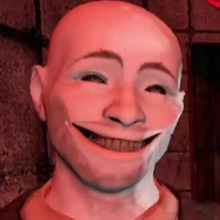
There’s something uniquely unsettling about a horror game that uses a smile as a threat. Because a smile is supposed to be safe. Friendly. Normal. Here it becomes a signal that something is broken in the world. The grin doesn’t feel like a monster roaring. It feels like someone pretending everything is fine while holding the worst secret imaginable.
And the game plays with that. You’ll feel watched even when nothing is visible. You’ll hear a sound and imagine the grin before you see it. Your imagination starts doing extra work, filling in blanks, inventing shapes in the dark. You’ll catch yourself standing still, listening, trying to decide if the noise was real or your own nerves being dramatic again. Spoiler, it’s often real. 😵💫
🏃 Chase moments that flip the whole mood
Then the tempo changes. Suddenly it’s not about careful clicks and quiet observation. Suddenly it’s survival. You’re moving fast, turning corners on instinct, slamming through routes you memorized without realizing. Your hands get sweaty, your timing gets messy, and your brain does that hilarious thing where it screams, why are we even here, we could be playing something relaxing.
These chases hit harder because the calm sections taught you to relax just enough. They taught you patterns. They taught you to trust silence. Then the game breaks that trust, and you realize you’ve been set up. It’s not cruel, exactly. It’s just honest horror design. The case is dangerous. The smile is not decorative. And you are not the strongest thing in these halls. 😬
🧠 Small strategies that feel like real detective work
What makes the experience stick is how it encourages smart behavior without lecturing you. You learn to conserve movement, to plan routes, to remember where a door leads before you sprint into it. You learn to look for resources and clues in the same sweep, because both matter. You learn to stop treating every room like a loot box and start treating it like a crime scene where every object could be relevant.
And you start developing your own style. Some players will double check every corner like a careful investigator. Others will play more like a desperate survivor, grabbing what they can and improvising. Both work. Both lead to different kinds of tension. The game doesn’t demand one personality, it exposes whichever one you bring into it. 😅
🌫️ The best kind of horror is the kind you keep thinking about
After a session, you might close the game and feel fine. Then later, you’ll remember a tiny image. A sound. The shape of a hallway. The way the grin appeared at the wrong moment. And you’ll feel that little chill again, the delayed reaction that proves the atmosphere did its job.
That’s why Case: Smile Origin Game works so well as a free online horror game on Kiz10. It’s quick to start, easy to replay, and it has that “one more try” pull that horror fans understand. Not because you want to suffer, but because you want answers. You want to outsmart the fear. You want to finish the case, even if the case keeps pushing back.
So go in curious. Move like a detective. Think like a survivor. And when the smile shows up, don’t panic. Or panic a little, honestly, that’s human. Just keep moving, keep searching, and keep your focus sharp enough to turn fear into progress on Kiz10. 🎭🔦





 Share
Share
 Embed
Embed