🍿 Lights down, pressure up
Cinema time takes one of the most familiar places in the world and turns it into a tiny controlled disaster. A movie theater sounds easy from a distance. People arrive, buy snacks, find their seats, enjoy the film, done. Smooth evening. Very civilized. Then the game starts, customers begin appearing with their orders, and suddenly the whole place feels like a race against impatience, spilled popcorn, and your rapidly collapsing sense of calm. That is exactly why it works.
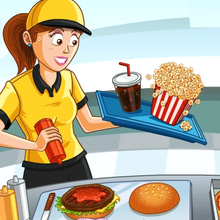
On Kiz10, Cinema time is clearly described as a game where you work as an employee in the cinema and must serve customers very well so they can enjoy the movie with delicious food. That setup is simple, but management games rarely need a complicated premise when the pressure is good. Here, the pressure arrives naturally. Moviegoers do not like waiting. Snacks need to move fast. The theater atmosphere already carries urgency because showtime is always close, and that means every customer interaction feels just a bit more intense than it probably should.
That is the charm. Cinema time does not turn you into a hero, a racer, or some giant tycoon with endless systems. It puts you behind the food counter and asks whether you can survive the beautiful nonsense of a busy cinema shift. Can you keep the line moving? Can you remember what people ordered? Can you handle the flow before the crowd becomes a muttering wall of disappointment? Strong questions. Slightly stressful questions. Very good game questions.
🎟️ Every customer arrives with perfect timing, unfortunately
What makes service and management games so addictive is how quickly they transform small tasks into something dramatic. In Cinema time, the tasks themselves are easy to understand. Serve the right items, keep customers happy, work efficiently. But once several people arrive close together, once multiple snack orders begin overlapping, once the pace starts climbing, the whole experience changes. It stops being a simple task game and becomes a rhythm game disguised as customer service.
That rhythm is where the fun lives. You are scanning faces, watching orders, clicking the right steps, moving from one request to the next before the mood in the room turns ugly. Movie theater food is a perfect setting for this because it is instantly recognizable. Popcorn, drinks, snacks, maybe hot dogs and other quick items depending on the setup. Kiz10’s current cinema management pages describe exactly that kind of escalating food-service pressure in a theater setting, especially Cinema Panic, where the cinema café keeps expanding with more items as the shift gets busier. Cinema time fits neatly into that same delicious mess.
And there is something funny about the contrast. Outside the counter, everyone is here for relaxation. Inside the counter, you are fighting for your life with snack logistics. One side gets the movie magic. The other side gets the line.
🥤 Popcorn economics and tiny disasters
A good management game is never only about speed. It is about order under pressure. Anyone can click wildly for ten seconds. The real skill appears when the pace rises and you still stay organized. Cinema time should feel strongest in those moments, when the line grows, the items start overlapping in your head, and you have to choose between panicking badly or operating like someone who actually belongs there.
That is why cinema games make such strong browser experiences. The environment is specific enough to have personality, but the actions are clear enough to stay accessible. You know what the world wants from you. You know what success looks like. Satisfied customers, fast service, a smooth flow. The tension comes from getting there before the entire theater loses patience. That kind of clarity is powerful. It makes every improvement visible. One round you are fumbling drinks. The next, you are sliding through orders like a snack-dispensing machine built by stress itself.
There is also a nice visual appeal to the whole idea. Movie theaters already feel lively. Counters, trays, lights, posters, people hurrying to their seats. Even if the mechanics are straightforward, the setting gives the work a little extra sparkle. You are not simply running a generic shop. You are running the part of movie night nobody admits they care about until the snacks are late.
🎬 Why cinema games feel more intense than they should
The funny thing about a theater management game is that the urgency is so believable. People really do rush before the movie starts. They really do want their snacks immediately. They really would be dramatically disappointed if the service moved too slowly. Cinema time takes that everyday impatience and turns it into gameplay pressure, which is a very smart move.
Kiz10’s verified page for Cinema time describes the goal as serving customers well so they can enjoy the film with delicious food. That phrasing says a lot. This is not a kitchen-simulator game about crafting gourmet meals. It is about keeping the experience alive. The snacks are part of the cinema ritual. They matter because the whole outing feels incomplete without them. That makes your role weirdly important. You become the backstage force holding movie night together with sugar, salt, and urgency.
Games like this also benefit from instant readability. You do not need a long tutorial to understand why the line matters or why customer happiness matters. You just know. The game taps into a familiar setting and then starts increasing the pressure until your brain fully accepts that yes, apparently this popcorn order now matters deeply.
🍫 The joy of finally finding the rhythm
The best part of Cinema time is probably the moment the flow starts clicking. At first, service games can feel messy. You are still learning the sequence, still figuring out how quickly orders stack, still making small mistakes that feel bigger because customers are involved. Then, somewhere along the way, the pattern becomes readable. You stop reacting late. You start anticipating. You see the next order before it becomes a problem. That shift is deeply satisfying.
And that is the exact reason management games have such strong replay value. They make improvement feel concrete. You are not just scoring higher by accident. You are getting better at handling pressure. Faster, cleaner, more composed. Even your mistakes become useful because they usually make immediate sense. Wrong item. Too slow. Missed the sequence. Let the line get too long. Painful, yes. Fair, also yes.
That fairness keeps the game light even when the pressure rises. It makes retries feel inviting instead of exhausting. You know what went wrong. You can fix it. The next run already looks more manageable in your head. Maybe not easy. But possible.
🎥 Why Cinema time belongs on Kiz10
Cinema time fits Kiz10 beautifully because it delivers a very browser-friendly kind of challenge: easy to enter, instantly understandable, and satisfying to improve at. It belongs right alongside other Kiz10 cinema and service games like Cinema Panic and Cinema Slacking 2, both of which show how well movie-theater settings work for quick management and timing gameplay.
If you enjoy time management games, food service games, restaurant-style multitasking, and browser titles where the pressure comes from staying organized under a growing rush, this one absolutely earns its place. The movie-theater setting keeps it lively, the customer flow keeps it tense, and the snack-counter theme gives everything a nice familiar charm.
Cinema time turns an ordinary cinema shift into something much louder, faster, and far more dramatic than any popcorn job has a right to be. That is exactly why it is fun. On Kiz10, it becomes the kind of management game you start casually and then keep replaying because one bad queue annoyed you, one perfect rush felt great, and now you need to prove you can keep the whole theater fed before the previews end.



 4.9 (65 votes)
 Share
Share
 Embed
Embed


