🌑 Lost in the dark, armed with almost nothing
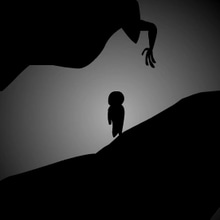
Darkness is the kind of game that strips everything down until the fear of getting lost becomes the whole challenge. There is no giant army to fight, no cheerful map pointing you toward safety, no helpful world built to support your confidence. It is just you, the dark, a few flares, and the stubborn need to reach the exit before the level turns into a blind panic walk. Public descriptions of the game summarize it very cleanly: you are alone in the dark, you launch flares to light your way, and you must find the exit in each level.
That setup is stronger than it sounds because darkness changes how every basic action feels. Walking in a normal maze is one thing. Walking in a maze where vision is temporary, where light must be created and spent carefully, is something else entirely. Suddenly movement is not just movement. It is risk. Each step asks whether you actually know where you are going or whether you are simply making a very confident mistake with limited visibility. That is the mood Darkness thrives on, and it is exactly why a game like this can feel much more intense than its simple rules suggest.
What I like about the concept is how honest it is. The game does not hide the challenge behind clutter. It gives you one clear problem: survive the unknown long enough to find the way out. The flares are not decorative. They are the mechanic, the rhythm, the lifeline, the little bursts of certainty that keep the whole experience from collapsing into total guesswork. And because the light is temporary, the game keeps forcing you into that same wonderful question: do I use one now, or do I trust my memory for a few more steps?
🔥 Light is not comfort, it is a resource
The moment a game turns light into something limited, everything becomes sharper. Darkness seems built on exactly that principle. According to the gameplay summary, your task is to shoot flares to illuminate the path and use that short window of visibility to navigate toward the exit. That means every flare matters. You are not just lighting the room because it looks nice. You are spending knowledge.
That is such a good mechanic for a browser game because it creates tension without needing complex systems. The flare gives you information, but only for a moment. So the real skill is not just seeing the route. It is remembering it. You need to read the level quickly, understand corners, identify dead ends, and then move with enough confidence to make that information last. That turns Darkness into a quiet battle between perception and memory, which is honestly a very elegant kind of pressure.
And yes, this is exactly the sort of game where one tiny bad decision becomes weirdly dramatic. You light the path, think you understand it, take the turn too late, and suddenly the brightness fades while you are standing in a place that feels less like a route and more like an apology to yourself. Beautiful. Mildly terrifying. Very replayable.
🧠 Memory becomes the real map
A lot of maze games are really about patience. Darkness feels more like a game about temporary certainty. You are shown just enough of the world to build a plan, but not enough to get comfortable. That difference matters. It means your brain has to do more of the work. The flare reveals. Your memory preserves. Your movement tests whether the two are actually cooperating.
That structure creates a really satisfying internal rhythm. Light the path. Read fast. Move. Hope. Light again. Recalculate. It is almost strategic, but in a stripped-down survival way. You are not making giant tactical decisions. You are making small, urgent choices about information and trust. Can I risk another corner without firing? Did that hallway bend left or right? Was the exit near the lower edge or was that just another dead end pretending to matter? These are tiny questions, but in a darkness-based game they feel enormous.
And because the challenge is so clear, every improvement feels real. You do not get better through stats or upgrades. You get better because your eyes get quicker and your sense of space gets sharper. A level that first felt impossible starts feeling readable. That is one of the best kinds of progress a puzzle-action game can offer.
👣 The fear is not the monster, it’s uncertainty
What makes Darkness work so well as a title is that the darkness itself is the enemy. Not in a horror-monster way, but in a more mechanical, more intimate way. It steals information. It punishes hesitation. It makes the simplest corridor feel suspicious. A game does not always need monsters to create tension. Sometimes it only needs to remove your confidence.
That gives the whole experience a really nice purity. The level design can stay minimal, because the mechanic is already doing the emotional work. Every unseen corner feels risky. Every wrong turn costs more than time, because it also costs trust in your own memory. You start doubting yourself, and that is exactly when the game gets better. The best runs happen when you stop wandering and start moving like the flare actually taught you something.
There is also something surprisingly atmospheric about games that revolve around darkness and limited light. Even simple graphics can feel heavy when the player only sees fragments. The imagination starts helping the game. The unseen parts of the map feel larger, stranger, more hostile than they probably are. That is a very efficient kind of design.
🕹️ Why this kind of challenge fits so well on Kiz10
Darkness has the kind of quick-start structure that works beautifully for browser play. The goal is immediate. The controls are direct. The pressure arrives early. Public listings describe it as a simple movement, aiming, and shooting setup where flares guide your progress to the exit. That means the game can hook players in seconds without losing the room for mastery that puzzle fans want.
On Kiz10, it would sit naturally beside dark maze, cave, and shadow-based challenge games like Escape From a Dark Cave, In the shadows, Dark World, The Dark Armor, and Slendrina X: The Dark Hospital. Those are all real Kiz10 pages, and while their mechanics differ, they share that same appeal of navigating dangerous darkness, limited visibility, or eerie environments where reading the space matters.
That broader fit matters because Darkness is not just “a maze game.” It is a dark navigation challenge with memory, pressure, and atmosphere packed into one clean loop. It belongs to that family of games where the environment is the problem and the solution.
🏆 A small game with sharp little nerves
Darkness succeeds because it trusts a very strong core idea: light is temporary, and your way out depends on what you do with it. That is enough. More than enough, really. It turns a basic maze into a tension machine, a flare into a decision, and a simple exit into something that feels earned every single time.
If you enjoy dark puzzle games, navigation challenges, and browser titles wheres your brain has to hold onto the path after the light disappears, Darkness is an easy fit. It is minimal, tense, and weirdly gripping in the way only good simple games can be. You fire one flare, see just enough, and then the level asks the only question that matters: did you truly learn the path, or did you just borrow it for a second?





 3.7 (20 votes)
 Share
Share
 Embed
Embed