🟩 Click. Clack. Your turn
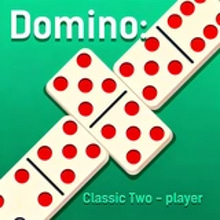
Two players, twenty-eight tiles, and the satisfying sound of ceramic confidence hitting the table. Domino: Classic Two-Player is pure head-to-head strategy, stripped of noise and full of tiny mind games. You draw from a tidy boneyard, pick a lane, and play a bone like you mean it. No fireworks, no gimmicks—just tempo, position, and the quiet thrill of forcing your rival into a draw while you glide toward a clean finish. It’s the kind of duel that starts relaxed and ends with you counting pips in your head like a secret spell. And yes, it feels very good to be right.
🧱 The bones, the rules, the rhythm
Here’s the clean loop. You and your opponent shuffle a standard double-six set—every combination from 0-0 to 6-6. Each of you draws seven tiles. The highest double leads; if nobody holds one, highest pip total breaks the tie. From there it’s matching time: play a tile whose end matches one of the open ends on the layout. If you can’t, you draw until you can—or until the boneyard says “no more,” in which case you pass and try not to look worried. The hand ends when someone dominoes (plays out) or both players pass back-to-back because the board is jammed. Score the pips left in your rival’s hand; if the board jammed, low total wins the hand and counts the difference. First to your target total takes the match, and bragging rights mysteriously taste like espresso.
🎯 Simple rules, deep decisions
Classic two-player domino is a game of control disguised as matching. Yes, you’re hunting plays that fit, but more importantly, you’re steering which numbers stay “live.” If you keep opening sixes, you’re declaring a language the game must speak. If you lock a number your rival loves behind a dead end and pivot to threes, you’re writing the script. The best turns do two jobs at once: advance your board and restrict theirs. Think chess, but with rectangles that tell the truth in dots.
🌀 Doubles: anchors, traps, opportunities
Doubles are dramatic little squares with personality. Played perpendicular, they can fork the board into a cross, widening your options while forcing your opponent to answer the new branch. But a careless double can become a liability—if you don’t hold the matching number to reopen the flow, you might gift your rival a tempo steal. Treat doubles like power tools: excellent when planned, expensive when improvised. The delicious move is the “double lock,” where you play a double that you alone can free, then pivot to another suit, letting the table sweat.
🧠 Counting pips without looking weird
You don’t have to be a math robot; you just need habits. Track what’s visible: if both fives on the ends are already out and you’ve seen four more fives pass, fives are nearly dry—nudge the board toward them to squeeze a draw. When you’re unsure, count by families: two blanks, three ones, four twos, all the way to sixes; note which families are “light” on the table. After a couple of hands, your brain starts tagging suits as hot, cold, or nearly extinct. That’s not overthinking. That’s how you stop your opponent from breathing.
🧭 Open ends are lanes; lanes are leverage
Every open number is a door. You want doors that open for you and stick for them. If you hold three tiles with fours and your rival has shown mostly fives, keep a four live and close fives whenever polite. When the layout offers you a choice of ends, ask two questions: does this play add a lane I can exploit next turn, and does it nudge them toward the boneyard. Two yeses is a green light. One yes is acceptable if the scoreboard says you can be patient. Zero yeses means look again—there’s often a “quiet” tile that creates future noise.
🪤 The block: a gentle art of suffocation
Blocking isn’t about slamming doors; it’s about guiding traffic into a cul-de-sac. Keep a mental tally of how many of a suit remain unseen. If the board is showing sixes everywhere and you’re holding the last six, congratulations—you own the oxygen. Play slow. Starve the lane. If you can route both ends to numbers you know your rival hates, the hand will jam on your schedule, and the pip math will smile in your direction. The sweetest win in classic domino is the one where nobody dominoes and you still take the points by being lighter when the board locks.
⚡ Tempo, or why passing hurts
When you draw, you’re not just wasting a turn—you’re surrendering initiative and revealing information. In two-player, every pass is loud: it tells your opponent what you likely don’t have. Good players pass rarely because they prepare. They keep a flexible tile for emergencies. They open with a suit they can support for two or three moves. They avoid plays that make both ends numbers they barely own. When you must pass, do it with a plan: remember which suit caused the choke and steer the next chance away from it.
🧰 Micro-skills that make you look clever
Play into your strength early—establish your most plentiful suit so your hand thins smoothly. Break your pointy pairs—if you hold 6-5 and 5-4, don’t get stuck needing a five forever; cash one when it does two jobs. Bank a low pip bailout—keeping a 0-1 or 1-2 for late turns can save you from a forced draw. Lead a double only when you can profit from both branches; otherwise, sneak it in mid-hand once the suit you want is dominant. And when the scoreboard says you’re ahead, simplify: keep one suit live, cut the others, and trade fancy plays for safe exits.
🎮 Feel and flow on Kiz10
Input is crisp, drags snap, and each tile lands with a satisfying clack that doubles as a coach—those tiny sounds help you keep pace and notice when the board’s voice changes. The layout stays readable even when the snake gets long: pips are bold, legal spots glow just enough, and your last move rings with a soft halo so you never lose the thread. Quick rematch? One click. Short session on a break? A hand or two slides neatly into your day like it belongs there.
🎨 Small touches, big table energy
There’s charm in the details: clean bone textures, soft shadows, a subtle table grain that doesn’t fight your eyes. The score pops in tidy blocks after each hand, and the pip summary renders in a way that makes your mental counting feel validated rather than replaced. Emojis match the vibe—one tiny grin for a slick domino, a respectful sigh when you get blocked by a blank you should have predicted. It feels like game night without the cleanup.
🧩 Modes that tune the tension
Classic Block is the pure duel: boneyard runs dry, passes matter, jam math decides tight hands. Draw variant keeps the boneyard open longer, trading information for chaos and giving comebacks a real shot. Race targets let you pick a length—short races to 50 for snack-games, deep races to 150 for a proper evening arc where rivalries bloom. Daily challenges remix the opening tile or force a specific suit to start dominant if you crave a nudge out of routine.
💡 Friendly advice before you click “Play”
Open with a suit you can sustain. Avoid lighting both ends with numbers you barely own. Don’t hoard your best exit until it’s useless—spend it when it creates two turns of comfort. Watch their draws; if they fish twice and then play on fours, assume fours were the problem and make fours the homework. When in doubt, lower the pip total you’re holding; lighter hands win jams, and jams are frequent in two-player. And remember: a quiet 1-1 at the right second beats a flashy 6-6 at the wrong one. 🤫
🏁 One last clack, then victory
Endgame. The layout hisses with fives at both ends, your rival has been fishing, and you have the last five tucked behind a sly 5-0. You wait a beat, play the zero to slide the board into a gentle corner, then drop the final five like a period. Domino. Their pips add up in your favor, the score clicks forward, and you feel that neat little rush only honest strategy delivers. Domino: Classic Two-Player on Kiz10 is exactly that—honest, readable, quietly competitive. Shuffle, draw, breathe, and let the bones tell a story where you’re two moves ahead and one tile lighter than anyone expected.





 Share
Share
 Embed
Embed


