🏁🚗 Welcome to the club, bring your best bad decisions
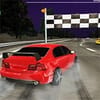
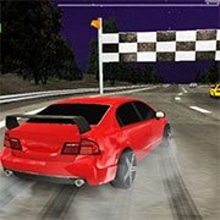
Drift Club feels like stepping onto an empty road at night with a car that’s just a little too eager to misbehave. The menu might look calm, the first level might seem friendly, but the moment you hit the accelerator you realize what the game actually wants from you: commitment. This is a drift racing game built around timed runs, checkpoint targets, and that addictive “clean line vs. fast line” argument you’ll have with yourself every single corner. On Kiz10, it plays like a tight, focused loop of drive, slide, correct, repeat, where one good drift can make you feel like a genius and one sloppy exit can ruin the whole run in the most humiliating way. 😅
🌙💨 Night roads, loud engines, and the timer that never blinks
A lot of drifting games let you relax and just paint arcs on the asphalt. Drift Club doesn’t really do “relax.” The timer is there, the checkpoints are there, and the game is constantly nudging you forward like a friend who keeps yelling “GO GO GO” while you’re trying not to spin out. You’re not only drifting for style, you’re drifting with purpose. The checkpoints act like a trail of glowing problems you must solve at speed, and every one of them demands a certain angle, a certain approach, a certain level of control. It’s not enough to slide. You have to slide in the right direction, at the right time, while the clock quietly threatens to end your run. ⏱️😬
🧠🛞 Drifting here is a language, not a stunt
The best part is how the car starts “talking” to you. Not literally, but you’ll feel it in the way the rear end steps out, the way the front grips (or refuses to), the way a tiny correction either saves you or makes everything worse. You begin to understand that drifting isn’t about yanking the wheel and hoping. It’s about balance. Entry speed, steering angle, throttle control, and the patience to let the slide settle instead of panicking and overcorrecting.
And yes, you will overcorrect. Everyone does. There’s a special kind of Drift Club tragedy where you’re sliding perfectly, you see the checkpoint, you get excited, and your hands do something dramatic. The car snaps, the line breaks, and the checkpoint is now behind you like a disappointed teacher. The game isn’t mean about it, it’s just honest. It shows you the difference between chaos and control, and then dares you to choose control. 🙃
🎯🌀 Checkpoints are your rhythm section
Think of each run like a track you’re trying to “play” correctly. Checkpoint, corner, checkpoint, corner, short straight, tighter bend, another checkpoint that’s placed exactly where your instincts want to fail. Once you stop treating them like random gates and start treating them like a rhythm, the game clicks. You stop chasing the car and start leading it. You start setting up early, entering with intention, drifting with a plan instead of a panic.
That’s also where the time limit stops feeling unfair and starts feeling motivating. It’s not there to punish you, it’s there to push you into flow. When your flow is good, you’re fast without trying to be fast. When your flow is bad, you’re slow even if you’re mashing the throttle like it owes you money. 😄💸
🧰🔧 Upgrades that actually feel like a personality shift
Progression in Drift Club has that satisfying arcade-racer charm: you earn currency from your performance and put it back into the car. Better handling, better acceleration, better stability, maybe even the kind of tweaks that make the car feel less like a shopping cart on ice and more like a machine you can trust.
What’s fun is how upgrades change the mood of your drifting. Early on, you’ll probably drift “messy” because the car is twitchy and your control window is small. Later, the same corner becomes smoother. You can hold an angle longer. You can recover faster. The game starts rewarding confidence because you’ve earned the right to be confident. But it still keeps a little bite. Drift Club never fully becomes autopilot, and that’s good, because drifting is supposed to feel like you’re negotiating with physics. 🛞🤝
😅🚧 The funniest failures are the “I was so close” ones
You’ll have runs where you’re absolutely cooking. Perfect entry, lovely slide, you thread a checkpoint like it was magnetized, and then… you tap a barrier, clip a curb, or drift just a hair too wide and the whole run turns into a slow-motion sigh. Those moments are painful for half a second, then they become fuel. Because you know it’s fixable. The run isn’t “impossible,” it’s just you being slightly too greedy with angle or speed.
This is why the restart loop feels so strong. You fail and instantly you’re already thinking about the adjustment: enter wider, brake earlier, less steering input, more patience on the throttle, stop trying to be a movie star. Then you try again. And again. And suddenly you’ve played the same track ten times because you’re chasing one perfect sequence that exists in your head. 🎬😤
🏎️🔥 Style matters, but not the Instagram kind
Drift Club isn’t just “do cool drifts for points.” The style is functional. A clean drift sets you up for the next checkpoint. A stable exit gives you speed for the straight. A controlled slide keeps your line tight so you don’t waste time correcting. It’s drifting as a tool, not drifting as decoration.
And when it works, it’s ridiculously satisfying. You’ll link corners, hit checkpoints smoothly, and feel that rare thing in racing games: the sense that you’re not fighting the car anymore. You’re collaborating with it. The slide becomes a smooth arc instead of a rescue mission. The timer becomes background noise instead of a threat. For a few seconds, you’re just… driving beautifully. Then you mess up again because you got excited. 😅✨
🧊⚡ A small trick that makes everything easier
If you want to improve fast, stop trying to drift as long as possible. Focus on entering clean and exiting clean. A shorter, tighter drift that keeps your speed is often better than a huge dramatic slide that makes you slow and sloppy. Also, look one checkpoint ahead. Your car goes where your eyes go, and Drift Club loves catching players who stare at the hood instead of the road. 👀
🏁🌪️ Why Drift Club is perfect for quick sessions on Kiz10
It’s immediate. You don’t need a tutorial novel. You don’t need a long grind. You jump in, you drift, you fail, you improve, you unlock something, you drift again. The game creates tension without being exhausting, and it delivers that classic drift fantasy: tires screaming, corners conquered, and the feeling that your hands are learning a new skill with every attempt.
If you like driving games, drifting challenges, time trials, checkpoint racing, and the satisfying process of turning messy runs into clean ones, Drift Club fits that craving. It’s the kind of game that makes you say “last run” and then quietly steal three mores. 🛞😄



 4.3 (55 votes)
 Share
Share
 Embed
Embed