🃏 Cold deal, warm tension
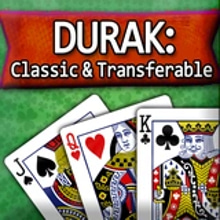
The deck is small, the stakes feel social, and the title no one wants is “Durak”—the fool who finishes last. Durak: Classic & Transferable keeps the table buzzing with fast attacks, sharp defenses, and that delicious moment when a single card flips the script. Thirty-six cards, a revealed trump, and a first attacker chosen; in two breaths you’re already reading suits, counting ranks, and deciding whether to stand your ground or push the problem down the line. Simple rules, real mind games.
♦️ How the table breathes
Durak runs on a heartbeat of attack and defend. On your turn as attacker, you play one or more cards of the same rank into the middle. The defender must beat each card with a higher card of the same suit or any trump. Beat a trump only with a higher trump. If the defender covers every card, the attack fails and those cards go to the discard; the defender becomes the next attacker. If they can’t (or won’t), they pick everything up, the pile becomes their burden, and the next seat clockwise becomes the attacker. Hands refill from the draw pile after each clash until the stock runs dry. When the last card is drawn, the race begins in earnest—empty your hand or wear the name no one wants.
🧠 Classic vs. Transferable—two flavors of pressure
Classic Durak is a straight duel: the attacker aims to overwhelm, the defender aims to parry cleanly. Transferable (also called “passing” or “perevodnoy”) adds a wicked twist—if the defender holds a card of the exact same rank as an incoming attack card, they may transfer the entire attack to the next player by adding that rank. Now the neighbor must defend against all cards on the table. It’s legal only while the ranks match the ones already attacking, and only up to the maximum cards allowed by the player count. The result feels like hot potato with knives: you can turn defense into offense if your timing is bold and your rank sense is sharp.
♣️ Trump speaks louder
One suit flips up after the deal to announce trump; every card in that suit outranks every non-trump. A low trump beats a high off-suit; only bigger trump beats trump. That single rule compresses the entire decision space into questions you can feel in your knuckles. Do you spend a precious medium trump to keep your hand lean, or hold it to punish a later transfer. Do you bluff weakness in a suit to bait an attack you can cheaply cover. Trump is oxygen—use it early to survive, use it late to win.
🔄 Throw-ins, windows, and table rhythm
When your initial attack is on the table, other attackers may “throw in” extra cards that match any rank already involved—only up to the per-round cap (usually 6 in two-player, 6–8 with more). That’s how quick piles turn brutal. Smart attackers drip ranks to invite throw-ins from allies; smart defenders control tempo by covering the highest threats first, then deciding whether to allow safe throw-ins (the ones they can still beat) or shut the window by picking up early. Transferable mode raises the stakes: a defender who could cover might instead pass—if the timing forces the next player to eat a mountain.
🪪 The etiquette of not being the fool
Durak is half tactics, half table sense. You don’t need to win—you need not to be last. That makes “helping” plays logical. If the defender is the current leader with few cards left, rivals often throw in aggressively to stuff their hand. If your neighbor just saved you last round by picking up, you might pay it forward by steering an attack away from them when someone else is bleeding. The social current runs under every decision.
🧰 Tiny tools that win loud rounds
Keep shape: off-suit pairs open transfer routes and double-cover options. Keep count: track how many of each rank you’ve seen; passing a 9 when three 9s are already out is a gift to yourself. Keep one low trump for emergencies—nothing rescues a wrecked defense like a humble trump that clears the last hit. In classic mode, “bleed the middle”: attack with mid ranks (8–10) to draw premium covers without wasting your aces. In transferable, “pin the rank”: attack with a rank you know the defender cannot pass but the next player can’t easily cover; it turns a routine skirmish into a forced pickup on your terms.
🧪 When to pick up on purpose
Taking the pile isn’t surrender; it’s investment. If throw-ins will strip your trumps and leave you naked for the next three rounds, pick up early while the damage is small. Better to eat four cards with structure than survive with two trumps gone and a hand of orphans. In transferable games, a strategic pickup denies the table the “rank highway” they were building—end the party before it reaches your neighbor who would have destroyed you next.
🎯 Attacking like you mean it
A sharp attack starts with information. Lead a single off-suit mid card to sniff for covers; if the defender spends a trump, note it and pivot your plan. If they use a same-suit high, throw in more of that rank to pressure their suit depth. In transfer mode, don’t fire ranks the next player is rich in—watch discards and earlier covers for tells. A great attack ends either with a clean discard (defender covers everything, you stay lean) or with a stuffed pickup that ruins someone else’s tempo. Both are wins.
🛡️ Defending without panic
Cover highest threats first (trumps over off-suits), then clean up with efficient trades—use a 10 of suit to beat a 9 instead of burning a queen, unless you’re setting a future pass. Avoid using your very last trump unless necessary; one survivor trump drives fear around the circle. In transfer mode, passing is a weapon, not a reflex. Only pass if it worsens the next player’s life; passing a rank the next player loves is volunteering to be famous in a bad way.
📈 The endgame squeeze
When the stock runs out, every card matters twice. Light hands win—so dump pairs and duplicates while you still can. Attack to create parity problems: feed two 7s to force two covers of the same rank, then throw the third when the defender is out of suit. Protect your final trump until it removes the last obstacle. Remember, only one player loses; pivot from “attack strongest” to “pressure the weakest” if it ensures you won’t be last.
🎵 Sounds like a card night, plays like a duel
Cards slap with a soft crack; trumps land with a heavier beat; a pass in transferable mode pops like a tiny drum fill as the attack slides right. You start to hear rhythm—quick single-card probes, then a swell of throw-ins, then the hush when someone decides to pick up and reset the room. It’s tactile theater, quick and friendly.
🎨 Clean table, readable ranks, zero fuss
Big pips, crisp suit icons, a face-up trump reminder tucked just so. Legal plays glow politely; pass and pickup prompts never nag. After each exchange, hands refill in order so you can track who likely has depth. The UI doesn’t play for you—it just stays out of your way while you make clever messes.
🌐 Why it sings on Kiz10
Click to sit, blink to learn, and you’re already plotting transfers like a villain with good manners. No installs, smooth animations, instant rematches that turn “one hand” into “best of five” without noticing. Play Classic when you want straight tactics, flip to Transferable when you crave controlled chaos and spicy rank math.
🏁 Last clash, last laugh
Two cards in hand, trump is clubs, and the attack comes as a 9♦ plus throw-ins. You could cover, sure—but you smile, pass a 9♦ to the right, and watch the next player drown under a hail of matching ranks they can’t answer. The pile slides past you like a wave that forgot your name. One turn later you shed your last card and exhale. Not the fool. Not today. Durak: Classic & Transferable is quick wit in card form—attack, defend, pass pressure like a pro, and leave the table with the only title that matters: not last. Load it on Kiz10 and let a small deck prove how big timing feels.
















 Share
Share
 Embed
Embed


