🚪 Doors That Don’t Lead Out
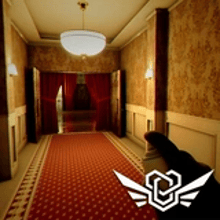
The keycard clicks green; the door sighs open; the hallway looks exactly like the one behind you. Same wallpaper the color of weak tea, same humming lights that buzz in a register your nerves can hear, same carpet pattern spiraling like a polite migraine. Escape from the Backrooms: Hotel Floor Level begins with the gentle cruelty of repetition. The hotel is a maze pretending to be normal, a place where every corridor insists it is the lobby and every exit is somebody’s idea of a joke. You learn quickly that progress is not forward; progress is truth. Which door is honest. Which mirror is shallow. Which elevator is a mouth.
🕯️ Light Is A Negotiation, Not A Comfort
Your flashlight isn’t a weapon; it’s a contract. Keep the beam low and moving, because static light whistles to whatever listens. Batteries drip away faster when you stare into signage, slower when you sweep corners without lingering on the stains that definitely weren’t there before. Power panels crackle behind maintenance doors; reroute a breaker and a section wakes up while another dies. Candles at thrift altars offer a radius of calm you can carry by memory, not sight. The lesson lands early: you don’t banish the dark. You rent a little space from it.
👂 The Hotel That Listens
Air vents speak in rumor. Ice machines grunt like old beasts. An elevator bell dings once in an empty shaft. The hotel watches for noise, not movement. Walk, don’t trot. Close doors gently; slams echo down carpets like thrown stones in a well. When you must sprint, do it with purpose: a three-second burst to clear a blind corner, a slide under a half-lowered security gate, a final lunge at a stairwell that may or may not choose to be stairs today. Every sound is a vote. The hotel counts.
🧭 Maps Lie, Carpets Tell The Truth
Paper maps sketch rectangles; the building draws spirals. You learn to navigate by textile folklore: three diamonds then a cross means the vending machines loop; paisley swirls that break pattern hide service doors; a misprinted stripe marks a seam the world forgot to lock. Elevators are coin flips that sometimes open to storage, sometimes to water, sometimes to floors with numbers you have never met. The stairwell is braver—if the exit bar is warm, someone used it recently. If it’s cold, the steps go nowhere and the landing becomes a cul-de-sac for fear.
🗝️ Keys, Sigils, And Vending Machine Omens
Progress tastes like brass and dust. Skeleton keys rattle in pockets like insects; some open doors, some open memories you didn’t consent to. Sigils bloom in wallpaper glue, subtle figures that align when you dim your light and tilt your head, unlocking latches that never had hardware. Vending machines refuse snacks and deliver clues: a blinking 404 means “don’t take the elevator,” a stuck cola coil means “watch the ceiling,” an out-of-order sign turns the machine into a safe if you slide a coin under its rubber foot. This is puzzle design by superstition, and it is strangely reliable.
👣 Stealth, Sprint, And The Breath Tax
You have three speeds: quiet, rude, and please don’t look back. Quiet is a crouched drift that leaves almost no footprint in the soundscape; rude is a walk with intent, for when the corridor is wide and the vents are calm. Sprint is expensive. Use it to cross open lobbies under chandeliers that flicker like countdowns, or to bait an entity into a loop where a revolving door buys you a heartbeat of invisibility. Breath is a resource. Hold it to pass close to whatever hums behind the linen cart. Exhale when you close a latch so your hands don’t shake the metal into treachery.
📻 Sound Cues As Compass And Warning
Ambient tracks do more than mood. The hum deepens a half step before a blackout. A soft chime across the corridor means a maintenance drone woke and is about to hate you. Television snow behind a door marks a safe room—until the channel changes to a children’s show without children, which means the room remembered what floor it is on and would like you to leave. Pay attention to the HVAC. When the vents sing in thirds, take the next right. When they drop to a single note, the corridor is longer than it looks.
🧠 Sanity Drip, Not Sanity Bar
There’s no meter to babysit, only the honesty of your vision. Corners round too quickly. Carpets ripple when you stand still. Your cursor wobbles a degree to the left the longer you stare at a painting of boats that never saw water. Sanity repairs itself if you act like a person: drink lukewarm water at a fountain, read a housekeeping checklist, tidy a misplaced tray. The hotel respects manners. Break them and it pulls on the loose thread of your calm until the whole sweater is floor-length.
🪞 Things That Wear Human Shapes
Entities here are rumors given bones. The Concierge stands behind empty desks, always just taller than the monitor, a silhouette that leans when you raise your light. Don’t. The Bellhop is kind until you ask directions; it will follow you at a respectful distance, jingling once per minute; if it stops jingling, you run. The Maid hums out of tune and collects lost objects, including you if you drop your flashlight. There’s a pale guest who never blinks; he’s safe unless you ask his floor. All of them obey a single rule: they like habit. Change yours and they forget you—sometimes.
🎮 Controls That Respect Panic
Inputs are merciful. Tap to ease doors, hold to barricade with a chair that weighs more when you’re afraid. Quick-slot charms live where your thumb expects: salt for thresholds, ribbon for knots that meant “do not open,” a hex key that pretends to be a miracle when you need a panel to remember how screws work. The sprint curve is generous at first and rude later; the game wants your early bravery and taxes your late desperation. Crawling under beds is a last resort. The dust tells on you.
📝 Clues, Notes, And Complaints From Other Exits
You’ll find notes wedged under ice buckets and slipped into Bibles with half the psalms glued shut. Some are maps in couplets, some are apologies to doors that wouldn’t open, some are lists of rooms that never existed. Keep them. Certain sets hum when stacked; others rewrite the numbering on your hallway if read aloud in elevator light. The hotel hates graffiti but tolerates recipes. Circle stains that look like moons. They align near the correct stairwell when you squint.
🧪 Failures That Teach Without Scolding
You will pick the wrong door, barricade the wrong way, sprint at exactly the wrong second and watch the wallpaper breathe like lungs. The reset is brisk; the layout is not the same, but the rules are. You learn that mirrors with fingerprint halos are not mirrors, and that polite knocks from empty bathrooms are not invites. You experiment with salt lines and find out which thresholds accept boundaries. You fail into knowledge, then walk straighter the second time because the hotel respects students.
🌐 Why Kiz10 Is The Right Hallway
On Kiz10 the loop stays tight: rapid loads, crisp input, instant retries that turn panic into practice. You can drop in for ten minutes and map a wing by memory, or sink into an hour where you solve the vending machine riddle and start treating elevators like rumors instead of transport. Sharing oddities—the bell that chimed backwards, the corridor that bent twice—feels like swapping campfire notes. The platform keeps the performance smooth while the world refuses to be.
🌙 One More Door, Then The Lobby (Maybe)
Pick a small vow before you step out again. Never open a door that is already apologizing. Only sprint under chandeliers. Read two notes before you trust a map. Keep your beam low, your hands gentle with latches, and your ears ahead of your feet. When the corridor finally breathes different, when the carpet pattern breaks and the elevator opens to a lobby that smells like outside, don’t celebrate yet. Press the button. Watch the numbers. If they go down, step back. If they go up, step in. Escape from the Backrooms: Hotel Floor Level on Kiz10 will be waiting in case you choose wrong—and it will pretend, as always, that it never moved anything at all.





 Share
Share
 Embed
Embed


