🚀 Wake up, run first, ask later
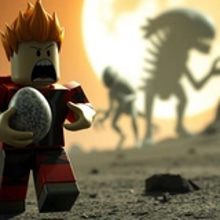
The siren doesn’t ring so much as shiver through the metal, a low note that makes your bones think about leaving. Red lights spin. A door sighs. Something big inhales behind the grating. Obbi: Escape from the Alien throws you into motion before your brain signs the waiver. One moment you’re blinking at a flickering corridor; the next you’re sprinting along hazard rails, springing off pads that feel two sizes too enthusiastic, and calibrating jumps by ear while a shadow the size of a bad idea stalks the catwalk above. It’s pure kinetic puzzle-platforming with a sci-fi heartbeat, simple to understand and gloriously rude to master. You jump or you don’t. You live or you get to practice again. And every practice lap makes your next escape look a little more like choreography and a little less like panic.
🧪 Spaceship logic and parkour grammar
Every room teaches a verb. Yellow pads promise lift if your timing isn’t shy. Magnetic strips cling to your boots and pull you sideways across walls with a low hum that turns into a grin once you trust it. Conveyor lanes whisper momentum tricks, handing you free speed if you step into their rhythm instead of fighting it. Gravity plates toggle weight like a joke only physics majors tell; step light to float, step heavy to slam a landing that sticks. By the third chamber you’re stringing moves together in sentences: bounce, wall-run, pivot, vault, breathe, repeat. The map feels alive, not because it wriggles, but because it rewards the moment you stop forcing inputs and start reading the room’s intent.
👾 The hunter you can hear before you see
The alien is not a jump scare in a rubber suit. It’s patient hunger with good ears. It prowls in loops that make sense as soon as you notice the clues. Vents exhale cool air before it passes. Grates resonate a hair richer when heavy footsteps cross above. A wet chitter clicks through the speakers like a metronome for your fear. If you blunder, it adjusts. If you hide, it waits just a little too long for comfort, then moves on with the confidence of a predator who knows the ship better than you do. Outrunning it is possible; outsmarting it is delicious. Route around its patrol, bait it toward a locking bulkhead, and bolt through the window you created by being rude to danger.
🛰️ Levels that escalate without getting cruel
Early chambers feel like obstacle courses built by engineers in a hurry. The floor is a polite checkerboard of safe tiles and “maybe don’t step there” tiles, platforms slide in predictable cycles, and the final jump asks for bravery you’ll gladly fake. Then the ship stops being courteous. A maintenance bay adds fans that nudge your midair path like a gossiping breeze. The cryo wing is beautiful and slippery; frost halos your steps, and the jump timing you thought you owned gets a new accent. Later, artificial daybreak pours through a cracked dome where the vacuum is having unhelpful ideas, and the only way across is a run of timed magnet strips that ask for breath control and faith in equal measure. The difficulty rises like a well-tuned song, never spiking into nonsense, always hinting at the trick that makes a scary line feel like a victory lap.
🧰 Tools, toggles, and one very persuasive flashlight
Your best gear is ordinary on purpose. A wrist torch slices the gloom without hiding danger, throwing crisp silhouettes that turn edges into decisions. A little multi-tool flips panels and resets doors; in master hands it’s a tempo button, giving you half seconds where panic would usually live. Emergency beacons ping path hints if you’re truly lost, but they never play the game for you. The ship itself keeps offering temptations. A gravity inverter here that buys a rooftop sprint, a maintenance cart there that doubles as an improvised moving platform if you jump while it rolls. Say yes to clever, no to lazy, and the route blossoms.
🎯 Movement that listens to you
Controls are snappy in that way platformers need to be to justify your optimism. Short hops read off quick taps. Held inputs stretch into floaty flights where you can finesse a landing pixel without drama. Air control is generous but not silly; commit early, adjust lightly, and the ship will repay your manners. Slide input trims corners, tucking your momentum under low pipes and slipping you past laser grids that hate hesitations. A late-jump buffer forgives the kind of “I hit that” moments that make other games feel petty. If you fail, you know why; if you stick the landing, it’s because your hands learned a new truth.
🧭 Routes for brains and bravado
Every room wears at least two lines: the obvious path and the one you invent when the floor tells you a secret. You can take the main route and feel heroic. Or you can chain a risky sidewall, skim a fan burst, and summersault onto a pipe that looks decorative until it says hello, shortcut. Speedrunners will map hidden lines with their teeth; casual players will stumble into them and laugh like thieves. The game never scolds either group. It just nods when you’re clever and reloads quickly when you get greedy.
🎧 Audio that coaches without shouting
This is a headphones-happy escape. Pads thump with a pitch that changes by strength, teaching you just how hard to hit them. Fans crescendo a beat before their push peaks; jump then, not after. Lasers sizzle at the edge of your lane like snakes with concert etiquette, warning you when your path is flirting with dumb. The alien’s presence folds in around all this, a low rumble that swells when you’ve loitered too long and drops away when you’re threading a perfect chain. The soundtrack knows when to pump your heartbeat and when to hush so you can listen to the ship breathe.
🌌 Visual clarity with just enough swagger
Neon accents paint interactables without turning the ship into a nightclub. Safe edges glow like polite highlighters; hazards gleam with that “touch me and regret it” sheen. Particle trails broadcast success but never hide the next decision. Color-blind aids add shapes to crucial tiles; reduced-flash mode keeps flourishes kind to tired eyes. Skins for your runner are pure style—chrome visor, hazard-stripe boots, a trail that sketches white chalk through the air like you’re drawing your own map—none of which changes hitboxes or fairness.
💡 Fail smarter, not louder
Deaths are quick, checkpoints are generous, and every reset drops you exactly where your hands still remember the rhythm. That frictionless loop means you’ll experiment. You’ll try the jump early, then late, then with a tiny midair swerve that suddenly clicks. The moment you hit a chain—bounce, wall-run, swing, land, slide—your brain lights up like the ship decided to root for you. The best rooms become small personal speedways you revisit just to feel the flow. Improvement is loud because the ship is honest, and honesty is addictive.
🧠 Tiny tips you’ll pretend you discovered
Aim your body at the exit before you jump anything tall; landing into a turn erases speed. On magnet walls, look where you want the run to end, not where your feet are—your angle will follow your eyes. Take fans diagonally to stretch the push and arrive fresher. Jump earlier than comfort off conveyors; they sneak a few free pixels under your boots. If the alien starts a close loop, hide near noise—sparking panels, rattling pipes, any audio that lets your breath blend. And when panic arrives, shrink the plan to two beats: get stable, then go.
🏁 Why it belongs on your Kiz10 rotation
Because Obbi: Escape from the Alien nails the sweet spot between reflex platforming and environmental puzzle solving, then spices it with a hunter that feels fair and frightening in the same breath. Five minutes buys a clean run through a new room and a cheerfully smug checkpoint. An hour becomes a highlight reel of impossible-feeling shortcuts, last-second vaults, and one glorious moment where you baited a monster into slamming a door you needed closed. It’s sleek, readable, replayable, and tuned to make your hands a little smarter every time you lace up.





 Share
Share
 Embed
Embed


