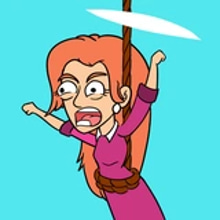
You start a level in Save Her Now and for a moment it looks harmless. A simple scene, a girl in trouble, a few odd shapes on the screen, and a handful of needles waiting for your command. No explosions, no chase sequence, just a quiet puzzle and one big unspoken question. Can you really save her with a few lines.
At first it feels almost too easy. You drag a needle, sketch a quick path, release, and watch the mechanism move. Maybe a shield drops in front of a threat. Maybe a gate opens and something rolls away. Maybe nothing works the way you imagined and the poor girl gets flattened by a falling object you accidentally unleashed. That is the exact moment when the game stops feeling simple and starts feeling personal. Somewhere inside your head a little voice wakes up and says alright, I can do better than that.
A rescue story told in pencil strokes 🧵🧠
Save Her Now is built around a simple idea that stays surprisingly fresh. You are not running or shooting. You are drawing. Needles become tools that let you trace paths, redirect movement, block hazards and trigger sequences. Every stage presents a tiny scene where the girl is seconds away from disaster. Lava, falling stones, spikes, strange contraptions, all waiting for one wrong move. Your task is to look, think, and then design a line that flips the script from helpless to safe.
Instead of text heavy tutorials, the game trusts you to learn by messing up. You see a hanging object above her head and instinct says draw a barrier. Then you realise the object was meant to hit a different threat. You see a rolling boulder and decide to block it, only to discover that blocking it too early creates a new danger on the other side. This constant back and forth between clever and clumsy is exactly what makes the puzzles feel alive.
Listening to the level before you draw 👀✨
The most important thing you do in every stage happens before the first stroke. You stop. You scan the scene. You try to imagine what will move once you touch the screen. Where will the rock roll. Which platform is going to tilt. What happens if that rope breaks. The game quietly rewards players who treat each level like a little story that has not happened yet.
You start noticing tiny details. A crack under a block that suggests it will fall. A slightly slanted surface that clearly wants to send something sliding. A hazard sitting just close enough to the girl that you know it will wake up the second the puzzle begins. Instead of rushing to draw, you run the future in your head a couple of times, then sketch the line that fits that mental rehearsal. When reality matches your prediction and everything falls exactly where you expected, it feels incredibly satisfying.
When one line changes everything ✏️💥
There is a special feeling that only line drawing puzzle games can give. You drag a single continuous stroke, lift your finger, and then just watch. In Save Her Now that moment is almost dramatic. Your line becomes real. It turns into a barrier, a ramp, a shield, a weird bridge that only makes sense in your imagination but somehow works.
Sometimes the result is clean. The hazard hits your line, slides away, and the girl stands there completely safe while you grin at the screen like you just solved a real life problem. Other times the line bends the wrong way, breaks at a weak point, or fails to connect where you thought it would. The danger slips through, and the level ends in a mess of ragdoll physics and regret. You press restart faster than the game can tease you because now you have a new idea. That loop of draw, watch, adjust becomes strangely addictive.
Hazards that want you to panic ⚠️🔥
Save Her Now knows that puzzles feel better when the danger looks just a little exaggerated. Hazards do not creep politely. They swing, fall, explode, slide, bounce, and pile up. A simple drop of one object can trigger a chain reaction where several moving parts come to life at once. Walls collapse, platforms slide, spikes swing from above, and your poor drawing has to survive all of it.
The trick is not to panic when everything starts moving. The first few times, you will. You will draw a line that looks fine at rest but collapses the moment a heavy object hits it. You will protect the top of the scene and completely forget about a threat coming from the side. You will underestimate how far something will roll once gravity takes over. Each failure feels sharp for a second and then turns into fuel for the next attempt. You start to respect weight, direction, and timing in ways you did not expect from such a simple looking game.
Small improvements that feel like real skill 🧩⭐
One of the best things about Save Her Now is that your progress is not just in levels cleared. It is in how your brain changes as you play. Early on, your lines are messy. You scribble thick shapes, overprotect everything, and hope brute force will be enough. Slowly, your drawings get leaner and smarter. You start using diagonal lines instead of heavy blocks. You build neat hooks that catch falling objects. You draw supports in just the right spots so a thin shield can handle heavy impact.
You also learn to think in sequences instead of single moves. Maybe one line can both block a hazard and guide a rolling object into a safe zone. Maybe you can build a small ramp that sends a threat away while also lifting the girl out of danger. When you finally pull off a solution that solves three problems at once, it feels like a magic trick you invented on the fly. That is the kind of improvement that keeps you locked in for one more puzzle even when you promised yourself you were done for the day.
Chasing perfect clears and clever solutions 🧠🏆
Because the mechanics are so approachable, the game leaves space for your own challenges. It is not enough just to survive. You start aiming for beautiful saves. Maybe you want to protect her using the shortest possible stroke. Maybe you want to survive a level without letting certain hazards move at all. Maybe you replay a stage you already cleared just because you thought of a cleaner solution in the shower and now you need to see if it actually works.
That small layer of personal goals makes the game feel bigger than its simple structure. You are no longer just reacting. You are expressing a bit of your own style through the lines you draw. Minimalist players will focus on small precise shapes. Chaotic players will sketch wild curves that somehow still manage to hold everything together. Both approaches work, and watching your own style evolve over time is part of the fun.
Why it fits so well on Kiz10 🎮💖
On Kiz10, Save Her Now slides perfectly into that spot between casual fun and brain teasing challenge. You can open it for a couple of quick levels during a break, or sink into a longer session where you chase progress across a whole set of stages. There are no giant downloads, no complicated menus to learn. You load the game, see the girl in trouble, study the scene for a few seconds, and draw.
It is also the kind of title that feels good to return to. Even if you have been away for a while, the basics come back instantly. Move your finger or mouse, trace, release, react. The levels still offer clever surprises, and your old instincts about weight and timing return after only a few attempts. That makes it a comfortable regular stop in your Kiz10 puzzle routine, especially if you enjoy games where creativity matters as much as logic.
If you like line drawing challenges, rescue puzzles with a bit of drama, and that very specific rush of watching a risky sketch actually protect someone, Save Her Now is exactly the sort of game that will quietly grab your attention. Step into each scene, take a breath, read the dangers, and then draw like her life depends on it. In this game, it really does.





 2.5 (159 votes)
 Share
Share
 Embed
Embed


