☁️ 𝗢𝗡𝗘 𝗕𝗔𝗟𝗟, 𝗢𝗡𝗘 𝗡𝗔𝗥𝗥𝗢𝗪 𝗥𝗢𝗔𝗗, 𝗔𝗡𝗗 𝗭𝗘𝗥𝗢 𝗥𝗘𝗔𝗦𝗢𝗡 𝗧𝗢 𝗙𝗘𝗘𝗟 𝗖𝗔𝗟𝗠
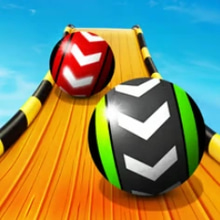
Sky Balls 3D is the kind of game that looks simple from a distance and then immediately turns into a personal argument between your reflexes and gravity. You are not driving a car, not controlling some giant machine, not waving around fancy powers. You are guiding a ball across narrow tracks suspended way too high above the void, and somehow that is enough to create stress, obsession, and a truly unreasonable number of restarts.
That is the beauty of it. The idea is tiny. Stay on the path. Do not fall. Easy, right? Absolutely not. The second the rails disappear, the curves tighten, and the path starts behaving like it actively dislikes your confidence, Sky Balls 3D becomes a real skill game. It stops being about moving forward and starts being about balance, restraint, and that tiny moment before every turn where you either handle it cleanly or learn a dramatic lesson about oversteering.
On Kiz10, it feels like a perfect arcade challenge for players who love quick reflex games, rolling ball physics, and the special kind of tension that only happens when the floor is thin and the punishment for failure is pure sky.
🎯 𝗧𝗛𝗘 𝗥𝗨𝗟𝗘𝗦 𝗔𝗥𝗘 𝗘𝗔𝗦𝗬. 𝗧𝗛𝗘 𝗧𝗥𝗔𝗖𝗞 𝗜𝗦 𝗡𝗢𝗧.
What makes Sky Balls 3D work so well is how brutally direct it is. The game never tries to hide what matters. Keep the ball on the track. Avoid barriers. Survive the turns. Reach the end. That clarity is a huge strength. You never spend time trying to understand the goal. You understand it instantly. The hard part is actually doing it well once the game decides to stop being polite.
That shift comes fast. Early levels ease you in just enough to make you think you understand the system. Then the road narrows. The edges vanish. Obstacles begin showing up in worse places. Curves start arriving with just enough speed to make your corrections feel dangerous. It is a very effective kind of escalation because it keeps the same core idea but asks more and more from your control.
That is how good skill games get you. They start simple, then quietly become cruel in a way that feels fair enough to keep retrying.
⚖️ 𝗕𝗔𝗟𝗔𝗡𝗖𝗘 𝗜𝗦 𝗠𝗢𝗥𝗘 𝗜𝗠𝗣𝗢𝗥𝗧𝗔𝗡𝗧 𝗧𝗛𝗔𝗡 𝗦𝗣𝗘𝗘𝗗
A lot of players go into games like this thinking faster is better. Sky Balls 3D does a very good job of teaching the opposite. Speed is useful, sure, but control is everything. The most dangerous moments are often not the obvious gaps. They are the small overcorrections. The extra bit of panic on a narrow bend. The one move that sends the ball too far to one side and leaves no space to recover.
That is why the game feels so satisfying when a run goes well. You are not just reacting wildly. You are finding that sweet spot between movement and restraint. The ball starts to feel lighter, the route becomes more readable, and the next few obstacles actually seem manageable. That is usually the moment confidence arrives and ruins something, but until then it feels fantastic.
This is where the best part of the game lives. Not in raw speed, but in that calm little zone where your timing is clean and the track finally makes sense for a few precious seconds.
🪙 𝗖𝗢𝗜𝗡𝗦 𝗔𝗟𝗪𝗔𝗬𝗦 𝗠𝗔𝗞𝗘 𝗥𝗜𝗦𝗞 𝗠𝗢𝗥𝗘 𝗧𝗘𝗠𝗣𝗧𝗜𝗡𝗚
Sky Balls 3D gets more addictive because it gives you things to chase beyond survival. Coins matter. Keys matter. Unlockables matter. That is important because it means every run has more than one reward loop working at once. You are trying to stay alive, yes, but you are also collecting currency and building toward better visuals, new skins, and a more personalized experience.
That small system adds a lot. Suddenly the track is not only a path to survive. It is a path full of temptation. Do you stay in the safest line, or drift a little farther out for one more coin? Do you play clean, or go slightly greedy because the unlock you want is starting to feel close? These are tiny decisions, but in a ball runner with no safety rail, tiny decisions become very loud.
The unlock system is also smart because it gives the grind a purpose. A hard level feels less frustrating when even imperfect runs still bring in something useful.
🌌 𝗡𝗘𝗪 𝗦𝗞𝗜𝗘𝗦, 𝗡𝗘𝗪 𝗕𝗔𝗟𝗟𝗦, 𝗦𝗔𝗠𝗘 𝗢𝗟𝗗 𝗚𝗥𝗔𝗩𝗜𝗧𝗬
The cosmetic side of Sky Balls 3D does more than decorate the experience. New scenery, landscapes, sky-boxes, and ball skins help keep long play sessions from feeling visually flat. That matters more than it sounds. Games built around repetition need little visual rewards to keep the grind feeling fresh. A different sky, a different ball, a different atmosphere, those changes give the game a stronger sense of progression even when the core challenge stays brutally consistent.
And because the world is already built around height and emptiness, visual variety helps the levels feel like places instead of just floating test tracks. One environment might feel calmer. Another might feel colder. Another might make the track feel even more exposed than it already is. The gameplay remains about control, but the surrounding world gives each run a different mood.
👥 𝗧𝗪𝗢 𝗣𝗟𝗔𝗬𝗘𝗥 𝗠𝗢𝗗𝗘 𝗠𝗔𝗞𝗘𝗦 𝗧𝗛𝗘 𝗦𝗧𝗥𝗘𝗦𝗦 𝗘𝗩𝗘𝗡 𝗕𝗘𝗧𝗧𝗘𝗥
One of the strongest parts of Sky Balls 3D is that it is not locked into solo play. The two-player mode is exactly the kind of feature this type of game benefits from. A rolling ball challenge is already intense when you are alone. Add another player on the same screen and the whole thing becomes more entertaining instantly. Now you are not only trying to control your own ball. You are also trying not to get distracted by somebody else’s disaster happening right next to you.
That is what makes local multiplayer so fun here. The rules are still simple, but the tension doubles because attention becomes part of the fight. A glance at the other side of the screen can cost you the run. A small mistake becomes funny faster. A clean finish feels more satisfying because somebody else was under pressure at the same time.
It turns the game from a personal test into a shared argument about who has better nerves, better timing, or simply less panic in their hands.
🧠 𝗧𝗛𝗘 𝗧𝗥𝗔𝗖𝗞 𝗔𝗟𝗪𝗔𝗬𝗦 𝗪𝗔𝗡𝗧𝗦 𝗬𝗢𝗨 𝗧𝗢 𝗚𝗘𝗧 𝗖𝗢𝗖𝗞𝗬
A big reason Sky Balls 3D stays fun is that it keeps tempting players into mistakes. The track often looks manageable right before it becomes mean. A clean stretch encourages you to relax. A wide section makes you think the danger passed. Then the next turn arrives, the road narrows again, the barrier placement gets ugly, and suddenly you are watching the ball disappear into the sky because your brain made one optimistic assumption too many.
This kind of design is excellent because it keeps the game honest. You cannot autopilot for long. You have to stay engaged. Every level feels like it is trying to trick you into overconfidence, and that makes each success feel sharper.
🏆 𝗪𝗛𝗬 𝗦𝗞𝗬 𝗕𝗔𝗟𝗟𝗦 𝟯𝗗 𝗪𝗢𝗥𝗞𝗦
Sky Balls 3D succeeds because it keeps everything focused on the right things. Clean controls. Immediate danger. Fast retries. Visible progression. Unlockables that make the grind worthwhile. A two-player mode that turns pressure into chaos. It does not need complicated mechanics when the central challenge is already strong enough.
On Kiz10, it is a very strong pick for players who enjoy balance games, 3D reflex challenges, rolling ball runners, and arcade levels that look simple right up until they humiliate you. It has that perfect combination of easy to understand and hard to master, which is exactly what a browser skill game should have.
So keep the ball centered, trust the turn just enough, and try not to get distracted by how far down the void goes. In Sky Balls 3D, the fall is always waiting. The fun part is how long you can keep saying no.





 2.5 (213 votes)
 Share
Share
 Embed
Embed