💙 A blue blur with a new reason to run
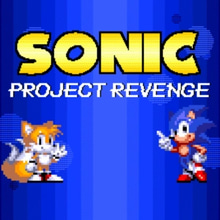
Sonic Online: Project Revenge drops you into motion so fast it feels like the level is already running without you. One second you are standing still, the next you are sprinting because the ground basically dares you to stop. This is not a slow adventure where you admire the scenery like a tourist. This is a platform game that wants you to move, react, improvise, and sometimes laugh at yourself when a perfectly confident jump turns into a dramatic fall you absolutely saw coming.
There is a different kind of tension when the game is built around speed. You are not only thinking about where to go, you are thinking about how to arrive there without losing your flow. Rings glitter like tiny promises. Slopes whisper free momentum. Springs feel like punctuation marks in a sentence you are writing with your feet. And somewhere in the background, the revenge theme sits like a little spark in your chest, pushing you forward when your fingers want to ease up.
🌀 Spin, bounce, recover, keep your rhythm alive
The movement in Project Revenge is the whole show. Sonic feels best when you treat speed like a living thing you have to feed. Run too cautiously and the level feels heavy, like you are dragging your shoes through glue. Run too reckless and you become a pinball, ricocheting off hazards with the kind of energy that is funny until it costs you a clean run.
The spin becomes your best friend. It is the quick answer to enemies and obstacles, the move that says I am not stopping for you. Jumps are the second half of the conversation. Short hops keep your speed. Big leaps buy you distance but can also steal your control if you land on the wrong angle. The game quietly teaches you this by letting you fail in the most educational way possible. You will jump too early, land too late, and watch your momentum evaporate. Then you try again, and suddenly you land clean and it feels like the whole level exhales with you.
💍 Rings, risk, and that greedy little voice
Rings are more than shiny collectibles. They are your confidence meter. When you have a pocket full of them, you move differently. You take bolder lines. You try the sketchy shortcut. You jump into a cluster of enemies because you think you can thread the needle and keep going. When you have none, you feel exposed, like every spike is personally offended by your existence.
The game plays with that psychology. It places rings in the places you want to be, along fast routes, near tempting ramps, over gaps that make you hesitate for half a second. You start doing mental math while you run. Do I go for that ring line if it means landing close to a hazard Do I take the safer path and lose speed Do I trust myself not to panic if something goes wrong
And then you do the most human thing. You go for it anyway. Sometimes it works and you feel like a genius. Sometimes you get clipped, rings explode everywhere, and you sit there staring at the screen like, wow, I really did that to myself.
🧱 Levels that reward curiosity, not just speed
Project Revenge is fast, but it is not empty. The best moments often happen when you start looking for secrets without fully slowing down. Hidden routes tucked behind breakable spots. Side tunnels that lead to ring stashes. Platforms that only make sense if you hit them from an odd angle with enough momentum.
It becomes a kind of playful investigation. You see a suspicious wall and think, that looks like a secret. You notice a ramp that sends you somewhere off camera and you decide to take it, even if it costs you a clean race line. Sometimes you find a shortcut that makes you feel like you unlocked a private lane. Sometimes you find a trap that exists purely to humble you. Either way, the level design keeps you awake.
And the best part is that exploration still feels like Sonic. You are not crawling around reading signs. You are discovering by moving. You are learning the map by colliding with it at high speed and gradually turning chaos into familiarity.
⚙️ Obstacles that steal momentum and dare you to earn it back
The enemies and hazards are not just there to hurt you. They are there to interrupt your rhythm, to force tiny decisions. Spikes make you choose your landing. Moving threats make you time your approach. Tight corridors make you commit to a line and then live with it.
A lot of the difficulty comes from the way speed amplifies everything. A jump that is easy at low speed becomes a tiny nightmare when you are flying. A corner that feels harmless becomes a wall magnet if you enter it too wide. The game is constantly asking, can you stay calm while everything is moving
And when you mess up, the real challenge is recovery. Not the dramatic recovery, not the heroic comeback music, the practical recovery. Rebuilding momentum. Getting back into the flow. Not letting one mistake turn into five. That is where players start to feel improvement, when they stop spiraling and start resetting quickly.
👊 Revenge energy and the satisfying bite of combat
Even in a speed focused platform game, there is something deeply satisfying about smacking enemies out of your path. It is not about stopping to fight, it is about clearing space. Spin into a threat, bounce off, keep moving. It feels clean when you do it right, like the enemy was just another stepping stone you used without permission.
Sometimes combat becomes part of your movement plan. You bounce off an enemy to reach a higher platform. You use a target as a mid air correction. You chain hits in a way that keeps you afloat for an extra second, and that extra second becomes the difference between reaching a secret ledge and falling into a pit while whispering no no no at your own hands.
The revenge vibe adds a little spice here. It makes the chase feel purposeful. Like you are not only collecting rings, you are pushing forward with intent, refusing to be slowed down, refusing to let the world push you around.
⏱️ Clean runs, messy runs, and why you keep restarting
This game is built for replay. Not because it forces you to repeat content, but because it makes you want to. You finish a section and immediately think, I could do that faster. I could take that corner cleaner. I could grab those rings without losing speed. I could hit that ramp at the right angle instead of launching myself into embarrassment.
That is the trap in the best way. The levels start living in your memory. You remember where the dangerous part is. You remember where the ring line sits. You remember the spot where you always panic jump. And then you start rewriting your own habits.
Some runs become smooth and almost quiet, like you are gliding through the map with practiced confidence. Other runs become glorious disasters, full of wrong turns and accidental discoveries. Both are fun because the game keeps its energy high and its pacing snappy. You do not have to commit to a long session to feel progress, but if you do commit, you can really feel your hands getting smarter.
🎮 Why it hits so well on Kiz10
Sonic Online: Project Revenge fits Kiz10 because it delivers instant action with real skill growth underneath. It is easy to jump in for a quick burst of speed, collect rings, punch through a few hazards, and step away. It is also dangerously easy to stay, chasing a cleaner run, a better route, a smoother flow.
If you love Sonic style platform games, speed running vibes, ring collecting, secret hunting, and that very specific joy of turning a chaotic first attempt into a controlled, stylish run, this one scratches the itch. Keep moving. Keep your rhythm. Take the risky line once in a while. And when the level throws something rude at you, do the most Sonic thing possible. Shake it off, spin forward, and run like the map is trying to catch you.





 Share
Share
 Embed
Embed


