🎾 Fast hands, thin margins, zero mercy
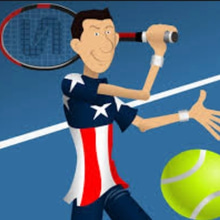
StickTennis wastes no time pretending to be gentle. It grabs a racket, points at the baseline, and tells you to survive. That is the mood from the start. This is not one of those sleepy sports games where nothing happens for twenty seconds and then someone politely taps the ball back over the net. No. StickTennis lives in that dangerous little zone where the rally is always one second away from becoming chaos. The pace is brisk, the timing matters, and the pressure has this funny way of sneaking up on you. One moment you are calmly trading shots, the next you are scrambling, swinging late, and wondering why the ball suddenly feels like it is moving with personal hatred.
On Kiz10, that makes the game instantly appealing. You click in, you understand the goal in a heartbeat, and suddenly you are locked into a pure tennis challenge built around reflexes, rhythm, and just enough panic to keep the whole thing alive. It feels sporty, yes, but not stiff. More like a stripped-down duel. Cleaner than a big simulation, sharper than a casual toy. There is no wasted padding. Every rally asks something from you. Every return matters. Every point has teeth.
That is the beauty of a game like this. Tennis, at its core, is already dramatic. Two players. One ball. Tiny margins. Reactions doing half the talking. StickTennis takes that built-in drama and squeezes it into a faster, punchier arcade format where every exchange feels urgent. You do not drift through matches. You stay alert. Or you lose. Usually in a way that feels slightly insulting.
⚡ The ball travels faster than your excuses
The first thing that hits you is how much the game depends on timing. Not complicated timing, not weird system-heavy timing, just that brutal, honest sports-game timing where you either read the shot correctly or you do not. Hit too early and the return goes wrong. Hit too late and the point starts slipping away before you can fix it. There is something wonderfully unforgiving about that. No gimmick can save you forever. Eventually it comes down to whether your eyes, hands, and brain are working together like civilized teammates or collapsing into a small internal argument.
And when the rhythm clicks, oh, it feels great. Suddenly the game opens up. You start sending cleaner returns. You anticipate the angle a little sooner. You move from reacting to controlling. That shift is satisfying because it feels earned. StickTennis does not just hand you flashy moments. It makes you create them through good reads and sharp responses. One strong rally can feel like a tiny masterpiece. Not a huge dramatic opera, more like a very precise robbery carried out with a tennis racket.
The pace helps a lot. Matches do not drag. Points stay lively. The ball movement keeps enough speed to force real attention without turning into unreadable nonsense. That balance is important. Too slow, and the game becomes flat. Too fast, and it becomes guesswork. StickTennis sits in a sweet spot where tension builds naturally. You always feel like you have a chance, but also like one lazy moment will ruin everything. Which, to be fair, is tennis in a nutshell.
🧠 Rallies that feel like arguments
One of the best things about StickTennis is how every rally develops its own personality. Some points are quick and brutal, over before your shoulders even relax. Others stretch out, turn awkward, and become these stubborn little tests of nerve where both sides keep finding a way to stay alive. Those longer exchanges are where the game really starts showing its character. You can feel the pressure building with every shot. Not loud pressure. Tight pressure. The kind that makes your fingers a little more careful and your mistakes a lot more obvious.
That is where the mental side sneaks in. You are not just swinging at a ball. You are reading patterns. You are noticing whether your opponent is forcing pace or trying to drag the exchange wider. You are deciding, sometimes in a split second, whether to stay safe or go aggressive. Good sports games always hide these choices inside simple actions, and StickTennis does that beautifully. It never feels cluttered, but there is more thought in it than first appears.
Also, let us be honest, there is a special kind of frustration that only tennis games create. You fight through a long rally, defend well, finally get a chance to take control, and then send the ball into a terrible position because your timing slipped by the tiniest amount. Awful. Completely your fault. Deeply memorable. That sting is part of why winning feels so satisfying. The game keeps you close enough to success that failure always feels personal.
🏟️ Tiny court, giant drama
Sports games do not need giant systems to create emotion. Sometimes all they need is a narrow space and a fast-moving object that refuses to be reasonable. StickTennis understands this better than a lot of bigger games do. The court becomes a pressure chamber. The baseline feels important. The angle of every return matters more than you expect. It turns a familiar sport into something almost duel-like, where positioning and reactions combine into these rapid little bursts of strategy.
There is also an odd elegance to how readable it all feels. The action remains clean. You are not buried under menus, modifiers, or endless mechanical clutter. You see the shot, judge the movement, make the swing. That directness gives every point a nice clarity. If you win, you know why. If you lose, you usually know why too, even if your first instinct is to glare at the screen and invent a conspiracy.
And yes, the game absolutely has that “one more match” curse. You lose a close point and want revenge. You win a tense rally and want another. You feel yourself improving in small, satisfying increments, and suddenly stopping becomes weirdly difficult. That is a strong sign. Good arcade sports games do not only entertain. They tempt. They keep the challenge visible. StickTennis always feels beatable, which is exactly why it keeps pulling you back in.
🔥 Arcade tennis without the dead air
A lot of tennis games struggle with pacing because real tennis contains pauses, setup, routine, small resets. That works beautifully in real life. In a browser game, not always. StickTennis solves the problem by trimming away the dead air and keeping the emotional core intact. You still get the suspense, the angle play, the sudden reversals, the pressure of a crucial return. You just get them faster, cleaner, and with a little more bite.
That makes the whole thing feel energetic instead of ceremonial. You are always engaged. Always watching the ball. Always one movement away from either a smooth winner or an embarrassing mistake. There is something addictive about that state. It sharpens your focus without exhausting it. You can jump in for a quick session, play a few matches, and come away feeling like you actually had to perform rather than just consume the game passively.
It is also why StickTennis works well for players who do not usually chase big sports simulators. You do not need deep technical knowledge to enjoy it. You just need reactions, timing, and a willingness to accept that this small yellow ball is about to control your emotions for a while. Not forever. Just long enough to make the next match feel absolutely necessary.
😎 Why StickTennis belongs on Kiz10
StickTennis fits Kiz10 so naturally because it delivers exactly what an online tennis game should: fast access, quick competitive tension, simple controls, and satisfying rallies that reward skill. It is easy to start, tough to master, and endlessly replayable because the sport itself carries so much tension inside such a clean structure. One rally can tell a whole story. One return can save a point. One mistimed swing can ruin a perfectly good plan. Brutal little sport, really.
If you enjoy tennis games, reflex-based sports challenges, precision timing, and head-to-head arcade competition, this one is a perfect pick. It captures the good stuff without dragging in the heavy stuff. No unnecessary complexity. No boring downtime. Just pressure, pace, and a court that feels smaller every time the rally gets serious.
StickTennis is sharp, lively, and weirdly intense for something built around hitting a ball back and forth. That is exactly why it works. It respects your reactions, punishes lazy timing, and rewards those moments when everything aligns and the return lands clean. On Kiz10, it becomes the kind of sports game you open casually and then keep playing because the last loss annoyed you, the last win felt excellent, and the next match might be the one where you finally look completely in control. Or completely not. Either way, you are hitting that play button again.



 4.5 (23 votes)
 Share
Share
 Embed
Embed