🌲 Daylight Feels Like a Lie, But You’ll Take It Anyway
Survival Sandbox for 99 Nights drops you into a forest that looks almost calm if you squint. Trees, fog, quiet paths, that soft daylight that makes you think, maybe this won’t be so bad. Then the objective hits you like a cold hand on the neck. Four kids are missing. The woods keep changing. And you have ninety nine nights to find them before the place decides they belong to it.
This is a survival sandbox game with a horror heartbeat. It’s not about finishing a checklist. It’s about learning the forest’s personality. You explore, you improvise, you carry fear in your pocket like a flashlight with dying batteries. The forest doesn’t just sit there waiting for you to be brave. It tests you. It shifts after sunset. It hides the children in places that feel designed to make you second guess every turn. And the longer you stay alive, the more you realize the real opponent isn’t only wolves or bears. It’s time.
🧭 The Map Changes, So Your Confidence Has to Change Too
One of the first things you notice is that “knowing the area” doesn’t mean what you want it to mean. The woodland feels wide, and worse, it feels unstable. Paths that looked safe yesterday don’t feel safe today. A route you trusted becomes a trap because the forest rearranges itself with each sunset like it’s bored and you’re its entertainment.
So you start navigating with instincts. Landmarks become precious. A certain rock, a weird tree shape, a clearing that smells like smoke, anything your brain can cling to. You learn to drop your ego quickly. You don’t own this place. You’re borrowing it, and the forest can repossess you whenever it wants.
And that’s the weird magic. Every day feels like a fresh run even if your character continues. You can’t autopilot. You can’t get lazy. The game keeps you awake.
🛠️ Daytime Is Your Workshop, Nighttime Is Your Trial
The day night cycle is the spine of everything. Day is when you act like a planner. You gather supplies, scout areas, craft tools, think about routes, build a mental plan that makes you feel competent. You find food, collect materials, maybe secure a weapon, maybe set yourself up with some cover. You almost start believing you’ve got a system.
Then dusk arrives and the forest changes its voice. Night is when the game stops being polite. Sounds feel closer. Movement feels faster. You can’t see as well. Threats feel like they’re waiting specifically for the moment you get distracted. The vibe turns from survival sandbox to survival horror, and you feel it in your shoulders.
And you begin to respect the clock. Not in a cute way. In that tense gamer way where you look at the sky and think, okay, I have to be somewhere safe before it gets fully dark. Because once it’s dark, mistakes stop being funny.
🐺🐻 Hunger, Health, and the Ugly Truth About Panic
The health and hunger system is the quiet pressure that never leaves. You can be brave for ten seconds, but hunger is patient. It waits. It drains you slowly until you start making risky choices. You chase food deeper into the woods. You take a fight you shouldn’t. You sprint when you should be sneaking. Your stomach becomes this annoying little narrator that keeps reminding you you’re not a hero, you’re a human.
And the enemies aren’t just decoration. Wolves come in groups, fast and hungry, forcing you to decide whether to stand your ground or break into a run and pray you don’t hit a trap. Bears are that heavy kind of danger. Not speedy chaos, more like unstoppable consequences. You can feel the difference in your decisions. Wolves make you twitchy. Bears make you careful.
The best runs aren’t the bravest. They’re the ones where you stay fed, stay aware, and don’t let panic steer the controller.
🧒 Finding the Children Feels Like Finding Hope With Mud on It
The children aren’t just collectibles. The game makes their presence feel like the reason you keep going. They’re hidden in treacherous areas that don’t want visitors. When you finally locate one, it’s not a victory lap. It’s a new responsibility. You have to escort them to safety, and suddenly your movement changes. You stop playing like a lone survivor. You play like a protector.
That escort part is where the forest feels cruel in a very smart way. Because now you’re not only thinking about your own health and hunger. You’re thinking about keeping someone else alive in a place that actively hates the idea. You’ll take safer routes. You’ll avoid fights you might have taken earlier. You’ll hesitate more, and that hesitation can be dangerous too.
It creates this tight emotional loop. Relief, then pressure. Success, then a new kind of fear.
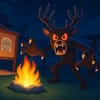
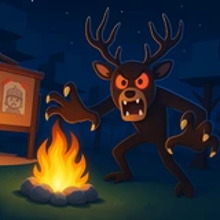
🦌 The Deer Is Not a Boss, It’s a Rule
And then there’s the Deer. The guardian. The one that makes the forest feel like it has a crown and it’s wearing it with pride. Ordinary weapons don’t solve this problem. That’s the point. The Deer is the thing you can’t brute force into submission. You can scare it off, outwit it, temporarily subdue it, but you don’t “win” by simply upgrading your damage and charging in.
That design choice changes the whole mood. You stop thinking like a power fantasy player. You start thinking like a survivor. You use cover. You listen. You move smarter. If you treat the Deer like a normal enemy, the game teaches you a lesson fast, and it doesn’t do it gently.
The Deer shows up at night when fear already has leverage. It’s the kind of threat that makes you whisper, not now, not now, not now, while your character is doing everything they can to not be seen. And when you manage to shake it off, you don’t feel like a warrior. You feel like someone who got away. Which is honestly more satisfying in a horror survival game.
🕯️ Little Decisions Become Big Stories
The beauty of this kind of sandbox survival is how it creates stories out of tiny choices. You remember the night you ran low on food and had to gamble on a risky path. You remember the time you found a child and then had to guide them through darkness while something moved behind the trees. You remember the moment you heard wolves and realized you were standing in the open like a fool.
It’s cinematic without forcing a cutscene. The forest supplies the camera angles in your head. Fog between trees, a flicker of movement, the sound of something breathing too close, the sudden relief of daylight like a reset button you didn’t deserve.
And because the world shifts, the same “mission” can feel different every time. You start planning, adapting, improvising. Some sessions you feel clever and steady. Other sessions you feel like the forest is laughing at you and you’re only alive because it hasn’t decided to finish the joke yet 😅
🔥 Why You’ll Keep Coming Back on Kiz10.com
Survival Sandbox for 99 Nights works because it combines exploration, crafting, and resource management with a constant night threat that never stops mattering. It’s a free online survival horror experience where the day night cycle actually changes how you think. Day is strategy and preparation. Night is fear and execution. And the Deer is the reminder that you’re not here to dominate the forest, you’re here to survive it long enough to bring the children out.
If you like open world survival games with tense night phases, shifting environments, and that steady pressure of hunger and danger, this one grabs you fast. You’ll play “one more night” and then realize you’ve been doing that for a while. Keep moving, stay fed, respect the sunset, and don’t confuse bravery with noise. In this forest, silence is a skill.





 Share
Share
 Embed
Embed