🏰 The Castle Door Closes Behind You
Sword Road begins with that classic, deliciously dramatic problem: you could stay home and be safe… or you could step outside and become a story people tell later. So you do the dumb brave thing. You put on armor that clinks like confidence, you grip a sword that feels heavier than your plans, and you leave the warm calm of the castle for valleys that look like they’ve never heard the word peace. The air feels sharper out there. The silence isn’t friendly. Even the trees look like they’re judging you. And somewhere ahead, enemy fortresses sit like ugly punctuation marks at the end of every road.
This is a melee-first medieval action adventure where your survival depends less on button-mashing and more on reading the room. Except the “room” is a battlefield and the “reading” involves watching a soldier’s shoulders to predict where the blade is going. It’s personal combat. Close, loud, messy. The kind of fighting where you can practically hear your own heartbeat in the helmet. 😅
⚔️ Steel Conversations and Bad Manners
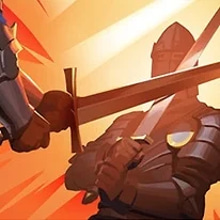
The combat in Sword Road feels like a conversation that keeps getting interrupted by violence. Enemies don’t wait politely for you to finish a combo. They swing when they feel like it. They crowd when they think you’re weak. They punish impatience. So you learn quickly that the sword is only half your personality. The shield is the other half, and honestly, it’s the smarter half.
Blocking isn’t a “maybe” here. It’s a lifestyle. You raise your shield, feel the impact rattle through your arms, and in that split second you get information. How fast is this enemy? Do they follow up with a second hit? Do they hesitate? That’s when you start turning defense into offense. A clean block, a tiny pause, then a counterattack that feels like you just corrected someone mid-sentence. No screaming, no panic, just a sharp response. It’s incredibly satisfying when it works. It’s also incredibly humiliating when you mistime it and eat a hit you absolutely saw coming. 🙃
Sword Road keeps pulling you toward that sweet spot where you’re calm enough to wait but sharp enough to strike. The game wants you to stop swinging like you’re swatting flies and start swinging like you mean it. One well-placed blow beats ten frantic slashes, and the moment you accept that, the whole adventure feels different.
🛡️ Patience, the Most Annoying Superpower
There’s a particular kind of bravery that isn’t flashy. It’s the bravery of not rushing into a crowd. Sword Road rewards that kind of restraint. You see a group of enemies and your instincts scream, go now, be heroic, do the movie thing! But the movie thing is how you get surrounded. So you do the unglamorous thing instead. You lure one or two. You isolate. You punish. You breathe. You move forward only when the space feels yours again.
It sounds slow on paper, but in practice it’s tense in the best way. Because while you’re being patient, the world is still dangerous. Valleys can hide treasures, sure, but they can also hide the kind of ambush that turns your heroic march into a frantic scramble. You start scanning the environment like a paranoid tourist. That rock looks suspicious. That narrow path looks like a trap. That quiet corner feels too quiet. And your caution starts paying off in small victories that feel earned, not gifted. 😌
🌲 Dark Forests, Mean Fortresses, and the Road That Hates You
The journey itself is half the mood. Sword Road isn’t just “arena fights,” it’s movement through hostile places that feel designed to wear you down. A dark forest can feel like it’s swallowing the light, pushing you to listen harder for footsteps and steel. A fortified citadel changes the energy completely. Tight corridors, defensive positions, and that sense that you’re walking into someone else’s territory with your name already on the guest list… under “unwelcome.” 😬
These environments keep the adventure from feeling flat. You’re not fighting the same way everywhere. In open spaces, you can breathe, circle, and choose angles. In tighter zones, you’re forced into uglier decisions, like when to block versus when to push forward aggressively. The terrain becomes part of the fight, and you start respecting it the way you respect an enemy. Sometimes more.
And there’s something weirdly cinematic about pushing through a valley toward an enemy stronghold, knowing the next encounter could be a simple patrol or something nastier. You’re not just clearing enemies. You’re surviving an atmosphere. You’re walking through a world that keeps whispering, you shouldn’t be here, and you keep answering, watch me.
🔧 Upgrades That Feel Like Training Montages
As you progress, Sword Road leans into that satisfying fantasy of self-improvement. Better armor doesn’t just mean bigger numbers, it means you feel sturdier, less fragile, more willing to take a calculated risk. Weapon upgrades make each strike feel more decisive. Skill improvements turn you from a cautious beginner into someone who can handle pressure without instantly falling apart.
It’s like the game is handing you a training montage, except the montage is made of bruises and small wins. You get stronger, and the world responds by throwing bigger problems at you. Basic soldiers give way to tougher adversaries, and eventually you’re facing enemies that don’t just swing wildly, they challenge your timing, your spacing, your discipline. Sometimes they even force you to change your rhythm, and that’s when you realize you’ve grown. Not because you hit harder, but because you can adapt. 🧠⚔️
🐺 When the Enemy Isn’t Just a Soldier
Sword Road doesn’t limit itself to “guy with sword, guy with sword again.” You’ll run into threats that feel more legendary, more monstrous, more like the world itself decided to bite back. These encounters shift the tone. Suddenly you’re not just dueling, you’re surviving a creature that hits like a truck and moves like it has no respect for your personal space.
Those fights tend to expose your bad habits. If you’ve been rushing, they punish you. If you’ve been blocking too late, they punish you. If you’ve been swinging without thinking, they punish you in a way that feels almost educational. Like the game is a stern instructor tapping a chalkboard that says: timing matters. 😅
But when you finally learn the pattern, when you block at the right moment and counter with confidence, it feels amazing. Not because it’s easy, but because it’s clean. You didn’t win by luck. You won by understanding.
🔥 The Chaos, the Courage, the “Why Am I Doing This?” Moment
Every good knight story has that moment where the hero questions everything. Sword Road gives you that feeling naturally. You’ll be deep in enemy territory, low on patience, surrounded by danger, and you’ll think, I could have stayed in the castle. I could have been warm. I could have been safe. Then an enemy swings, your shield catches it, and your sword answers back, and suddenly you remember why you came. Because glory is a ridiculous goal, but it’s also a powerful one. It makes you do hard things. It turns fear into movement.
The game’s best moments happen when you’re right on the edge of losing control but you don’t. You block instead of panic-swinging. You step back instead of charging. You wait for the opening instead of inventing one. That’s where Sword Road feels like more than just combat. It feels like discipline wearing armor. 🛡️✨
👑 Becoming the Champion Doesn’t Feel Like Luck
By the time you’ve fought through enough valleys and pushed into enough fortresses, you start feeling like a different knight than the one who left the castle. Your timing improves. Your decisions get calmer. Your counters get sharper. And the enemies start feeling less like impossible walls and more like tests you can pass with the right mindset.
Sword Road is at its best when it convinces you that courage isn’t charging in. Courage is staying focused when the chaos tries to scramble your brain. It’s learning to block first, strike second, and move like you belong on the road you chose. If you like medieval action games with sword-and-shield duels, upgrades that feel meaningful, and that heroic pressure of forging a legend the hard way, Sword Road hits that fantasy cleanly on Kiz10. ⚔️🏰





 2.5 (151 votes)
 Share
Share
 Embed
Embed