🏛️⚔️ Welcome to the Arena, Where Confidence Gets Tested Immediately
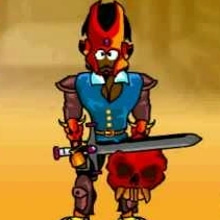
Swords and Sandals Gladiator doesn’t pretend you’re a legend. It treats you like a fresh face walking into a colosseum with borrowed courage and a budget that can barely afford decent sandals. And that’s exactly why it works. This is a classic gladiator RPG with turn-based arena battles, built around the simple, addictive dream: start as a nobody, survive the early fights, earn gold, improve your gear, and claw your way up until the crowd finally screams your name instead of laughing when you whiff a swing.
On Kiz10, the game feels like a compact career mode you can binge in short bursts or accidentally sink hours into. You’re not just clicking to attack; you’re making choices every round that stack up into a story. Do you go aggressive and try to end fights fast? Do you play patient, block more, and let enemies tire themselves out? Do you spend your hard-earned gold on a stronger weapon, or patch up your weak armor so you don’t get folded by the next big hitter? It’s a strategy loop dressed up in sweat, steel, and surprisingly personal grudges.
🥊🧠 Turn-Based Combat That Still Feels Fast
Even though battles are turn-based, the pace doesn’t feel sleepy. Every turn is tense because a single wrong decision can swing the entire match. You’re managing distance, picking high or low attacks, deciding when to defend, when to gamble on a heavy strike, and when to back off because you can feel the momentum slipping. The best fights are the ones where you start reading your opponent like a book you don’t trust. They always block high? Fine, go low. They rush every turn? Punish them. They wait and counter? Fake them out, chip away, force them into mistakes.
There’s something satisfying about the moment you realize the arena is less about “big numbers” and more about timing and discipline. A flashy attack is nice, but a smart attack is better. And the game loves players who can stay calm when their health bar gets uncomfortably low. That’s where the drama lives: the crowd in your head screaming “attack!” while your smarter brain whispers “block once, then strike.” The arena rewards the player who can listen to the whisper.
🪙🛡️ Gold, Gear, and the Painful Art of Priorities
The economy in Swords and Sandals Gladiator is basically your second opponent. Winning fights earns gold, but gold disappears fast when you start shopping. Weapons tempt you. Armor saves you. Upgrades promise the future. And you can’t buy everything at once, so you have to choose your identity.
If you lean into offense, you’ll end fights quicker, but you’ll also take riskier damage when things go wrong. If you invest in defense, you’ll survive longer, but you might struggle to close out fights against tough opponents. Most players eventually find a balance, and the fun comes from discovering your style through consequences. Buy a huge weapon too early and you might still lose because your armor is paper. Over-invest in defense and you’ll survive forever… while slowly realizing you can’t actually finish anyone off without a miracle.
The best part is how personal your loadout becomes. You’ll remember the first “real” weapon you bought that changed everything. You’ll remember the first time your upgraded armor let you survive a hit that would’ve ended you before. Those moments are tiny, but they feel like milestones in a gladiator career.
🏟️😈 Opponents That Feel Like Problems You Must Solve
The game shines when it throws different enemy types at you. Some opponents hit hard but leave openings. Some are slippery and annoying. Some feel fair. Some feel like they were created to punish your exact build, specifically, personally, and with malice. That variety forces adaptation. You can’t autopilot forever. You start thinking about matchups: do I need more stamina? More raw damage? Better defense? A safer strategy? Or do I just need to stop being greedy and block for once?
And yes, you will have at least one fight where you lose and immediately blame the game… then replay and realize you made three terrible decisions in a row. It’s that kind of RPG. It doesn’t hold your hand. It hands you a helmet and says, “Go learn.”
🔥🥴 The Emotional Loop: Win, Upgrade, Get Humbled
Swords and Sandals Gladiator has a very specific rhythm that feels almost dangerous because it’s so easy to chase. You win a fight and feel unstoppable. You spend your gold and feel smarter. You enter the next match and get humbled instantly. Then you rethink your build, tweak your approach, and climb again. It’s a repeating story, but it never feels stale because the arena keeps shifting the pressure.
The smartest players treat every loss as information. Not in a boring “study notes” way, more in a “okay, so that guy punished my high attacks, I should mix low strikes and defend more” way. You’re learning patterns, experimenting with risk, and slowly turning chaos into something controlled. When it finally clicks, the game gives you that delicious feeling of earned confidence. Not loud confidence. Quiet confidence. The kind where you don’t panic when you’re low health, because you’ve been there before and survived.
🧬⚙️ Building a Gladiator: More Than Just Stats
Progression isn’t only about equipment. It’s about shaping a fighter. You’re building a character that feels different over time, and you can feel the growth in how fights play out. Early battles can feel scrappy, like both sides are swinging and hoping. Later, when you’ve upgraded and learned the system, your decisions feel sharper. You’re controlling the pace. You’re choosing when the fight becomes dangerous. You’re forcing mistakes instead of waiting for them.
And that’s the secret magic of gladiator games: they turn small improvements into big satisfaction. A better sword is nice, but a better plan is the real upgrade. The arena starts to feel like your stage rather than your prison. Even when you lose, you lose with a reason, and that keeps you coming back.
🏆👣 Practical Advice That Doesn’t Sound Like a Lecture
If you want to progress smoothly, treat defense like a tool, not a surrender. Blocking at the right time wins matches. Also, don’t overspend on one shiny item and neglect the basics. A balanced setup usually outperforms a single expensive weapon with weak armor behind it. Watch what opponents do repeatedly and punish patterns instead of trying to brute-force every exchange.
Most importantly, don’t rush the ladder when your gear is behind. The arena is not impressed by bravery with bad equipment. Farm a little, upgrade intelligently, then push upward. You’ll feel the difference immediately, and your win streak will look less like luck and more like control.
🎮🏛️ Why It Still Feels Great on Kiz10
Swords and Sandals Gladiator is a classic arena RPG because it understands what players want: the fantasy of rising through ranks, the satisfaction of smarter decisions, and the thrill of a fight that can flip in one turn. It’s easy to start, hard to fully master, and built for that “one more duel” pull. If you want turn-based gladiator combat, gear upgrades, character progression, and a steady climb toward champion status, this is the kind of Kiz10 game that keeps you coming back to the sand… even after the sand has humbled you.





 Share
Share
 Embed
Embed