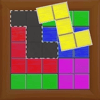
🟦 A Small Grid With Big Attitude 😅
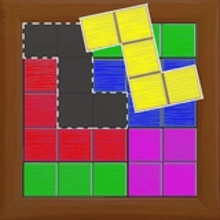
The 5x5 cube puzzle sounds harmless because it’s literally five by five. Twenty five little squares. That’s it. No giant map, no dramatic story, no flashy explosions trying to distract you. And somehow that tiny board still manages to make you stare at it like it’s judging you. Because the game asks for one simple thing that becomes weirdly intense: place every block so the whole 5x5 grid is filled, cleanly, without regret, across 100 levels that slowly teach you how easy it is to sabotage yourself with one “quick” placement.
It’s the perfect kind of brain puzzle for real life gaps. Metro ride, waiting room, the quiet minute before a meeting, that moment when you want something calming but you also want to feel like your brain didn’t turn into soup today. You open it, you solve a level, you get that small click of satisfaction, and your day feels slightly more organized. Then you hit a tougher layout and suddenly you’re whispering, why is this tiny square game making me negotiate with my own patience.
🧩 The 5x5 Rule That Changes Everything 🧠
A lot of block puzzle games give you space to breathe. Here, space is the whole drama. On a 5x5 grid, every square matters earlier than you expect. You don’t have the luxury of sloppy gaps. You don’t get to create a cute little hole “for later” unless you’re absolutely sure the next pieces can actually fill it. And being sure is the hard part, because certainty in puzzle games is basically a myth you tell yourself to feel brave.
The game pushes you into thinking in shapes, not just placements. You start reading the board like a tiny terrain map. Corners feel dangerous. Single square gaps feel like traps. Long skinny spaces look promising until you realize you don’t have the long piece you need. The grid is small, but it forces you to plan like you’re packing a suitcase for a trip where you’re only allowed to bring exactly what fits.
And the best part is how it teaches you to slow down without feeling slow. It’s not a timed panic puzzle. It’s a thoughtful puzzle game where your main enemy is your own impatience.
😬 The Moment You Place One Block and Instantly Regret It
This game is full of those tiny human moments where you make a move and your brain immediately goes, oh no. Not because the move was obviously wrong, but because it created a future problem you can already feel forming. Maybe you just created a weird L shaped cavity that looks harmless, but deep down you know it’s going to demand a very specific piece later. Maybe you filled a clean line but accidentally boxed yourself into a layout that has no flexibility. Maybe you blocked off a corner and now the only remaining pieces are all too chunky to squeeze in.
That’s when the game becomes funny in a quiet way. You’re not raging. You’re just sitting there, watching your own mistake like it’s a little documentary about poor decisions. And then you restart or try again, and you do the thing every puzzle lover does. You tell yourself you learned. You tell yourself you won’t do it again. Then you do it again, but slightly differently, which somehow feels like progress 😅
🚇 Metro Brain Mode: Small Levels, Fast Satisfaction ✨
The structure of 100 levels is a big reason this works as a quick play puzzle. You’re not signing up for a huge commitment. Each level feels like a small bite. You can complete one, feel good, and move on. Or you can get stuck on one stubborn level and suddenly it becomes your personal rival. You start solving it in your head when you’re not even playing. You see the shapes in your mind like they’re floating above the real world. You catch yourself thinking, if I place the square piece first, then the T shape can slide in later, then the last piece fits, yes, yes… and then you try it and it still fails because the order was wrong by one tiny square.
That mental carryover is the sign of a good logic puzzle. It slips into your thoughts without being exhausting. It’s like a gentle workout. Your brain gets warmed up, not wrecked.
🧠 The Sneaky Strategies That Feel Like Common Sense After You Learn Them
You’ll develop habits. Not rules carved in stone, more like instincts that keep you safe. You start respecting corners and edges. You start saving awkward pieces until you understand the board better, or sometimes you do the opposite and place the awkward piece first so it doesn’t ruin your endgame. You start looking for “clean rectangles” because clean shapes are easier to fill later. You start noticing when a move creates a dead pocket, and you avoid it like it’s cursed.
But the game never becomes mechanical, because each level’s block set and layout challenge your habits. One level rewards filling the center early. Another level punishes you for doing that. One level wants you to build from the bottom up. Another wants you to anchor a corner first. The game keeps you flexible, which is the best compliment you can give a grid puzzle. It makes you think, not memorize.
😌 Waiting Room Calm With a Tiny Edge of Pressure
There’s something soothing about watching a 5x5 board slowly become complete. It’s visual order. It’s a mess turning into a neat square. That alone is relaxing. But the edge comes from knowing you can still fail even at the end. That last piece can betray you. The final placement can reveal that you misread the shape two steps ago. So you stay focused, but not stressed. More like… alert calm. The kind of mood that’s perfect for killing time without melting your brain.
And because the graphics are simple, your mind doesn’t get overloaded. It’s just shapes, space, logic, and that small click of completion when the board fills perfectly. That click is basically a reward sound your brain makes on its own.
🔥 Late Levels: When the Game Starts Smiling at Your Confidence 😏
As you progress, the levels get trickier in a way that feels fair. The game starts giving you block sets that look compatible, but only if you place them in the right order. You’ll have levels where the solution is elegant, and levels where the solution feels like you’re threading a needle with gloves on. Still, it stays readable. It stays honest. You never feel like you lost because of randomness. You lost because you chose comfort over logic, or speed over planning.
And when you finally crack a stubborn level, it feels amazing in a very quiet way. Not fireworks. More like a satisfied exhale. Like your brain just sat back in its chair and nodded.
🎮 Why It Belongs on Kiz10
The 5x5 cube puzzle is exactly the kind of puzzle game that people search for when they want quick brain training without noise. It’s bite sized, clean, and satisfying, with enough difficulty to keep you hooked through 100 levels. If you like block placement puzzles, grid logic, and that cozy feeling of solving something small but real, this one is an easy add to your rotation on Kiz10. Just don’t trust your first instinct too much. The grid is small. Your mistakes are not.





 Share
Share
 Embed
Embed