🏚️ Whispers at the edge of town
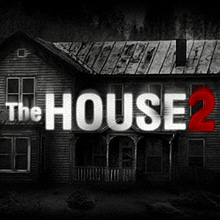
The house doesn’t jump at you. It just waits. It’s the kind of place people cross the street to avoid, the kind of dark silhouette that keeps showing up in small town rumors and “don’t go there” stories. Windows like empty eyes, door nailed shut, garden long dead. Nobody lives there. Officially. Unofficially, everyone swears something still does. They hear a woman’s scream in the middle of the night, see a shape in an upstairs window, and then pretend they imagined it.
You arrive on the pavement outside with nothing but a mouse pointer and a very bad idea. No weapons, no HUD shouting quests at you. Just the house, the wind, and the uncomfortable feeling that the building knows you are here. The legend says a wealthy family died inside, all of them, and the town locked the door and never looked back. You, for some reason, decide to look.
🚪 The door that finally gives in
The House 2 doesn’t even let you in for free. The first “puzzle” is simply getting past the front door. Boards, chains, shadows, tiny details that might matter or might just be there to see if you’re paying attention. You move the cursor around, click on things that look wrong, and the house reacts in little ways. A sound that’s too loud for such a small action. A plank that creaks like it’s complaining. A lock that shouldn’t move, but does.
There’s a small, very human moment before you actually cross the threshold. You’ve been poking and prodding, half hoping nothing will happen. Then something clicks, literally, and the entrance opens just enough. You could close the browser. You don’t. You step inside, and it feels like the entire place exhales.
🩸 Rooms that remember what happened
Inside, nothing is jumping in your face. At first. The living room looks tired rather than monstrous. Old television, peeling wallpaper, framed photos that probably meant something to someone once. It’s all very normal in that “this should be cosy but instead it’s wrong” way. You hover over a picture and it twitches. A note on the coffee table appears only after the third time you click that area. A light flickers even though you never touched a switch.
Every room works like a little memory knot. Bathroom, bedroom, study, other corners of this miserable house – all of them store scraps of the family’s last days. Prescription bottles, crumpled letters, dates that don’t line up, a birthday card that feels too cheerful for where you find it. You’re not gathering items to craft weapons. You’re gathering the feeling of people coming apart in slow motion. The house never explains everything out loud. It just lets you stand in the middle of its mess and connect the dots, or fail to.
👁️ When the house starts looking back
The longer you stay, the less you feel like the one doing the exploring. At first, you’re hunting for hotspots: that drawer, that photo, that crack in the wall. After a while, it feels like they’re hunting you. A black shape slides across the far wall at the edge of your vision. A face appears in a family portrait for half a second and then isn’t there when you click it again. Doors close behind you even though there’s no “character” on screen moving them.
Sometimes nothing happens for a full minute. No new note, no obvious scare. Just a low sound in the background and the faint buzz of a dying lamp. You start wondering whether you missed the trigger, so you click again. And again. And every repeated click makes you more tense, because you know the house will answer eventually, and it will choose the exact moment your guard drops. That’s the rhythm: long stretches of dread, short stabs of pure “nope”.
🖱️ Point, click, and willingly scare yourself
The controls couldn’t be simpler. You use your mouse or touch to point at objects and click. That’s it. No sprint key, no dodge roll, no “press F to fight the ghost.” Your only real power is curiosity, and the game weaponises it beautifully. If you want to see more, you have to choose to touch the creepy painting, the flickering lamp, the strangely clean part of the wall that absolutely hides something.
It’s a slow, stubborn kind of horror. Nothing moves until you give permission with that little finger tap. In an action game, fear comes from things chasing you. Here, it comes from knowing you are the one pushing the story forward, you are the one opening the next door, you are the one who just clicked on a mirror that really shouldn’t be reflecting what it’s reflecting right now. You’re not being dragged through a haunted house ride; you’re the one pressing the button to start the next scene.
🎧 Screens, heartbeat and bad timing
People say “play with headphones” a lot. For The House 2, that’s not a suggestion, it’s basically part of the design. The creak of boards, distant sobs, the specific way a chair scrapes in another room—those tiny sounds are your real map. Visually you might just see a static background. In your ears, something has just stepped into the room with you. Or maybe on the floor above. Or right behind the wall you’re about to click.
Play in a bright room and it’s spooky. Play in a dark room, full screen, headphones squeezed a little too tight, and you start noticing other things: your own reflection ghosting on the screen when the scene goes black, the way your chair suddenly feels too loud, how you pause before clicking just in case. The game never shouts “boo” constantly. It waits, lets you stew in your own imagination, then picks one perfect moment to slam a door or throw a figure into view and ruin your composure.
📖 Not a speedrun, but a slow infection
You won’t need a walkthrough to understand the basics. Each room wants you to poke around until something changes, then follow that thread to the next place. But the house doesn’t reward rushing. Click once on an object and it might do nothing. Click again later and suddenly it’s different. Some scenes only advance after you’ve read a note or stared at a detail long enough that your brain has started writing its own explanation.
It’s the kind of horror that sneaks up on you afterwards. You close the game, tell yourself it was short, simple, “just a browser title on Kiz10.com.” Then later that night you remember one specific image – a corner of a room, a small object that shouldn’t have moved, the way a shadow seemed a little too solid – and you realise the story landed harder than you admitted. The house got exactly what it wanted: time inside your head.
😨 Why coming back feels like a bad idea… that you’ll still take
The House 2 isn’t about high scores or loot drops. There’s no endless upgrade grind, no giant boss at the end waving health bars around. What it offers is quieter and strangely more persistent: a short, focused visit to a place where something went horribly wrong, told entirely through the things that were left behind. Notes, sounds, flickers, and that one scream that arrives a split second after you thought the room was safe.
If you like horror that leans on atmosphere instead of constant action, this is exactly the kind of experience that fits into a late night session. No installation, no friction—just open it on Kiz10, let the house open the door, and see how far you’re willing to go before your own nerves tell you to get out. And when you inevitably come back for another run through those rooms, don’t worry. The house remembers you. Of course it does.





 2.5 (185 votes)
 Share
Share
 Embed
Embed


