⚽ A still ball, a loud stadium, and the horrible beauty of all that pressure
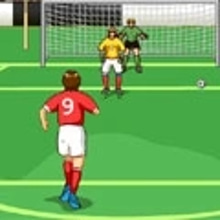
World Cup 2014 Free Kick is the kind of soccer game that turns one single moment into a full emotional crisis. The ball is placed. The wall is ready. The goalkeeper is pretending to look calm. The crowd is waiting for magic, or a disaster, or maybe both. And there you are, staring at the goal like it somehow got smaller in the last two seconds. That is exactly why free-kick games work so well. They take one of the most dramatic situations in football and stretch it into the entire experience. No long midfield buildup, no endless passing, no time to hide behind the rest of the team. Just angle, power, spin, nerves, and the tiny unbearable delay between the strike and the net.
What makes a title like World Cup 2014 Free Kick instantly appealing is the tournament atmosphere wrapped around that mechanic. The phrase “World Cup 2014” already drags in a very specific kind of energy: giant expectations, national pride, knockout tension, and that feeling that every goal matters more than logic says it should. Add free kicks to that setting and suddenly the whole game becomes a celebration of football’s most theatrical little moment. A free kick is never just a shot. It is a puzzle, a gamble, a performance, and sometimes a personal argument with physics. That blend of spectacle and precision is where the game gets its hook, and on Kiz10 it makes perfect sense as a soccer challenge built for players who like pressure served in neat, repeatable bursts.
🎯 The wall is only half the problem
The funny thing about free-kick games is that people always focus first on the wall. Fair enough, the wall looks like the obvious obstacle. It is right there, standing between you and the shot you already decided should have been easy. But the real problem is everything else happening at the same time. The angle might be awkward. The goalkeeper might be positioned just well enough to ruin your confidence. The target might look inviting until you realize the curve needed to reach it is much nastier than expected. Suddenly a simple kick becomes geometry under stress, and that is where the game starts becoming addictive.
World Cup 2014 Free Kick feels like the kind of game that lives entirely in that sweet spot between control and panic. You want to strike confidently, but not blindly. You want power, but not so much power that the ball launches itself into another postal code. You want curve, but the elegant kind, not the embarrassing kind that starts promisingly and then wanders off into irrelevance. That balance is what makes every shot feel meaningful. The player is not just aiming. The player is trying to outsmart the shape of the whole situation. The wall blocks one route, the keeper threatens another, and the only path to glory is the one you create yourself with placement and timing.
That is a huge part of the satisfaction. A goal in a free-kick game never feels random when the shot is good. It feels designed. Like you solved something. The ball leaves your foot, bends around the defenders, drifts just enough, and then lands exactly where the keeper cannot fix the problem in time. Those moments are glorious because they look smooth and impossible at the same time. And of course, once you score one like that, your standards immediately become unreasonable. Now every goal has to feel heroic.
🏆 Why the World Cup mood makes every shot feel heavier
A generic free-kick game can already be fun, but a World Cup setting changes the emotional temperature completely. The second a football game wraps itself in tournament energy, every action starts feeling larger. A simple goal is no longer just a point. It becomes a national event inside your own head. A miss is not just a miss. It becomes one of those tragic sports memories you invent for yourself in real time, where the whole crowd probably gasped and somewhere a commentator definitely sounded disappointed.
That is the sneaky power of football games built around big stages. They make repetition feel dramatic. You may be taking multiple shots, trying different curves, learning the behavior of the ball and wall over time, but the atmosphere keeps each attempt from feeling empty. It feels like the match still matters. It feels like the tournament still matters. That illusion matters a lot in browser sports games, because it gives the mechanic extra life. You are not simply practicing. You are surviving pressure. That is a very different mood, and a much more replayable one.
World Cup 2014 Free Kick also has the advantage of being rooted in one of the most iconic football contexts possible. Even just the title gives off that specific international energy: flags, pressure, crowds, do-or-die moments, and the absurd emotional weight football can place on one clean strike. It does not need to over-explain that fantasy. Players already understand it. The title opens the door, and the free-kick mechanic does the rest.
🌍 Curve, power, and the very human urge to overdo everything
One of the reasons free-kick games stay interesting is that they always tempt the player into bad decisions. You know the shot should probably be controlled, but you also want it to look spectacular. You know the safe corner is there, but the top corner is calling your name like a terrible influence. You know a moderate curve may be enough, but your inner football artist insists this ball should travel like it has its own soundtrack. That conflict is fantastic. It turns every shot into a little internal debate between discipline and ambition.
And honestly, ambition is usually more fun, even when it goes badly.
That is the hidden charm of games like this. They encourage mastery, but they also encourage style. You are not just trying to score. You are trying to score beautifully. You want the shot that bends around the wall so cleanly it almost feels rude. You want the strike that makes the keeper dive purely for aesthetic reasons because the ball was never actually catchable. You want the kind of goal that would absolutely be replayed from three angles if the stadium camera crew existed inside the game’s universe. That desire for style gives the whole thing extra personality.
At the same time, the game punishes excess just enough to keep you honest. Push the power too far and the shot gets wild. Force too much curve and the ball starts lying to you halfway through its flight. Rush the setup and the keeper gets an easy save that feels deeply insulting. This tension is exactly what makes free-kick gameplay so satisfying. The best goals come from control dressed up as flair. That is true in real football and even truer in games, where the line between genius and nonsense is often only a few pixels wide.
🔥 A Kiz10 soccer challenge built for one more shot syndrome
World Cup 2014 Free Kick fits Kiz10 beautifully because it has that classic browser-sports quality of being immediate, readable, and dangerously replayable. You understand the objective instantly. Beat the wall. Beat the keeper. Score. Then do it again, but better. That loop is incredibly strong because every miss feels correctable. You were close. The angle was nearly right. The curve almost worked. The power only needed a tiny adjustment. That “almost” feeling is what keeps players pressing restart instead of walking away.
And free-kick games are masters of that trap. They create short, concentrated bursts of challenge that never feel fully settled. Even when you are doing well, there is always the next shot to refine. The next bend to perfect. The next impossible-looking angle that might actually become a goal if you trust your touch just a little more. This is why the game concept remains so strong. It distills football into one of its most dramatic little rituals and then lets the player chase precision until precision starts feeling like obsession.
So World Cup 2014 Free Kick ends up offering exactly what a Kiz10 soccer player would want from a title like this: stadium pressure, tournament flavor, elegant ball control, and the constant thrill of trying to bend one more shot into greatness. It is all there, compressed into those few seconds before impact. The wall waits, the keeper doubts you, the crowd wants a miracle, and for one brief moment the whole world becomes a question of curves, power, and nerve.





 Share
Share
 Embed
Embed