🧠 Four pieces, infinite trouble (the good kind)
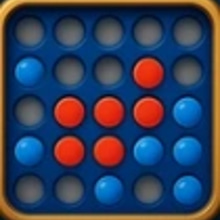
At first glance, 4 Balls looks almost too polite: a tidy grid, glossy spheres, a cursor that moves like it has table manners. Two turns later you realize this isn’t checkers; it’s pocket chess with round pieces and a habit of flipping momentum when you blink. You don’t have an army—you have four. That’s the thrill. Every placement is a promise and a risk, every rotation a plot twist. You set a ball down, hear the soft clack, and suddenly the board starts to whisper probabilities. If you like strategy that fits in a coffee break but leaves your brain humming after dinner, welcome. Kiz10 loads fast; the thinking is on you.
🎯 Rules that teach by daring you
The heart of 4 Balls is tempo. You alternate turns placing or sliding your spheres along paths that belong to you for exactly as long as you control them. Corners matter, edges lie, center commands. Link two balls and a corridor opens; link three and you’ve got a lane that eats space; link four—well, the title is not subtle. The twist is rotation: some cells pivot, quarter-sections you can spin to reroute lines, block opponents, or serve yourself a checkmate on a silver spinner. It’s simple enough to explain, deliciously rude to master.
⚙️ The language of moves, spoken softly
You start noticing micro-signals. A diagonal gap that looks harmless is a spring-loaded trap for a two-turn fork. A single ball on an island tile isn’t lonely; it’s an anchor for a late rotate that redraws borders you thought were stable. Your thumb learns to hover, your inner monologue mutters “not yet” and then “now,” and the board rewards patience with those rare, perfect chains where one action changes three threats at once. It feels like tidying a messy desk with one sweep of the arm, except nobody’s mad and you earn points.
🌀 Rotations: tiny earthquakes you cause on purpose
Spin a quadrant and watch paths realign like train tracks in a heist movie. Rotate early to claim initiative, rotate late to turn defense into a counterpunch. There’s a rhythm: claim line, bait response, rotate to open a lane your opponent can no longer reach without breaking their own structure. The trick is not spinning for chaos. Spin for story. Each 90-degree click should say, “I moved the future two squares to the left,” and if that sounds dramatic, you’re getting it.
🧩 Modes that shape your brain differently
Classic Duel is pure tactics—place, slide, rotate, race for control. Puzzle Trials throw curated positions where you must win in three moves or less; you’ll fail prettily, then spot the one rotation that turns a no into a yes. Blitz clocks add panic spice: quick decisions, faster regrets, surprisingly loud victories when instinct turns out smarter than you gave it credit for. Endurance pits you against escalating AI temperaments—Timid, Greedy, Architect—each teaching a habit worth stealing or countering.
🧠 Tiny principles you’ll pretend you knew already
Corners are banks; hit them early for safe anchors. Parallel lines beat single long lines because they double your threats. A lone ball two steps from the edge is secretly a spear—slide, rotate, capture. When behind, stop mirroring; break symmetry and you force questions your opponent hasn’t rehearsed. If a rotation helps both players, it belongs to the one who plays it after a tempo-gaining move. And a two-move trap is better than a one-move threat because it survives scrutiny; obvious wins die of exposure.
🎮 Feel in the fingers, not just the forehead
Inputs are crisp, and that matters. You drag to preview lines, release to commit, tap to toggle rotation direction like you’re turning a safe dial. Snap-to-hints nudge legal moves without playing for you. Animations are brief on purpose; the game respects the speed at which ideas form. You’ll find a groove where thinking and moving blur, and that’s when 4 Balls switches from puzzle to flow—calm, certain, just enough pressure to make you grin when a plan lands exactly on the beat you counted in your head.
🧬 Combos and cascades, the polite kind of rude
Best feeling in the room? The chain. You slide a ball to complete a line, which unlocks a rotation, which flips a corridor, which lets a second ball travel farther than physics should allow, which lands on a choke point that turns your opponent’s network into… art. Not destruction, elegance. The board doesn’t explode; it rearranges loyalties. Territory bleeds from one color to the other like a time-lapse of tides. You sit back, exhale, pretend you meant it all along.
🧨 Mistakes you’ll make once, then never again
The double gift—rotating in a way that opens your attack and theirs; cute until it isn’t. The tunnel vision—chasing a four-line while ignoring a quiet two-line that pins your best piece. The impatient slide—moving a ball off an anchor tile and discovering it was the only thing keeping your left flank attached to reality. These are good mistakes. They leave fingerprints on your habits and become reflexes with names: never gift, count the quiet, check anchors.
🤖 AI that plays like three different friends
One opponent babysits structure and punishes overreach; you beat it by creating unreliable lines it won’t touch. Another hunts quick forks, bluffing threats to make you rotate wrong; you punish by stabilizing and counter-rotating into slow squeezes. The third is a mirror with opinions—your best teacher, because it shows you that your favorite move is also your most predictable. Win, lose, you leave smarter.
🎵 Quiet sound, loud meaning
Moves land with a wooden click, rotations with a velvet whirr, line completions with a restrained chime that never gets old. When you threaten two wins at once, a soft swell sneaks into the background like the board is holding its breath. No meme horns, no drama dumps—just the minimal audio that turns feedback into timing, and timing into confidence.
✨ Visuals that help the plan speak up
Paths glow when linkable, dim when blocked, and never shout over the grid. Your last move leaves a short-lived halo so post-mortems are painless. Rotatable quadrants carry subtle corner markers; you’ll read orientation without thinking. Accessibility toggles add high-contrast edges, larger node dots, or reduced motion for players who prefer stillness while plotting the shortest route to triumph.
🧭 Openings, midgames, endgames—yes, it has them
Openings are about staking corners without becoming predictable. Aim to place your second ball orthogonal to your first so rotations create leverage instead of loneliness. Midgame is the dance—threats versus structure, lines versus lanes. Count your future moves; count theirs twice. The endgame shrinks to a knife fight in a broom closet: one rotation left, two slides possible, three ways to pretend you’re not sweating. That last click when you secure the unstoppable fork? That’s a whole serotonin playlist.
🧪 Training that actually works
The sandbox lets you pin positions and play both sides until you understand why a setup feels poisonous. Daily Tactics dish a bite-size fork or save-the-endgame puzzle with a clean solution you can memorize and then spot in wild matches. Replays arrive with a little scrubber; you’ll tag the moment you threw, the moment you stole, and the one quiet move that no one noticed except the scoreboard.
🏆 Challenges you’ll brag about with zero dignity
Win without rotating. Win with only three slides. Turn a lost position by chaining two rotations back-to-back. Survive Blitz with ten seconds on the clock and a cat walking across your keyboard. The game tracks this silliness, prints badges, and yes, you will equip “Corner Goblin” even if you pretend you’re above it.
💡 Coach-in-your-head reminders
Threaten two things; force one answer. Don’t move a piece that’s doing two jobs unless it can do three after. Rotate only when it changes the evaluation, not the vibe. If you see a winning line, look for a quieter one that wins next turn and improves your structure. When stuck, flip the board in your mind and ask what you’d hate to face. Now play that.
🌐 Why 4 Balls thrives on Kiz10
No installs, instant rematches, silky input—perfect for “one quick game” that becomes a best-of-five because both of you keep saying last one. Cloud saves remember your favorite themes, your puzzle streaks, and the opening you swear isn’t predictable even though the AI is now smirking. Sessions can be snack-sized or evening-shaped; the strategy stretches to fit.
🏁 The finish that teaches the next game
You’re down material, pinned to the edge, a single rotation from doom. Instead of flailing, you slide one ball into a nothing square that turns out to be everything. Your opponent rotates to cash in… and the corridor you planted snaps shut like a book. One counter-rotation, two linked lanes, a final glide that completes the fourth connection with an almost shy chime. The board exhales. You lean back, grin, and realize you’ve learned a new law: in 4 Balls on Kiz10, the smallest sphere can cast the longest shadow if you give it the right corner and one patient turn.





 4 (151 votes)
 Share
Share
 Embed
Embed


