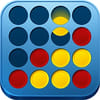
🔴🟡 The board looks innocent… until you blink
4 in a Row Classic is one of those games that pretends to be simple, like it’s doing you a favor. A clean grid, two colors, turns that alternate politely. Drop a disc, watch it fall, repeat. That’s the pitch. Then you play it on Kiz10 and realize the grid is basically a stage for quiet betrayal. You’re not just placing pieces. You’re writing threats. You’re leaving little notes that say “if you ignore this column, you’re done.” And the funniest part is how calm it all looks while your brain is sprinting.
The goal is timeless: connect four of your discs in a straight line, vertical, horizontal, or diagonal. But the real game is how you get there without handing your opponent a gift-wrapped victory. Every move is a trade. You gain position, but you also create new platforms the other player can use. You build a plan, but the plan has to survive contact with an opponent who is actively trying to ruin your day.
🧠🧲 Gravity is the hidden rule that decides everything
Unlike many board puzzles where pieces just appear wherever you click, here gravity is the boss. Discs fall. That means you can’t simply place a winning piece anywhere you want. You have to earn the height. You have to stack. And stacking is where the drama lives, because stacks create ladders for both sides. You’ll feel it quickly: a harmless-looking drop can accidentally give your opponent the perfect stepping stone for a diagonal you didn’t even notice forming.
So you start thinking in layers. Not just “I want four in a row,” but “what does this move make possible next turn?” It’s chess thinking, but compressed into colorful little drops. A move that seems defensive can become offensive two turns later. A move that seems offensive can become a trap door under your own feet. And when you finally see the board as a set of rising platforms rather than empty squares, the whole game becomes sharper, meaner, and way more fun.
🎭😅 The moment you learn the difference between a plan and a trap
Beginners aim for obvious lines. They build three in a row and then reach for the fourth like it’s guaranteed. Experienced players grin at that, because obvious lines are the easiest to block. The real magic in 4 in a Row Classic is creating a situation where you have two winning threats at the same time. A double threat is basically a checkmate. Your opponent can block one… and lose to the other. That’s when the game stops feeling like “connect four” and starts feeling like a psychological prank you’re pulling with perfect manners.
You’ll start setting up “fake” threats too, little temptations that encourage the opponent to waste a move blocking something that wasn’t the real danger. Sometimes you’ll place a disc that looks like it’s about to complete a line, knowing full well they’ll rush to block it… which gives you time to build the diagonal that actually wins. It’s silly, it’s clever, and it makes you feel like a villain in a family-friendly puzzle.
🟨🟥 Diagonals are where confidence goes to get humbled
Everyone remembers to watch the horizontal lines. Most people remember vertical stacks. Diagonals are the sneaky ones that creep into existence while you’re distracted by something else. One moment the board looks fine. The next moment you realize there’s a diagonal chain that’s one move away from victory and you can’t block it because gravity won’t let you place the disc at the right height. That’s the special pain of this game: sometimes you see the problem, but the board says “cool story, you can’t reach it.” 😭
The cure is awareness. You learn to scan diagonals constantly, like it’s a habit, like checking your mirrors while driving. You watch the slopes forming. You imagine where the fourth disc would need to land. And you start building your own diagonals on purpose, because diagonals are harder to read, harder to block, and incredibly satisfying when they click. A diagonal win feels like a reveal. Like the board flips a mask and says, surprise, it was over two turns ago.
⏳🧊 Slow games can still be intense, and this one proves it
There’s no explosions here. No dramatic soundtrack required. Yet the tension is real because the consequences are immediate and permanent. You can’t undo a drop. You can’t take back a risky move. You commit, the disc falls, and now the future is shaped around that choice. This creates a weird kind of pressure that’s quieter than an action game, but sharper. You’ll catch yourself leaning in. You’ll hesitate over a column like it’s a life decision. You’ll place a disc and instantly regret it, then try to act like it was “part of the plan.” Sure it was. Totally. 😅
That tension also makes wins feel earned. When you win, you didn’t win because your reflexes were faster. You won because you saw something coming and guided the board toward it. Or because your opponent missed the threat you planted. Or because you stayed disciplined and blocked at the right moment. It’s pure strategy satisfaction, the kind that feels clean and a little smug.
🧱🧨 The classic mistake: building a tower that helps the enemy
Here’s the hilarious danger: every disc you place creates support. Support is useful… to whoever gets to use it next. If you mindlessly stack in one column, you might be handing your opponent the exact height they needed to complete a diagonal. If you chase a vertical win too aggressively, you may create a predictable structure that’s easy to counter. The board is a shared resource, and the best players treat it like a contested space, not a personal canvas.
This is where defensive play becomes exciting rather than boring. Blocking isn’t just “stop the win.” Blocking is shaping the board so your opponent’s future options become awkward. You block in a way that forces them into bad columns. You drop a disc that interrupts their structure while quietly improving yours. It feels like steering a conversation, not shouting over it.
🏁✨ Why 4 in a Row Classic still feels fresh on Kiz10
4 in a Row Classic endures because it’s quick to learn and endlessly tricky to master. It’s a puzzle game where every move matters, where gravity makes planning feel physical, and where the best wins are the ones that land like a surprise punchline. You can play it casually, just dropping discs and hoping for the best, or you can go full strategist and start building layered threats, diagonal traps, and double-win setups that leave no escape.
On Kiz10, it’s the perfect “one more match” game. You finish a round and instantly think, I see what I did wrong. Or, I almost had that diagonal. Or, next time I’m not falling for that bait. And that’s the loop: quick matchs, quick lesson, quick rematch… until you’re the person casually spotting wins three moves ahead while pretending you’re not trying that hard. 🔴🟡😄





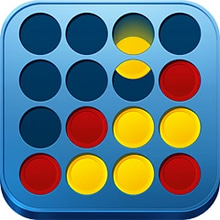
 Share
Share
 Embed
Embed