🏁🇺🇸 Start the engine, hide your fear
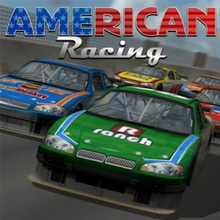
American Racing on Kiz10 throws you into that loud, shiny, straight-line temptation that only stock car racing can deliver. The track looks simple. Oval. Wide. “Just hold speed,” your brain says. Then you meet traffic. Then you meet corner entry. Then you meet that one rival who leans on your door like you owe them rent. Suddenly it’s not a calm race at all, it’s a constant negotiation: keep momentum, protect your line, use turbo at the right moments, and don’t let the pack turn you into a wall decoration. 😅
This is the kind of racing game where the opponents aren’t just obstacles, they’re a moving weather system. They draft, they swarm, they appear in your mirrors at the exact second you thought you had space. You’ll feel fast, then you’ll feel slow, then you’ll feel fast again because you found the slipstream and suddenly the world stretches forward like a rubber band. It’s addicting because it’s instantly readable but never truly “easy.” The track stays the same, yet every lap feels slightly different depending on where the pack is breathing down your neck.
🚦💨 The oval is a lie, the corners are the truth
Ovals look innocent because the steering angle is smaller than a twisty road. Don’t trust that. In American Racing, corners are where speed goes to die if you don’t respect them. The secret is that you’re not trying to “turn,” you’re trying to preserve your exit. Entry is important, yes, but exit is everything. If you enter too hot, you drift wide, kiss the outside, lose your line, and then the pack eats your lunch on the straight. If you enter too timid, you survive the corner but you’ve basically handed everyone a free pass.
You start learning this weird rhythm: lift just enough, aim the car so it settles, then roll back into speed as early as you can without scrubbing. That last part is tricky because your instincts will beg for full throttle all the time. Full throttle feels brave. Full throttle also feels like sliding into chaos when traffic compresses mid-corner. So you learn to be brave in a smarter way. Brave is choosing the line that keeps you stable. Brave is not panicking when a car appears beside you. Brave is staying smooth while the whole pack tries to turn you into a pinball. 🫠
🧲🚗 Drafting feels like cheating… until it doesn’t
Drafting in stock car games is one of those mechanics that makes you grin the first time it works. You tuck behind an opponent, the air resistance drops, and suddenly your car pulls like it just found extra horsepower under the seat. You slingshot, you pass, you feel like a genius. Then you do it again but you mistime the move by half a second and you clip the rival’s bumper, your car wobbles, and the pack punishes you instantly. That’s the American Racing mood in a nutshell: power is available, but it comes with consequences.
You’ll discover that the best passes aren’t made in the middle of the corner. They’re set up before the corner, then completed after. You position yourself on entry, stay calm through the turn, then use the straight to finish the move with turbo or a clean draft. When you try to force a pass at the wrong moment, you lose speed, you lose stability, and suddenly you’re fighting not to get swarmed. The game teaches you patience the hard way. Not slow patience, racing patience. The kind where you wait one second so you can attack for the next five.
And yes, sometimes you’ll bump. Because it’s stock cars. Light contact happens. The trick is to keep that contact from turning into a chain reaction. The pack doesn’t care if you “didn’t mean it.” The pack only cares that you got loose. 😭
🔥🚀 Turbo: a gift, a trap, a personality test
Turbo in American Racing is not something you hold mindlessly like a video game button you forgot was pressed. Turbo is a decision. Turbo is you asking, “Do I need speed right now, or do I need control?” The funniest part is that the answer changes constantly. On a clean straight with space ahead, turbo is delicious. It stretches the track, pulls you forward, makes overtakes feel possible. In traffic, turbo can be a trap because it accelerates you into bad situations faster. You’ll boost into a gap that closes, you’ll reach a corner too hot, you’ll arrive at a rival’s bumper with no plan, and suddenly you’re doing emergency steering like you’re swatting a fly. Not ideal. 😅
The best turbo use is sharp and intentional. Use it to complete a pass, not to start one blindly. Use it to recover momentum after a messy corner. Use it when you’ve got a draft and you want to break free. If you waste it in a place where you’re already stuck, you’ll feel fast but you won’t actually be faster. That’s the racing heartbreak: speed without progress.
When you time it right, though, it feels incredible. You pull out of the slipstream, boost, the car surges, and you slide into the lane like you planned it all along. It’s one of those moments where arcade racing feels cinematic without trying. 🏁✨
🛡️😈 Defense is “don’t be nice”
A lot of players treat racing games like solitary time trials. American Racing is not that vibe. You have to defend your position. Not by swerving like a maniac, but by owning your lane. If you drift away from your line, you invite passes. If you brake or lift too much, you create a hole that someone will fill. If you panic and change lanes late, you can trigger a bump that ruins your lap. The strongest defense is predictable, smooth, and slightly stubborn.
This is where the mental game shows up. You’ll feel a car behind you, and your instincts will scream, “Block!” But blocking too aggressively costs speed, and speed is your shield. The smarter move is often to stay smooth, keep exit speed high, and force the opponent to pass the long way around. Make them work for it. Make them lose momentum while you stay clean. It’s not polite, but it’s racing. 😈
And if you do get passed? Don’t spiral. That’s the biggest trap in pack racing games. You lose one position, then you start forcing moves to get it back instantly, and that’s how you lose five positions. The calm player climbs back up. The angry player becomes part of the scenery.
🏆⚙️ Why it’s hard to quit after “one more race”
American Racing on Kiz10 is built for quick sessions that become stubborn missions. You finish a race and immediately remember the corner where you scrubbed speed. You remember the turbo you wasted. You remember that one pass you almost pulled off. Almost is a dangerous word in racing games because almost means the perfect run exists. It’s right there, one smarter lap away.
You start improving without noticing. Your lines get smoother. You stop overcorrecting. You stop turbo-spamming. You begin to anticipate traffic instead of reacting to it. That’s the satisfying part: the game doesn’t need complicated tuning menus to create progress. The progress is in your decisions. The progress is the way you stop fighting the car and start flowing with the track.
If you love NASCAR-style racing, oval track battles, drafting, turbo timing, and that loud arcade sensation of fighting a whole pack for a clean finish, American Racing fits perfectly. It’s simple to start, tricky to master, and always ready to humble you the second you get cocky. Which is honestly part of the fun. 🏁🇺🇸



 4 (163 votes)
 Share
Share
 Embed
Embed