🐞🎨 Tiny Creatures, Big Panic
Bugs is the kind of puzzle game that looks innocent for about three seconds. Then the timer starts ticking, the colors begin crowding your brain, and suddenly you are staring at a screen full of tiny creatures like your life depends on organizing them before everything collapses into adorable nonsense. It is simple on paper, which is usually how the dangerous ones start. Group bugs of the same color, make them unite, help them grow, do it quickly, and try not to let the whole thing turn into a frantic mess. Naturally, it turns into a frantic mess anyway. That is part of the charm.
What makes Bugs instantly appealing is how direct it feels. There is no giant rulebook standing in the doorway with folded arms. The goal is visible. The action is immediate. The pressure arrives fast. You see matching bugs, you react, you connect what belongs together, and the screen rewards you with progress that feels satisfyingly obvious. Pieces become groups, groups become something bigger, and every good move creates that tiny brain-spark puzzle fans chase all the time. Ah. Yes. That worked. Do it again.
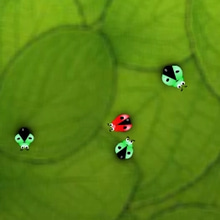
The insect theme gives the whole thing a playful identity too. If this were just colored blocks, it might still be fun, but turning them into bugs makes it feel livelier, stranger, and a bit more memorable. There is movement in the idea, even when the board itself stays clean and readable. Tiny swarming energy. Tiny colony energy. Tiny “why do I care this much about arranging digital beetles?” energy. Very effective.
On Kiz10, Bugs fits perfectly into that classic browser puzzle category where the game is easy to understand but keeps finding ways to raise your pulse anyway. It is not trying to bury you under complexity. It just hands you a sharp concept, adds time pressure, and lets your own panic do the rest.
⏳🪲 The Timer Is Your Least Favorite Character
The real villain in Bugs is not any specific insect. It is the clock. That little invisible force hovering over every move, quietly reminding you that hesitation is expensive and sloppy thinking gets punished fast. Puzzle games change completely once time enters the room. A calm matching decision becomes a hurried instinct. A careful plan becomes a half-panicked gamble. Suddenly you are not only solving; you are surviving your own reactions.
That is what gives Bugs its bite. Matching same-color bugs sounds friendly. Growing them into larger groups sounds almost wholesome. But the moment time starts draining away, the whole mood shifts into something much more electric. You stop playing like a tourist and start playing like someone trying to keep the room from catching fire. Metaphorically, yes. Probably.
And yet the game does not need chaos on every inch of the screen to feel intense. That is the clever part. Because the core objective is so clear, every second of tension lands harder. You always know what you should be doing. The challenge is doing it fast enough, cleanly enough, and without making the kind of desperate move that looks smart for half a second and then ruins the whole board. We have all been there. “No, no, I definitely meant to do that.” Lies. Complete lies.
The best timed puzzle games create that strange mental split where one part of you is thinking strategically and the other part is just yelling internally. Bugs feels built for exactly that kind of split. It has enough order to feel fair and enough urgency to keep your hands moving. That balance matters. Too calm, and it drifts. Too cruel, and it stops being fun. Here, the pressure feels playful, even when it is making you mildly dramatic.
🧠💥 Match, Merge, Regret, Recover
At its core, Bugs works because the act of grouping matching colors is naturally satisfying. Humans, for reasons both noble and slightly ridiculous, love organizing things. We love patterns. We love when scattered chaos suddenly makes sense. Puzzle games have known this forever, and Bugs taps into that instinct without overcomplicating it. You are not deciphering ancient runes or managing seven layered systems. You are scanning the board, spotting opportunities, and making quick pattern-based decisions that pay off immediately.
That direct loop is strong. Find same-color bugs. Unite them. Make them bigger. Keep going. The progression feels visible, which is hugely important. Good puzzle games show you your success. They do not hide it in menus or abstract math. They let you see it happen right there on the board. One clean group becomes a larger one, and suddenly the whole screen feels a little more under control. For a moment, anyway.
Because of that, every move has a tiny emotional charge. Good move? Relief. Great move? Pride. Bad move? You stare at the board like it personally betrayed you. The game gets a surprising amount of personality out of such a compact mechanic because the feelings around each decision are so immediate. There is no delay between thought and consequence. That makes Bugs easy to enter and annoyingly difficult to leave.
It also gives the game a natural replay pull. Fast rounds, obvious goals, rising pressure, instant feedback—those ingredients are lethal in the best browser-game way. You can finish a session and still feel the itch to try again because you know, absolutely know, that you could have played that better. Maybe quicker. Maybe smarter. Maybe with slightly less panic and slightly more dignity. Maybe not. Still worth trying.
🌈🐛 When the Board Starts Talking Back
There is a moment in puzzle games like this where the screen stops looking like a simple arrangement of colors and starts feeling alive. Not literally, hopefully. More like your brain begins reading it as a living puzzle ecosystem. Clusters begin calling for attention. Certain colors become immediate threats or opportunities. Dead space annoys you. Efficient paths look beautiful. The board becomes less of an object and more of an argument.
Bugs seems perfect for that kind of transformation because its insect theme already suggests movement and grouping. Even if the mechanics remain clean and arcade-like, the visual idea of bugs joining together gives every successful match a little extra texture. It does not feel mechanical in a cold way. It feels active. Swarmy. Slightly chaotic. A puzzle game with tiny legs, basically.
And the more pressure builds, the more the experience shifts from methodical to instinctive. You stop narrating each move in your head. You start reacting faster, trusting your eye, chasing clusters before the timer steals the chance. That does not mean strategy disappears. It just gets compressed. Strategy becomes speed-thought. A flash of recognition. A quick correction. A moment of “there, that one, now go.”
That is a wonderful zone for a casual puzzle game to hit. It makes the player feel smart and frantic at the same time. Not always graceful, but definitely engaged. Bugs knows that clean simplicity can be more gripping than over-designed complexity, especially when the game respects your time and keeps the action moving.
🎮✨ Why Bugs Still Feels So Good to Play
Bugs succeeds because it understands an old truth about arcade puzzle games: a small idea, handled well, can create a lot of excitement. It does not need a giant story or a tower of gimmicks. It just needs a strong mechanic, readable pressure, and enough visual charm to make the board feel inviting even while the timer is quietly ruining your peace.
The color-matching concept gives it accessibility. The growing bug groups give it identity. The countdown gives it urgency. Together, those pieces create a loop that feels bright, fast, and genuinely hard to shake off. One round becomes another. Another becomes “okay, one last try.” That phrase, as always, is a trap.
And maybe that is the nicest thing about Bugs on Kiz10. It feels light, but not empty. It feels funny, but not disposable. It has enough challenge to wake you up and enough simplicity to keep the fun from getting buried. If you enjoy puzzles games, matching games, quick arcade challenges, or anything that turns color, speed, and pattern recognition into a low-key obsession, Bugs has exactly the right kind of energy.
It is a small storm of color and timing, full of tiny creatures and big split-second decisions. Cute? Sure. Relaxing? Sometimes. Until the clock starts glaring at you again 🐞





 5 (16 votes)
 Share
Share
 Embed
Embed