🍔 The first table is already angry
Chain of Restaurants sounds simple at first. Maybe even calm. Open a place, serve food, earn money, grow the business. Nice. Reasonable. Civilized. Then the first rush hits, three customers want completely different things, somebody is losing patience near the counter, your brain starts dividing itself into tiny screaming departments, and suddenly this is not a peaceful business game anymore. This is survival in an apron.
That is exactly the charm of a restaurant management game like this. It takes something familiar—food, service, customers, upgrades—and turns it into a glorious chain reaction of pressure. You are not just placing dishes on plates. You are juggling time, speed, expectations, money, and that constant feeling that if you stop moving for one second, the whole operation may collapse in a shower of complaints and digital disappointment. Very elegant chaos. Very addictive.
Chain of Restaurants works best when you lean into that pressure instead of resisting it. The fun is not in pretending the kitchen is under control. The fun is in realizing that control is temporary, improvisation is everything, and every successful wave of customers feels like a tiny miracle. One minute you are calmly sending out orders. The next minute you are mentally sprinting between tables, stations, timers, upgrades, and your own increasingly dramatic inner monologue. It is the kind of game that makes multitasking feel like both a talent and a prank.
🍟 Hungry customers are tiny bosses
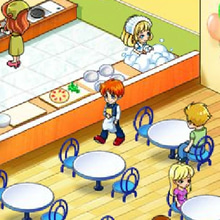
Restaurant games always understand one important truth: customers become terrifying the moment they are forced to wait. In Chain of Restaurants, that pressure becomes the heartbeat of the whole experience. Every customer is basically a walking timer with opinions. They arrive hopeful. They stand there politely for a second. Then they start radiating that dangerous energy that says, “I asked for one thing. Why is this taking forever?” And suddenly you are not running a cute restaurant anymore. You are managing expectations in a crisis zone.
That is where the game gets fun in a very specific way. You start recognizing priorities. Which orders can be finished quickly? Which dishes need more prep? When should you rush the easy ticket, and when is it smarter to invest those few extra seconds in a bigger order? A good restaurant management game does not just test speed. It tests judgment. Chain of Restaurants, by its very name, suggests growth and scale, and that changes the mood. This is not one tiny kitchen forever. This is a business with ambition.
And ambition in games like this always creates risk. Once money starts flowing, upgrades start calling your name. Faster prep stations. Better equipment. More efficient service. Maybe a bigger menu. Maybe a whole new location. Suddenly you are no longer just trying to survive the lunch rush. You are trying to build something larger while still keeping the current restaurant from exploding into misery. That tension between present chaos and future expansion is where a lot of the magic happens.
🧾 Orders everywhere, dignity nowhere
There is a weird beauty to a well-designed food game. From the outside, it looks repetitive. Click, prepare, serve, repeat. But from the inside, when you are playing, it becomes this sharp little puzzle of movement and timing. That is what gives Chain of Restaurants its staying power. Even if the basic loop is easy to understand, the pressure of multiple simultaneous tasks changes everything.
A single order is simple. Five orders are a plan. Ten orders are a lifestyle problem.
That escalation is where the real entertainment lives. You begin each round thinking you will stay organized this time. You will be efficient, maybe even graceful. Then a new wave arrives, something takes longer than expected, another station needs attention, and now your kitchen flow has become an elaborate dance choreographed by panic 😅 Somehow, in the middle of it, you still manage to pull off a streak of perfect serves, and for a few seconds you feel unstoppable. That feeling is gold. It is exactly what keeps management games alive.
And the nice thing is that each mistake usually teaches you something. Maybe you invested in the wrong upgrade too early. Maybe you focused too much on one high-value order while losing the rhythm everywhere else. Maybe you ignored the simple jobs and created your own disaster. That kind of failure is useful. Frustrating, yes, but useful. It gives the game that satisfying sense of improvement where success starts feeling earned rather than random.
🏪 One restaurant becomes a whole problem
The word “chain” changes everything. It implies scale. Expansion. Bigger dreams. More moving parts. That gives Chain of Restaurants a slightly different flavor from a small cooking game about one kitchen and one menu. Here, the fantasy is not just becoming good at serving food. It is building a restaurant empire, one rush hour at a time.
And that empire-building fantasy is delicious because it creates momentum outside the moment-to-moment action. You are not only trying to complete the current shift. You are feeding a larger machine. Every coin matters. Every efficient round has consequences. Every improvement pushes you toward something bigger, whether that means a stronger location, a better setup, or simply the ability to handle future madness with less suffering.
Of course, growth also introduces that beautiful managerial anxiety. More options mean more decisions. New systems mean more chances to make terrible choices with confidence. Maybe you expand too quickly. Maybe you overestimate how ready your operation really is. Maybe you unlock more complexity before mastering the basics. That is part of the fun. A business game without risk feels sterile. A business game with slightly reckless growth? Much better.
There is also a satisfying fantasy in seeing the place evolve. What begins as a scrappy little food operation gradually feels more serious, more capable, more alive. Even when the pace gets brutal, there is still that sense of progress under everything. You are not just surviving random shifts. You are building a machine and learning how to keep it fed.
🔥 Stress, upgrades, and that dangerous “one more shift” feeling
Chain of Restaurants has the kind of loop that sneaks up on you. You think you are done after one round, but the last run almost worked. You were close. One better upgrade, one cleaner sequence, one smarter decision, and the whole restaurant would have flowed beautifully. So you go again.
That “one more shift” energy is what separates forgettable management games from the sticky ones. It comes from the combination of immediate pressure and longer-term growth. The shift itself is exciting because it is chaotic. The progression is exciting because it promises a smoother, stronger next attempt. Those two layers feed each other perfectly.
Upgrades deserve special attention here because they always change the emotional texture of a run. Better tools do not just make things faster. They make you bolder. You start believing you can handle more customers, more recipes, more chaos. Sometimes you are right. Sometimes the game politely reminds you that confidence is not the same thing as planning. Both outcomes are entertaining.
And then there is the strange joy of recovery. Some of the best moments in restaurant games are not flawless runs. They are messy saves. A streak that almost collapsed, then somehow came back together through quick decisions and a tiny miracle. Those moments feel dramatic in a way that should be impossible for a game about digital food, yet there they are. Tiny kitchen epics. Burger opera. Fryer tragedy narrowly avoided.
👑 Why Chain of Restaurants is easy to get hooked on
On Kiz10, Chain of Restaurants makes perfect sense as a fast, rewarding restaurant management game for players who enjoy cooking pressure, upgrade systems, and time-management chaos. The title naturally suggests food business growth, multiple locations, and service-focused gameplay, which fits closely with Kiz10’s active cooking and management categories.
What makes the game appealing is how relatable the pressure feels even inside a playful arcade structure. Serve faster. Think smarter. Upgrade carefully. Keep the customers happy. Build something bigger. Those goals are simple, but when they all collide at once, the game becomes wonderfully intense. It is not about realism. It is about momentum. It is about surviving the rush with style, even if that style occasionally looks like panicked clicking and quiet regret.
If you like online restaurant games, cooking games, and time management challenges that combine fast decisions with satisfying business growth, Chain of Restaurants has the right kind of energy. It is loud, hungry, demanding, and weirdly hard to stop playing. You begin by serving meals. You end by defending your fragile food empire from the unstoppable force known as lunchtime 🤯
For the similar-games section below, I matched this title to live Kiz10 restaurant, cooking, and food-management pages so the links stay inside real Kiz10 games only.


















 Share
Share
 Embed
Embed


