𝗧𝗛𝗜𝗦 𝗚𝗔𝗠𝗘 𝗗𝗢𝗘𝗦 𝗡𝗢𝗧 𝗔𝗦𝗞 𝗜𝗙 𝗬𝗢𝗨 𝗧𝗥𝗨𝗦𝗧 𝗬𝗢𝗨𝗥 𝗙𝗥𝗜𝗘𝗡𝗗. 𝗜𝗧 𝗔𝗦𝗦𝗨𝗠𝗘𝗦 𝗬𝗢𝗨 𝗛𝗔𝗩𝗘 𝗡𝗢 𝗖𝗛𝗢𝗜𝗖𝗘 ⛓️
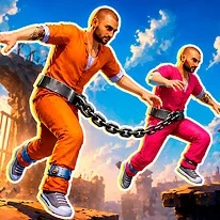
Chained Together: Co-Op Parkour takes a simple parkour challenge and makes it instantly more dangerous by adding the one thing most platform games politely avoid: shared consequences. Two players, one screen, one chain, and zero room for selfish movement. The result is exactly the kind of chaos that sounds funny at first and then slowly becomes a test of friendship, timing, and emotional stability. You are not just jumping across platforms. You are dragging another human being through the same disaster while hoping they do not return the favor at the worst possible moment.
That is what makes the game so good on Kiz10. It understands that co-op is much more interesting when success and failure are physically connected. The chain is not a cute visual gimmick hanging between two characters for decoration. It is the whole game. It changes how you jump, when you stop, how you recover, and what “good movement” even means. Suddenly a clean solo leap is not enough. Now you have to think about arc, weight, swing, rescue angles, and whether your partner is about to panic-jump both of you into a reset.
The best part is that it feels intense immediately. There is no long warm-up where the game slowly pretends to be polite. From the start, every obstacle is shared, every mistake has company, and every successful landing feels like a tiny miracle built on trust and luck.
𝗧𝗛𝗘 𝗖𝗛𝗔𝗜𝗡 𝗜𝗦 𝗡𝗢𝗧 𝗔 𝗣𝗘𝗡𝗔𝗟𝗧𝗬. 𝗜𝗧 𝗜𝗦 𝗧𝗛𝗘 𝗪𝗛𝗢𝗟𝗘 𝗣𝗨𝗭𝗭𝗟𝗘 🔗
A lot of co-op platformers simply place two players in the same stage and let teamwork happen naturally. Chained Together: Co-Op Parkour does something much better. It forces teamwork into the physics itself. The chain turns every movement into a negotiation. Go too far ahead and you pull your partner off line. Fall badly and you become a heavy problem instead of just a dead teammate. Try to rush a jump without considering distance and timing, and suddenly both of you are learning about gravity together.
That is why the chain feels so clever. It is restrictive, yes, but in a way that creates possibilities as well as disaster. You can use it to pull someone to safety, to tension a swing, to support a difficult recovery, or to save a run that looked completely doomed half a second earlier. This is what gives the game its identity. The chain is both danger and tool, punishment and solution, comedy and terror all at once.
It also means the game constantly asks players to think in pairs. A jump is never just “can I make this?” It becomes “can we make this without ruining the angle, stretching too far, or leaving one of us in a position the chain cannot fix?” That extra layer is where the real fun lives.
𝗘𝗩𝗘𝗥𝗬 𝗝𝗨𝗠𝗣 𝗜𝗦 𝗔 𝗦𝗛𝗔𝗥𝗘𝗗 𝗔𝗥𝗚𝗨𝗠𝗘𝗡𝗧 𝗔𝗕𝗢𝗨𝗧 𝗧𝗜𝗠𝗜𝗡𝗚 🪂
Platforming feels very different when you are no longer allowed to think like an individual. In Chained Together: Co-Op Parkour, good timing is no longer a private skill. It becomes a joint language. One player jumps a little too early, the other compensates. One hesitates, the other gets pulled into a weird half-landing that should not have worked but somehow does. Every platform becomes a conversation between two people trying to move as one creature with four legs and a terrible future.
That is why the game gets so funny and so stressful. Perfect cooperation feels incredible. You line up the jump, both players commit, the chain stays tight but not destructive, and you land cleanly. It feels smooth for one beautiful second. Then the next obstacle reminds you that the game has no respect for your new confidence. A late hop, a nervous correction, one awkward collision, and the whole run becomes a ragged little lesson in why teamwork sounds easier than it is.
But that tension is the point. The game is not trying to create graceful solo parkour with a spectator attached. It is trying to create mutual dependence, and it does that extremely well.
𝗦𝗔𝗩𝗜𝗡𝗚 𝗬𝗢𝗨𝗥 𝗣𝗔𝗥𝗧𝗡𝗘𝗥 𝗙𝗘𝗘𝗟𝗦 𝗛𝗘𝗥𝗢𝗜𝗖. 𝗡𝗘𝗘𝗗𝗜𝗡𝗚 𝗧𝗢 𝗕𝗘 𝗦𝗔𝗩𝗘𝗗 𝗙𝗘𝗘𝗟𝗦 𝗘𝗠𝗕𝗔𝗥𝗥𝗔𝗦𝗦𝗜𝗡𝗚 😅
One of the best ideas in the game is that the chain is not only there to punish falls. It also creates rescue opportunities. If your partner slips, there is still a brief window where skill and fast thinking can pull the run back from total failure. That makes the parkour much more dynamic. Falling is bad, but not always final. A clutch save can turn a terrible moment into the highlight of the whole session.
This is where Chained Together: Co-Op Parkour becomes more than just a hard obstacle game. It starts telling tiny stories through movement. One player dangles. The other holds position. The chain tightens. A last-second pull turns disaster into survival. Those moments are exciting because they feel earned and messy at the same time. Not clean heroics. Better. Scrappy, ridiculous heroics with a lot more screaming.
The rescue mechanic also strengthens the trust theme. Good teammates are not just players who land their own jumps. They are players who can stabilize the mess after something goes wrong. In a game like this, recovery matters as much as raw precision.
𝗧𝗛𝗘 𝗟𝗘𝗩𝗘𝗟𝗦 𝗔𝗥𝗘 𝗕𝗨𝗜𝗟𝗧 𝗧𝗢 𝗠𝗔𝗞𝗘 𝗖𝗢𝗢𝗥𝗗𝗜𝗡𝗔𝗧𝗜𝗢𝗡 𝗟𝗢𝗢𝗞 𝗟𝗜𝗞𝗘 𝗠𝗔𝗗𝗡𝗘𝗦 🌪️
The stage design sounds like it fully understands the concept. Platforms, traps, and environmental puzzles are not just there to test jump accuracy. They are there to test whether two players can maintain shared rhythm under pressure. That is an important difference. A solo obstacle course can be brutal, but at least it only judges one body at a time. Here, the same obstacle becomes much more dangerous because it interacts with chain physics, distance, momentum, and communication.
This gives the levels a lot of replay value. A section that seems impossible at first often becomes manageable once both players agree on the timing and role split. One leads, one follows. One anchors, one leaps. One commits, the other delays slightly to avoid tangling the chain. Those small adjustments can completely change the outcome of a room or obstacle line.
And because the game apparently mixes pure parkour with puzzle-style moments, the pace should stay varied. That helps a lot. Constant jumping is fun, but shared problem-solving gives the whole experience more texture. It also creates more opportunities for that classic co-op moment where two people look at the same obstacle and somehow come up with completely different bad plans.
𝗧𝗛𝗘 𝗧𝗜𝗠𝗘𝗥 𝗔𝗗𝗗𝗦 𝗝𝗨𝗦𝗧 𝗘𝗡𝗢𝗨𝗚𝗛 𝗘𝗚𝗢 𝗧𝗢 𝗠𝗔𝗞𝗘 𝗘𝗩𝗘𝗥𝗬𝗧𝗛𝗜𝗡𝗚 𝗪𝗢𝗥𝗦𝗘 ⏱️
Built-in timers are always dangerous in a game like this because they transform survival into competition. Suddenly it is not enough to finish the level. Now there is the idea that you could finish it faster. Cleaner. Better. That is exactly how good co-op games create replayability. First you are just happy to reach the end together. Then you start noticing where the run slowed down, where one hesitation cost you three seconds, where one bad recovery turned a good attempt into a merely decent one. That thought loop is incredibly powerful.
This is especially true in parkour games because speed naturally feels satisfying. Once the basic coordination is there, the desire to optimize arrives almost automatically. The timer becomes a quiet little insult hanging over every decent performance. You can do better. You know you can. The chain maybe disagrees, but the timer keeps whispering anyway.
That kind of challenge is perfect for Kiz10 players who enjoy improving routes, replaying obstacle courses, and turning platforming into a shared obsession.
𝗧𝗛𝗘 𝗚𝗔𝗠𝗘 𝗜𝗦 𝗔𝗕𝗢𝗨𝗧 𝗙𝗥𝗜𝗘𝗡𝗗𝗦𝗛𝗜𝗣, 𝗕𝗨𝗧 𝗔𝗟𝗦𝗢 𝗔 𝗟𝗜𝗧𝗧𝗟𝗘 𝗔𝗕𝗢𝗨𝗧 𝗧𝗢𝗟𝗘𝗥𝗔𝗡𝗖𝗘 😂
The funniest thing about Chained Together: Co-Op Parkour is that it understands something very real about co-op games. The mechanics create laughter and blame in equal measure. One bad jump can be tragic, but also hilarious. One great recovery can make both players feel like geniuses for ten seconds. The chain ensures that everything emotional is shared. That means victories feel bigger, but so do mistakes. There is no hiding from the consequences when your body is literally tied to them.
And that is exactly what makes the game memorable. It does not just produce difficult jumps. It produces stories. “Remember that impossible save?” “Remember when you panicked and dragged us both off the platform?” “Remember when we somehow made that gap even though the chain looked completely wrong?” Those are the moments co-op games are supposed to create, and this one seems built entirely around them.
𝗪𝗛𝗬 𝗖𝗛𝗔𝗜𝗡𝗘𝗗 𝗧𝗢𝗚𝗘𝗧𝗛𝗘𝗥: 𝗖𝗢-𝗢𝗣 𝗣𝗔𝗥𝗞𝗢𝗨𝗥 𝗙𝗜𝗧𝗦 𝗞𝗜𝗭𝟭𝟬 𝗦𝗢 𝗪𝗘𝗟𝗟 🏆
On kiz10.com, this game fits perfectly for players who enjoy obby games, co-op platformers, chained physics, shared-screen challenges, and chaotic parkour that rewards communication just as much as movement skill. Kiz10 already features strong obby and teamwork-friendly platformers like Obby with Friends: Draw and Jump!, Obby Parkour: Choose Your Tower of Hell, Roblox Obby: Tower of Hell, and Money Movers 4 Jailbreack, so Chained Together: Co-Op Parkour lands in exactly the right neighborhood.
If you like games where teamwork is physical, where every jump matters twice, and where saving your partner feels just as good as landing your own move, this one has a lot to offer. It is frantic, funny, and built around the kind of shared failure that somehow makes players want another try immediately.
Chained Together: Co-Op Parkour is not only about reaching the finish line. It is about staying connected long enough to deserve it.





 Share
Share
 Embed
Embed