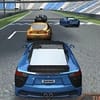
𝗡𝗘𝗢𝗡-𝗙𝗥𝗘𝗘 𝗦𝗣𝗘𝗘𝗗, 𝗣𝗨𝗥𝗘 𝗧𝗥𝗔𝗖𝗞 𝗗𝗥𝗔𝗠𝗔 🏁🚗
Fast Circuit 3D Racing is the kind of racing game that doesn’t ask if you’re warmed up. It just drops you onto a track, hands you a car, and dares you to be smooth at a speed that makes your brain quietly complain. On Kiz10 it hits that sweet browser-racing zone: instant action, no long tutorial sermons, and a constant tug-of-war between “I need to go faster” and “if I go faster I will absolutely mess up that corner again.” It’s all about circuits, clean lines, and the tiny decisions that separate a calm lap from a panic lap.
The premise is simple, almost smug about it. Choose a vehicle, enter the competition, and fight through different race styles. But the simplicity is a trap, because once you’re actually driving, the game starts demanding rhythm. You can’t muscle your way through a circuit racer forever. At some point you have to stop driving like you’re late for the last bus and start driving like you understand what corners are for. And the funny part is, the moment you start respecting the track, you get faster. Not slower. Faster. The game rewards control, then rewards courage on top of that.
𝗧𝗛𝗘 𝗧𝗥𝗔𝗖𝗞 𝗜𝗦 𝗔 𝗠𝗘𝗠𝗢𝗥𝗬 𝗧𝗘𝗦𝗧 𝗪𝗜𝗧𝗛 𝗧𝗜𝗥𝗘𝗦 🧠🛞
A circuit racer lives and dies on repetition, and Fast Circuit 3D Racing leans into that in the best way. Your first lap is always messy. You’re learning where the road tightens, where the turn opens, where the car gets light, where the wall sits like a silent judge waiting for you to touch it. The second lap is you trying to fix what went wrong. The third lap is where you start feeling confident… and that’s usually where you overdo it. It’s a familiar cycle, almost comforting, like a ritual. Mess up, adjust, improve, get cocky, repeat.
What makes this one stick is that the tracks aren’t just scenery. They’re problems. Each corner is a question: do you brake early and stay safe, or do you brake late and risk turning your car into a spinning headline? Each straight is another question: do you push top speed and commit, or do you leave a little margin because you know the next bend is going to bite? The game keeps these questions coming quickly enough that you never fully relax, but not so aggressively that it feels unfair. It feels like a challenge you can solve, which is the most addictive kind.
𝗚𝗔𝗥𝗔𝗚𝗘 𝗘𝗡𝗘𝗥𝗚𝗬: 𝗣𝗜𝗖𝗞𝗜𝗡𝗚 𝗔 𝗖𝗔𝗥 𝗜𝗦 𝗣𝗜𝗖𝗞𝗜𝗡𝗚 𝗔 𝗣𝗘𝗥𝗦𝗢𝗡𝗔𝗟𝗜𝗧𝗬 🚙✨
The car selection is where you start building your own little story. Some cars feel like they want to behave, steady through corners, predictable under pressure. Others feel like they’re itching to break traction and make you work for it. Even if you don’t think about stats, you’ll feel the difference in how you drive. A stable car makes you brave in corners. A twitchier car makes you cautious, but then you start learning to be precise, and suddenly that twitchiness becomes speed.
And yes, you’ll have that moment where you pick a car purely because it looks fast, then the first corner arrives and you realize looks are not grip. That’s part of the fun. Circuit racing has this weird honesty: the track always tells the truth. If you’re sloppy, you lose time. If you’re smooth, you gain time. If you’re greedy, the wall says hello.
𝗧𝗛𝗥𝗘𝗘 𝗠𝗢𝗗𝗘𝗦, 𝗢𝗡𝗘 𝗢𝗕𝗦𝗘𝗦𝗦𝗜𝗢𝗡: 𝗞𝗘𝗘𝗣 𝗜𝗧 𝗖𝗟𝗘𝗔𝗡 😬🏁
Fast Circuit 3D Racing doesn’t feel like one single type of race. It gives you variety that changes how you think. Circuit racing is the pure form, the “learn the track, build the lap” mode where your goal is consistency. Knockout flips the mood into survival. Suddenly it’s not only about being fast, it’s about not being the slow one when the clock tightens. That pressure changes everything. You start taking calculated risks. You start passing in places you normally wouldn’t. You start feeling your pulse in your fingertips, which is silly because it’s a browser race, but also very real.
Time Attack is the mode that turns you into a perfectionist you didn’t ask to become. It’s you versus the clock, you versus your last mistake, you versus that one corner where you keep losing momentum. This is where the game becomes weirdly personal. Nobody bumped you. Nobody blocked you. You lost because you turned in too late or got on throttle too early and slid wider than you meant to. Time Attack makes you honest with yourself. It also makes you restart a lot. Not because you have to, but because you know you can do it cleaner.
𝗖𝗢𝗥𝗡𝗘𝗥𝗦 𝗔𝗥𝗘 𝗪𝗛𝗘𝗥𝗘 𝗬𝗢𝗨 𝗘𝗜𝗧𝗛𝗘𝗥 𝗪𝗜𝗡 𝗢𝗥 𝗗𝗜𝗦𝗔𝗣𝗣𝗢𝗜𝗡𝗧 𝗬𝗢𝗨𝗥𝗦𝗘𝗟𝗙 🌀😅
If you want to get good at this game fast, stop thinking of speed as a straight-line thing. Speed is exit speed. The real victory happens when you come out of a corner clean and already accelerating while your brain is still celebrating that you didn’t crash. That’s how lap time disappears. Not through heroic late braking every single turn, but through clean entries, calm steering, and earlier throttle.
A nice little mental image helps: pretend your car is attached to a string and you’re trying not to snap it. Sharp steering snaps the string. Panicked corrections snap the string. Smooth arcs keep it intact. When you drive like that, the car stays settled, and settled cars are fast cars. You’ll notice you’re not fighting the wheel anymore. You’re guiding it. And the game suddenly feels lighter, like the track isn’t bullying you as much.
Then again, you’ll still have those moments where you try to “save” a corner with an overcorrection and you end up sliding into a worse line. That’s normal. That’s racing. The trick is learning when to accept a small mistake instead of turning it into a big one. Small mistakes cost seconds. Big mistakes end runs.
𝗞𝗡𝗢𝗖𝗞𝗢𝗨𝗧 𝗣𝗥𝗘𝗦𝗦𝗨𝗥𝗘: 𝗪𝗛𝗘𝗡 𝗧𝗛𝗘 𝗚𝗔𝗠𝗘 𝗦𝗧𝗔𝗥𝗧𝗦 𝗪𝗛𝗜𝗦𝗣𝗘𝗥𝗜𝗡𝗚 “𝗚𝗢” 😈⏱️
Knockout mode is where the game feels like it’s staring directly at you. You can’t just do a safe lap and hope it’s enough. The pacing pushes you to be aggressive in the right places, and careful in the dangerous ones. You start learning track economy. Where can you push? Where can you not afford to lose speed? Which corner is worth risking a tighter line, and which corner is a trap that will punish bravado?
This is also where you learn not to panic-pass. Passing in a circuit racer is not about sudden swerves. It’s about setting up a better exit and letting your speed do the work. When you dive into a gap with no plan, you usually lose more time than you gain. When you set the pass up one corner earlier, it feels effortless, and that’s the best feeling in racing, the “I didn’t force it, I earned it” feeling.
𝗧𝗜𝗠𝗘 𝗔𝗧𝗧𝗔𝗖𝗞 𝗜𝗦 𝗔 𝗦𝗣𝗘𝗘𝗗 𝗗𝗜𝗔𝗥𝗬 📓⚡
Time Attack turns every lap into a little diary entry of your driving habits. You’ll notice patterns. You always brake too late into the same corner. You always drift wide on the same exit. You always hesitate on the same straight because you don’t trust the next bend. Once you see the pattern, you can fix it, and that’s where the game starts feeling satisfying in a quieter way. You’re not just playing. You’re improving.
And improvement in a circuit racing game is weirdly addictive because it’s measurable. You feel it. Your lap becomes smoother. Your car stays more stable. Your mistakes shrink. Even if you don’t beat every opponent instantly, you feel like a better driver than you were ten minutes ago. That’s a rare and pleasant feeling in a quick browser game.
Fast Circuit 3D Racing on Kiz10 is for players who like racing that rewards calm hands, sharp eyes, and a little bit of stubbornness. It’s fast, it’s tense in the fun way, and it keeps dragging you back with that simple, dangerous thoughts: one more race, one cleaner lap, one fewer mistakes. 🏁🚗💨





 Share
Share
 Embed
Embed