🐾 𝗧𝗛𝗘 𝗪𝗛𝗢𝗟𝗘 𝗪𝗢𝗥𝗟𝗗 𝗜𝗦 𝗔 𝗛𝗜𝗗𝗜𝗡𝗚 𝗦𝗣𝗢𝗧
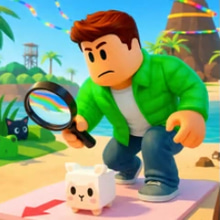
Find The Pets takes a very dangerous idea and turns it into a game: what if curiosity never stopped rewarding you? What if every rooftop, tunnel, ledge, cave entrance, weird corner, and suspicious-looking shortcut had a chance to hide something adorable, ridiculous, or gloriously unexpected? That is the energy here. This is a 3D platform game built around exploration, collection, and the wonderful madness of trying to find all 150 pets scattered across large themed worlds.
The premise is wonderfully clean. You enter a map, move through platforms and secret routes, search every possible corner, and collect pets one by one. Some are easy to spot. Some absolutely are not. Some sit in places that practically wave at you. Others seem tucked away by a level designer who woke up and chose mischief. That variety is exactly what makes the hunt so satisfying. The game understands that collecting feels good, but discovering feels even better. You are not simply filling a number. You are uncovering a world piece by piece, and that gives the whole experience a very sticky, very replayable charm.
🧭 𝗧𝗛𝗜𝗦 𝗜𝗦 𝗡𝗢𝗧 𝗔 𝗥𝗔𝗖𝗘, 𝗜𝗧 𝗜𝗦 𝗔 𝗣𝗘𝗧 𝗛𝗨𝗡𝗧 𝗪𝗜𝗧𝗛 𝗣𝗔𝗥𝗞𝗢𝗨𝗥 𝗕𝗥𝗔𝗜𝗡
At first glance, Find The Pets looks simple. Walk around. Spot the creature. Click or tap to collect it. Keep going. But the game becomes much more engaging once you realize the real challenge is not interaction. It is observation. This is a platformer where your eyes are doing as much work as your movement controls. You climb, jump, rotate the camera, and keep scanning everything like your brain has been hired as a full-time treasure detector.
That is where the fun really starts. A good collectathon does not only ask where you can go. It asks what you might have missed. That question powers the entire game. You see a narrow ledge above a doorway and suddenly wonder if something is hiding there. You spot a suspicious gap behind a rock formation and feel physically unable not to investigate. You notice a strange platform in the distance and immediately begin planning the path to reach it. Find The Pets keeps feeding that loop of curiosity, and once that happens, every environment starts feeling alive with possibility.
The platforming itself helps a lot. It gives the search structure. You are not only running across flat ground picking things up like a very committed grocery employee. You are climbing, jumping, crossing layers, and figuring out how the space connects. That makes each pet feel a little earned, especially the ones hidden in places that require a clever route or a bit of courage.
😺 𝗣𝗘𝗧𝗦 𝗔𝗥𝗘 𝗧𝗛𝗘 𝗥𝗘𝗪𝗔𝗥𝗗, 𝗕𝗨𝗧 𝗗𝗜𝗦𝗖𝗢𝗩𝗘𝗥𝗬 𝗜𝗦 𝗧𝗛𝗘 𝗔𝗗𝗗𝗜𝗖𝗧𝗜𝗢𝗡
The collection system is the beating heart of the game. There are 150 pets to find, and that number is just large enough to feel ambitious without becoming hopeless. You always feel like progress is possible, but never effortless. Every discovery gives you a small burst of satisfaction, and that burst builds into a much bigger obsession once your collection starts filling out.
What makes it even better is the personality of the pets themselves. The game leans into quirky creatures and meme-flavored animals, which gives the collecting process extra flavor. You are not gathering boring generic tokens. You are hunting weird little stars. That makes each find more memorable. It is easier to keep searching when the reward feels playful instead of purely mechanical.
And because there is no heavy handholding, the discoveries feel personal. The game does not constantly drag you by the nose toward the next objective. It lets you search. That freedom matters. It creates the kind of exploratory rhythm where players start forming their own routines, checking vertical spaces first, revisiting suspicious corners, using the map intelligently, and slowly learning how the worlds think. That sense of learning the game’s hiding logic is incredibly satisfying.
🌍 𝗠𝗨𝗟𝗧𝗜𝗣𝗟𝗘 𝗠𝗔𝗣𝗦 𝗠𝗘𝗔𝗡 𝗠𝗨𝗟𝗧𝗜𝗣𝗟𝗘 𝗢𝗕𝗦𝗘𝗦𝗦𝗜𝗢𝗡𝗦
One of the game’s smartest decisions is spreading the hunt across themed maps and varied biomes. That instantly keeps the collectathon structure from going flat. Different zones bring different shapes, moods, pathways, and visual clues. A pet hidden in a bright open area creates one kind of challenge. A pet tucked inside a darker corner of a denser map creates another. Variety like that matters because it forces your search habits to evolve.
Each world feels like a fresh puzzle box. You enter with the same broad objective, but the logic of exploration changes depending on the space. Some maps encourage rooftop scanning and vertical movement. Others hide secrets in passages, caves, or side routes that are easy to ignore if you rush. The result is a game that keeps your attention active. You cannot just repeat one lazy pattern and expect total completion.
That map variety also gives the experience a pleasant sense of scale. Even though the main goal is straightforward, the worlds make the journey feel bigger. You are not completing one repetitive loop. You are moving through distinct spaces, each with its own personality, and carrying your growing collection through all of them. That makes the whole thing feel more adventurous than a simple item hunt.
🗺️ 𝗠𝗔𝗣𝗦, 𝗠𝗘𝗡𝗨𝗦, 𝗔𝗡𝗗 𝗧𝗛𝗔𝗧 𝗧𝗜𝗡𝗬 𝗗𝗘𝗦𝗣𝗘𝗥𝗔𝗧𝗜𝗢𝗡 𝗧𝗢 𝗙𝗜𝗡𝗗 𝗪𝗛𝗔𝗧 𝗬𝗢𝗨 𝗠𝗜𝗦𝗦𝗘𝗗
Find The Pets also understands something important about large collection games: players need tools, but not too much help. That balance is handled nicely through the menus and navigation features. You can open the map, check your pet menu, and track what is still missing without turning the whole experience into automatic cleanup. That means the game supports your search without replacing it.
This is a subtle but important strength. Too little information and the hunt becomes frustrating. Too much information and the magic disappears. Here, the systems seem designed to keep you engaged in the actual process of looking. You still have to interpret the space, revisit zones, and think about where you have not been thorough enough. The game respects your ability to figure things out while still giving you enough structure to keep going.
That is especially useful when you start chasing the last few missing pets, which is always where these games turn slightly feral. Early progress feels breezy. Late progress feels personal. Suddenly you are circling a biome muttering things like “there is no way I missed one on that cliff again,” and the game quietly smiles because this is exactly the state it wanted.
🚀 𝗕𝗢𝗢𝗦𝗧𝗦 𝗖𝗛𝗔𝗡𝗚𝗘 𝗧𝗛𝗘 𝗪𝗔𝗬 𝗬𝗢𝗨 𝗦𝗘𝗔𝗥𝗖𝗛
The boost system adds another smart layer to the hunt. Fast running, super jump, and radar all change how you approach exploration. These are not just novelty tricks. They are practical tools that can completely reshape a search route. A speed boost helps you cover more ground quickly. Super jump opens new vertical possibilities. Radar turns vague suspicion into focused investigation. Suddenly a map you thought you understood becomes more open, more readable, more conquerable.
That makes the late-game search much more satisfying. Instead of pure trial and error, you gain ways to interact with the world more efficiently. Good exploration games often feel best when movement itself becomes part of the reward, and Find The Pets leans into that. The more tools you use, the more playful the search becomes. You are not simply combing a map. You are actively hunting.
And because the platforming and searching already work well together, the boosts feel like extensions of the core loop rather than distractions. They do not replace the need to explore carefully. They just make your exploration smarter, faster, and occasionally much more dramatic. Super-jumping onto a roof you were convinced had a hidden creature? Very satisfying. Radar ping sending you back to the one tunnel you ignored? Humbling, but useful.
🎮 𝗪𝗛𝗬 𝗙𝗜𝗡𝗗 𝗧𝗛𝗘 𝗣𝗘𝗧𝗦 𝗪𝗢𝗥𝗞𝗦 𝗦𝗢 𝗪𝗘𝗟𝗟 𝗢𝗡 𝗞𝗜𝗭𝟭𝟬
On Kiz10, Find The Pets is a great fit for players who enjoy platform games, Roblox-style obby adventures, pet collecting, and open-ended exploration. It is easy to start because the goal is instantly understandable, but it has enough hidden depth to keep you engaged far longer than expected. That is a very good combination. Casual players can jump in for short sessions and grab a few discoveries. Completionists can sink into the maps for much longer, chasing every last missing creature like it has become a personal mission from the universe.
The controls help that accessibility. Movement is clean, camera control is straightforward, and collecting stays simple. That means the difficulty comes from searching well, not fighting awkward input. The game trusts its world design and collection loop to carry the experience, and honestly, that trust pays off.
If you love exploration games where curiosity is constantly rewarded, Find The Pets is a strong choice on Kiz10.com. It turns platforming into investigation, collecting into obsession, and every corner into a tiny question mark. Somewhere out there, one more pet is sitting on a rooftop, behind a wall, above a cave, or tucked into a secret path you absolutely walked past earlier. And now you have to go back. Obviously. 🐶





 2.5 (151 votes)
 Share
Share
 Embed
Embed