
Five Nights at Epstein's








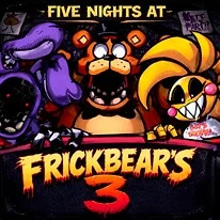
Five Nights at Frickbear's 3 is a brutal office horror game on Kiz10 where every camera check costs time, every reset feels dangerous, and one small mistake can turn the whole night into panic. (1840) Players game Online Now
 2.5 (162 votes)
 Share
Share
 Embed
Embed
Five Nights at Frickbear's 3 is a survival horror office game built around pressure, multitasking, and the ugly little realization that the room you are defending is already losing the argument. At first, the setup seems familiar enough. A security office, a few cameras, a dark building, and the promise that you only need to survive until morning. Then the game starts layering its problems properly. The cameras matter, yes, but they are only one part of the panic. Doors matter. Lights matter. Vents matter. Reset systems matter. Power matters. And once the animatronics start pushing from different angles, the whole night stops feeling like a simple defense job and starts feeling like a systems failure you are desperately trying to slow down.
What makes Five Nights at Frickbear's 3 work so well is that it does not rely on one easy source of fear. A weaker office horror game would send the same threat down the same path until the player solved the pattern and stopped feeling anything. This one sounds much nastier because the danger is layered. Some enemies pressure obvious routes. Others interfere with your ability to respond. Some want immediate reactions. Others punish the player for letting a smaller issue build quietly in the background until the whole office starts collapsing under it. That variety matters, because it keeps the room alive. You are never only watching one door and waiting to be brave.
Five Nights at Frickbear's 3 online also benefits from how mean its resource pressure feels. A good night-shift horror game understands that safety should have a cost, and this one clearly leans into that idea. Every defensive action burns something. Doors cost you. Lights cost you. Monitoring too aggressively costs you. Resets cost you time and attention, which is often even worse than spending power. That creates the exact kind of tension this genre needs. You are not just surviving monsters. You are budgeting survival itself, which is a much nastier problem once the night gets loud.
The reset systems are one of the smartest parts of the whole design. They add a second layer of vulnerability underneath the physical threat. It is not enough to keep the office secure in the obvious sense. You also need to keep the game functioning. The moment a system fails, the danger changes shape. Information becomes less reliable. Reactions become slower. Decisions start getting uglier because you are solving one problem while another is already advancing. A reset is never a peaceful menu action in a game like this. It is a moment where you are admitting that something important has already gone wrong and hoping the next problem waits politely while you fix it.
The animatronic roster gives the game much stronger replay value too. Kiz10’s current page specifically points to a larger cast with distinct behaviors, unlockable threats, and customizable nights, which is a very good fit for this kind of horror design. That means survival is not only about getting through one fixed set of patterns. It is about learning how different enemies change the office, how their attack styles overlap, and how much chaos you are willing to invite into future runs once you begin unlocking more of the nightmare. That progression gives the game a nasty twist. You are not just surviving horror. You are gradually curating it.
The office itself becomes much more interesting because of that overlap. A camera check is no longer only a camera check. It is time not spent somewhere else. A closed door is not just protection. It is a future problem if you hold it too long. A vent threat is not only scary on its own. It is dangerous because it arrives while the rest of the room is already demanding something. That stacking pressure is where the game gets its real identity. The fear does not come only from jumpscares. It comes from the moment three bad things are happening at once and none of them feel optional.
From an SEO point of view, this title naturally connects with players searching for FNAF-style games, office survival horror games, animatronic horror games, power management horror games, and browser jumpscare games. It brings together exactly the mix those players usually want: cameras, doors, vents, system resets, night progression, multiple enemy behaviors, and the kind of mounting panic that makes each successful night feel earned rather than lucky.
The pacing helps a lot too. A good run in this game should feel like a sequence of tiny emergencies that you barely keep under control, and that is exactly the fantasy the page suggests. The first minutes are about learning the flow. Then the threats begin to stack. Then something breaks, something moves, something drains too fast, and suddenly the room that looked manageable starts feeling much smaller than it did before. That shift from caution to overload is where the best office horror lives, and this game seems built around that exact pressure curve.
What really keeps players coming back is that each failure usually feels understandable. You can point to what went wrong. You ignored a pattern. You reset too late. You spent too much power pretending the room was safer than it was. You treated one threat like the whole problem and let another one grow quietly behind it. That clarity matters because it makes the next attempt feel useful instead of random. One better decision, one calmer reset, one less wasteful defensive move, and suddenly the same night starts looking beatable.
Play Five Nights at Frickbear's 3 on Kiz10 if you want a free online horror game with layered office pressure, multiple animatronic behaviors, power management, reset-based panic, and the kind of survival structure that punishes panic without ever letting you forget that panic is part of the point. Stay calm, learn the threats, and never waste power pretending the office is more stable than it really is.
The smartest way to improve is to stop reacting to every problem at full strength and start thinking in priorities. Strong nights come from short camera checks, cleaner resets, and understanding which threat needs an answer right now and which one is only trying to trick you into wasting resources too early.
Because every failed night feels like it was one calmer decision away from working. One cleaner reset, one better read on the office, one less wasteful use of power, and suddenly the whole shift starts feeling much more manageable than it did a minute ago.


Play Five Nights at Frickbears 3 on your phone or tablet by scanning this QR code! It's available on iPads, iPhones, and any Android devices.


