𝗪𝗘 𝗔𝗥𝗘 𝗜𝗡 𝗔 𝗦𝗜𝗠𝗨𝗟𝗔𝗧𝗜𝗢𝗡 𝗦𝗜𝗠𝗨𝗟𝗔𝗧𝗢𝗥: 𝗧𝗛𝗘 𝗚𝗔𝗠𝗘 𝗧𝗛𝗔𝗧 𝗦𝗧𝗔𝗥𝗘𝗦 𝗕𝗔𝗖𝗞 👁️🖥️
We Are In A Simulation Simulator is built around one terrifying idea: you are being observed, judged, and quietly tested. Not with big boss fights or loud explosions, but with something more uncomfortable—behavior. The world is a “simulation,” and your job isn’t to break it or question it. Your job is to survive inside it by doing the safest thing possible: copy everyone else.
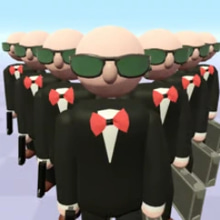
That’s the core mechanic, and it’s what makes the game feel creepy in a subtle way. It’s not horror with monsters in hallways. It’s horror with social rules. The crowd moves, you move. The crowd crouches, you crouch. The crowd jumps, you jump. Hesitate too long or do something that doesn’t match the pattern and you feel it instantly: you’re different, and in this world being different is basically waving a red flag at invisible monitors.
On Kiz10, it plays like a stealth game mixed with a reflex challenge and a social mimicry puzzle. You’re not only controlling a character—you’re controlling your “normalness.” Which is a strange sentence, but it fits. Every moment asks: are you blending in, or are you about to get noticed?
𝗧𝗛𝗘 𝗥𝗨𝗟𝗘: 𝗗𝗢𝗡’𝗧 𝗕𝗘 𝗦𝗣𝗘𝗖𝗜𝗔𝗟 😶🌫️
Most games reward creativity. This one rewards conformity. That’s the point. It turns everyday actions into a survival test, because you’re constantly scanning for cues from the people around you. If they stop, you stop. If they turn, you turn. If they crouch, you crouch. You become a shadow of the crowd, trying to stay perfectly synchronized like a human copy machine.
And the funny part is how quickly your brain adapts. At first you’ll try to “play normally,” exploring, testing controls, wandering. Then you realize wandering is suspicious. You start behaving like a cautious actor on a stage, following choreography you didn’t rehearse. You begin to watch the crowd the way you’d watch a teacher’s hands during an exam: any signal matters.
The game creates tension without needing a complex system. The tension comes from your fear of making the wrong move. Even a tiny mistake feels loud, like a glass breaking in a quiet room. 😅
𝗢𝗕𝗦𝗘𝗥𝗩𝗔𝗧𝗜𝗢𝗡 𝗜𝗦 𝗬𝗢𝗨𝗥 𝗦𝗨𝗣𝗘𝗥𝗣𝗢𝗪𝗘𝗥 🧠🔍
We Are In A Simulation Simulator is all about reading patterns fast. The “enemies” aren’t just the watchers; it’s the speed of change. The crowd may shift behavior suddenly. A new action might become the “correct” action. You need to notice it, accept it, and mirror it immediately. It’s not about being clever in a puzzle-solving way. It’s about being alert in a “I can’t miss anything” way.
That makes the game feel like a reaction test wrapped in a narrative skin. Your reflexes matter, but so does restraint. If you move too much, you draw attention. If you move too little, you might miss the moment the crowd changes. So you learn to hover in the perfect zone: calm enough to stay invisible, ready enough to react instantly.
It’s a weird balance. You’ll mess it up. You’ll learn. Then you’ll start predicting what’s coming, which feels amazing because it’s like you’ve learned the simulation’s language.
𝗖𝗢𝗡𝗧𝗥𝗢𝗟𝗦 𝗧𝗛𝗔𝗧 𝗙𝗜𝗧 𝗧𝗛𝗘 𝗧𝗛𝗘𝗠𝗘 🎮🕵️♂️
The controls are simple, which is good because your attention should be on the crowd, not on fighting the keyboard.
On PC, you move with WASD, crouch with C, jump with Space, and pause with P. Crouching is especially important because it’s a “low-profile” action that often helps you match the group while also staying less noticeable. Jumping is usually the loudest-looking move, so when the crowd jumps, you jump—no delay. When they don’t, keep your feet on the ground and your ego in a box.
On mobile, the game is built to be playable on the go, but the same rule applies: smooth, minimal movement, react when needed. The moment you start thrashing the camera like you’re looking for hidden loot, you’ll feel out of sync with the world.
𝗧𝗛𝗘 𝗔𝗧𝗠𝗢𝗦𝗣𝗛𝗘𝗥𝗘: 𝗖𝗟𝗘𝗔𝗡, 𝗤𝗨𝗜𝗘𝗧, 𝗔𝗡𝗗 𝗦𝗨𝗦𝗣𝗜𝗖𝗜𝗢𝗨𝗦 🧩👁️
The “simulation” vibe works because it doesn’t over-explain itself. The world feels controlled. The behavior rules feel arbitrary. And that’s what makes it unsettling. You’re encouraged to accept the environment as it is, to stop asking questions, to just follow. That theme hits a nerve because it mirrors real-life social pressure in an exaggerated, game-like form. Everyone’s doing it, so you do it. Everyone’s calm, so you act calm. Everyone’s moving together, so you move together.
It’s strangely immersive because it makes you think while you play, but not in a preachy way. More like: “Why does this feel so tense if nothing is attacking me?” Then you realize the fear is social and systemic. You’re afraid of being noticed.
And that’s why the title is funny and ominous at the same time. It’s called a simulator, but it’s basically a mirror: follow rules, fit in, don’t stand out, survive.
𝗛𝗢𝗪 𝗧𝗢 𝗦𝗨𝗥𝗩𝗜𝗩𝗘 𝗟𝗢𝗡𝗚𝗘𝗥 (𝗪𝗜𝗧𝗛𝗢𝗨𝗧 𝗕𝗘𝗖𝗢𝗠𝗜𝗡𝗚 𝗧𝗛𝗘 𝗢𝗕𝗩𝗜𝗢𝗨𝗦 𝗢𝗡𝗘) 🫥⚡
A good habit is to watch first, move second. When you enter a new area, take a quick moment to see what “normal” looks like there. Who’s moving? Who’s crouching? Is everyone jumping on a rhythm? Then match it.
Another habit is to avoid extra camera drama. It’s tempting to spin around constantly, but you’ll lose track of the crowd pattern. Keep your view steady and sweep calmly. When the crowd changes, that’s your cue to react fast.
If you’re unsure, stick close to the group. Not on top of them, but near enough that you can copy the moment you see a shift. Distance is dangerous because it delays your information. In this game, information is survival.
We Are In A Simulation Simulator on Kiz10 is a stealth-style mimicry challenge where the main goal is simple and stressful: act like you belong. Follow the crowd, copy their actions, and stay invisible to whatever is watching. You’re not here to break the system. You’re here to survive it. 👁️🧠





 Share
Share
 Embed
Embed