🏚️ The house that answers when you knock
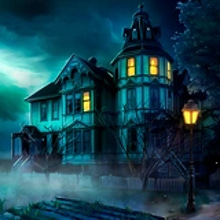
Number 23 sits at the end of a street that forgot how to be busy. The porch sags, ivy claws the brick, and the door is polite in the way old predators are polite. Your mentor—a stage magician with more truth than tricks—vanished through a portal he swore was safe. His final note only says: “If I’m late, listen to the house.” House 23 Escape is an atmospheric hidden-object adventure where listening is everything. Every scuff on the floorboards, every crooked frame, every draft that smells faintly of lavender is a hint. You don’t brute-force this place; you court it.
🔎 Touch, peer, eavesdrop—then act
Tap or click anywhere the room looks like it’s keeping a secret. The camera leans closer; a drawer yawns; a key blinks under dust like it meant to be found today. The game rewards eyes before hands. A glimmer in the wainscot telegraphs a loose panel. The fifth stair groans off-beat—press it, and a tool rolls out as if it were shy. You’ll begin to recognize the house’s grammar: patterns repeat with sly variations, and the set dressing is never just dressing. Even the wallpaper tells on the walls behind it if you stare long enough.
🧳 Inventory with opinions
Your bag becomes a traveling workbench: a brass key with teeth worn by too many seasons; a ribbon that remembers a particular knot; a monocle that makes invisible ink behave. Items are not trophies—they’re verbs. Drag chalk across a mirror and a message bleeds backward into honesty. Bind wire to a busted metronome and grant a stubborn lock the rhythm it understands. Inspect everything: open the locket, rotate the coin, fan the brittle pages of a diary to shake out a pressed bloom whose petals form a cipher. Combining isn’t guesswork; the house hums when you’re close.
👻 Ghosts who prefer riddles to jump scares
The residents are more theatrical than malicious. A caretaker in a tuxedo appears only in reflections, pointing two seconds too late—which is somehow exactly on time. A child spirit plays hot-and-cold with a music box melody, louder when you’re near the correct floor tile. A portrait winks when you swap two books on a shelf the way a clever librarian would. They’re puzzle partners with a flair for the dramatic pause, and they will absolutely clap (quietly) when you solve their favorite trick.
🧠 Puzzles that teach you the alphabet of the house
Early locks are candid: numbers, dials, click. Soon, logic folds into story. Roman numerals scratched into the banister aren’t counting steps—they’re compass hints for a rug with a stitched rose. A broken chessboard isn’t about checkmate—it’s a map of candle heights around the room. A cracked stained glass window filters moonlight into a pattern that fits the buttons on a safe like a lullaby. The best riddles don’t punish; they reveal. Here, revelation arrives with the warm certainty of a key sliding home.
🕯️ Light and shadow are co-conspirators
Carry a candle into the parlor and note how the flame leans near one wall. There’s a draft; there’s a door. Hold the monocle to a window stain and invisible ink glows like gossip. Turn off every lamp in the nursery and a spatter of glow-in-the-dark stars outlines a sequence you’ll need two rooms later. Light is not only atmosphere; it’s syntax. Read it like punctuation and the sentences of each room become crystal.
📜 The mentor’s voice, tucked between lines
Your teacher litters the house with notes only you would understand. “If you find this, congratulate the wallpaper; it hid me for an hour.” A recipe lists spices in an order that doubles as a keypad code. A folded theater program marks a row whose seat numbers match the screws holding a grate. His jokes keep dread away, but they also shape your thinking—in House 23 Escape, the best hint is often the one that makes you smile.
🗝️ Backtracking that feels like a revelation
You will return to rooms, not because the game is stalling, but because you are different. With a new lens, old paintings confess second lives. After cracking a basement cipher, the doodles in the studiolo resolve into coordinates. The music you tuned upstairs unlocks a wall downstairs because certain bricks prefer certain notes. Progress is spiral, not linear; each loop tightens your understanding until a stubborn door becomes an old friend that finally decides to open.
🎯 Small habits that make you look brilliant
Take a slow lap around any new scene before touching a thing. Corners hide more than shadows; ceilings hoard secrets. When a lock asks for numbers but a room offers colors, think seasons, spectrum, or stained-glass order. Keep one “active tool” in mental spotlight and test it against obvious suspects first. Photograph with your brain: wallpaper motifs echo in puzzle glyphs; scuff marks align with hidden compartments; the angle a chair is turned is not an accident. And always examine items again after using them once—their stories often have a second act.
🎮 Controls that disappear into the mood
On desktop, the mouse is a magnifying glass that feels like a fingertip. Click to pocket, drag to apply, right-click to steady the view while you parse micro-details. On mobile, long-press opens a crisp zoom without bouncing the scene, swipes pan with velvet friction, and taps land exactly where intention points. The inventory opens when invited, labels whisper meaning, and the “combine” prompt appears only when the marriage is plausible. Interface behaves like a respectful stagehand: present for cues, invisible for applause.
🔊 Sound that solves as much as it spooks
Wear headphones. Footsteps on tile vs. creaks on wood tell you where weight belongs. A pendulum ticks, then skips—a metronome across the hall needs mending. Breeze moans through one cracked window but not its twin—choose the moaning one. When you line up a multi-step puzzle, the score swells in tiny increments, giving you confirmation without giving away the finale. The completion sting is a soft click more than a cheer, like the house clearing its throat: proceed.
🪄 The portal room—no fireworks, just inevitability
At the center waits a circle of chalk and audacity. It doesn’t roar; it purrs. To wake it safely you’ll collect not just objects, but their meanings: a rhythm returned to a vexed metronome, a sunset mapped by a candlestick’s shadow, a phrase completed on a torn page, a locket warmed by the right hands. Place them in balance, not superstition, and speak the one word your mentor always used when a trick became truth. The room listens; the chalk line brightens; a doorway you can believe in opens like a yawn after a long story.
🔁 After you escape, the house keeps one secret
Credits don’t roll you out the door. Optional puzzles remain hidden in smug places, alternate solutions wink at your upgraded instincts, and a speed-route emerges where you string reveals like pearls. Ghosts swap their haunts; hidden objects shift a breath; the house invites you back for a cleaner conversation. It’s generous like that.
🌐 Why Kiz10 is the best way in and out
Kiz10 keeps the ritual quick: load fast, move crisp, save clean. Whether you’ve got five minutes to nudge a stubborn latch or an hour to unwind a wing of supernatural logic, the platform gets out of the way and lets the atmosphere do the teaching. Mouse, touch, big screen, tiny screen—controls stay honest, which is the nicest thing you can say about an escape.
🏁 The breath you’ll remember
You align the constellation on the nursery ceiling with a compass stitched into a hallway rug. The metronome ticks true, the mirror speaks forward for once, and the portal answers like it was waiting for politeness. Your mentor steps through dust and light with an apology shaped like a grin. The house exhales. A doorknob warms in your palm. Outside, the street is still quiet, but you are not the same. House 23 Escape didn’t just let you out—it taught you to hear rooms. That’s a skill you’ll bring to every puzzle from here on.





 2.5 (154 votes)
 Share
Share
 Embed
Embed


