🌘🧟 The world went quiet, then tried to eat you
Last Day on Earth Survival doesn’t open with hero music. It opens with that dead, dusty silence you get after everything collapses, like the planet is holding its breath and waiting to see who blinks first. You wake up with almost nothing, which is honestly the most realistic part. No epic loadout, no comfy tutorial bubble, just you and the uncomfortable fact that survival is now your full-time job. On Kiz10, the loop grabs you fast: step out, scavenge, craft, run back, repeat, and try not to become part of the landscape. The world isn’t asking you to save it. The world is asking if you can last another day, another hour, another messy sprint back home with your health bar screaming.
🪵🪨 Early survival feels like caveman panic with better shoes
The first minutes are pure scramble. You punch a tree, grab stone, scoop up whatever looks remotely useful, and suddenly you’re the type of person who gets excited about rope. That’s the charm. The game turns trash into treasure in a way that makes your brain go, wait, I actually need this. Wood becomes tools. Stone becomes protection. Random scraps become the next upgrade that keeps you alive one more run.
And the paranoia kicks in quickly. A quiet clearing feels suspicious. A path that looks safe feels like bait. You learn to listen. Not for music, but for the tiny signs that something is nearby. You start moving like you’re stealing from the world, because you are. Every second outside is borrowed time, and the interest rate is paid in bites 😬
🏚️🧱 Your base is not decoration, it’s your argument against dying
Then you build. Not because it’s cute, but because walls are the only honest allies left. You place your first pieces and it feels small, almost pathetic, like a cardboard fort in a hurricane. But it grows. You add storage, crafting stations, upgrades, and suddenly your shelter becomes your anchor.
The base has a funny way of turning into your personality. You start neat, then your chests explode into chaos, then you reorganize like your life depends on it, which it kind of does. You upgrade walls because you don’t trust the night. You strengthen doors because you heard something once and now your brain refuses to forget it. You’re building a place where you can breathe, even if only for a moment, before the next run drags you back into danger 🧱✨
🥫💧 Hunger and thirst are the quiet villains
Zombies are obvious. Hunger isn’t. Thirst isn’t. They sneak up on you while you’re feeling proud of your gear. You can be armed, confident, ready to fight, and then your character starts fading because you forgot water. It’s almost embarrassing how often it happens.
This is where the survival side shines. You’re always balancing basics versus ambition. Do you push deeper for rare parts or turn back while you still have enough food to function? Do you spend resources crafting stronger armor or improving your base so you have a safer reset point? There’s no perfect path, only the one that doesn’t get you killed today. The best survivors aren’t the strongest. They’re the ones who leave early, even when greed whispers, one more crate 😅
🔪🔥 Combat is messy, tense, and weirdly satisfying
Fights in Last Day on Earth Survival aren’t about style. They’re about outcomes. You feel the cost of every swing because durability matters. Healing matters. Noise matters. You can win a fight and still lose the run if you burned too many supplies to do it.
Melee combat has that raw survival energy, like you’re not fighting because you want to, but because the universe shoved you into it. And when firearms show up, they feel powerful, but also precious, the kind of thing you don’t waste unless you’re cornered or truly desperate.
Stealth becomes your secret weapon. Sneaking isn’t glamorous, but it saves resources and keeps you from waking the whole zone. You learn to isolate enemies, to avoid messy swarms, to think before you swing. Then you mess up anyway, of course, and it turns into full chaos, and you’re sprinting with panic in your fingers and regret in your backpack 😈
🗺️💀 Zones that tempt you with loot and punish you for believing in yourself
Exploration is the heartbeat. The map offers areas with different danger levels, and the logic is simple: higher risk, better reward. The problem is your confidence grows faster than your safety. You’ll tell yourself you’re going in and out, quick and clean. Then you spot a box. Then another. Then the game gives you that sound, that subtle cue that something noticed you.
That’s when the session becomes cinematic. Your calm turns into tension. Tension turns into scrambling. Scrambling turns into a desperate sprint where you’re trying to remember your exit while your health drops and your inventory suddenly feels too heavy.
When you survive those runs, it feels like you pulled off a heist. You didn’t just loot. You stole time from the apocalypse and got away with it. Those moments stick. They’re the reason you queue up another run instead of closing the tab 💀🎒
🛠️⚙️ Crafting is the slow, stubborn climb from helpless to dangerous
Progress here isn’t a straight ladder. It’s a spiral. You craft a tool that helps you gather faster, which lets you craft something stronger, which unlocks a new need that sends you back out. You upgrade stations and suddenly the next tier asks for rare components that only exist in places that want you dead.
It’s frustrating in a way that feels honest. Survival isn’t convenient. It’s effort stacked on effort. And when it pays off, it pays off hard. The first time you craft gear that changes your runs, you feel it immediately. You move with purpose. You hit harder. You last longer. You’re still not safe, but you’re not helpless either, and that shift feels amazing 🤝🔥
🐕🚗 The moment you realize you’re planning instead of panicking
Eventually, you stop being purely reactive. You start planning routes. You prep supplies. You decide what you’re hunting for and what you’re willing to ignore. That’s when vehicles become more than a goal, they become a statement. Faster travel means fewer mistakes. Fewer mistakes means more loot. More loot means better upgrades.
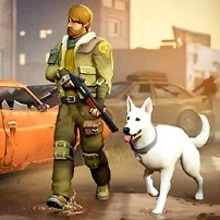
And companions like dogs add a strange comfort. Not soft, not sentimental, just… reassuring. A living thing near you that isn’t trying to bite your face off. In a zombie world, that’s basically luxury 🐾
🎭🧠 The game stays dangerous because your worst enemy becomes your confidence
Here’s the trick: even when you get better, the game doesn’t lose its teeth. The danger changes shape. Early on you die because you lack gear. Later you die because you get greedy or cocky. You start trusting your armor too much. You push deeper because you can. You take fights you shouldn’t.
It keeps you honest. It makes you check your inventory like a paranoid accountant. Do I have healing? Do I have food? Do I have an escape plan? It’s tense because it’s always one mistake away, and it never pretends otherwise. That constant pressure is what makes survival victories feel real 😵💫
🌪️🎮 One more run, because this time you’ll be smarter
That’s the addiction. You always believe the next run will be clean. You’ll grab what you need, avoid trouble, and return like a professional. Sometimes you do. Sometimes it turns into a disaster movie where you barely crawl home with a sliver of health and too much pride.
Then you stand inside your base for a second. Quiet. Breathing. Sorting loot like it’s proof you didn’t imagine the nightmare. And your brain does the classic survival game thing, it forgets the fear and remembers the thrill. One more run. Just one more. On Kiz10, Last Day on Earth Survival hits that balance of crafting, tension, and zombie chaos in a way that keeps pulling you back, because it feels like your story, not a script. The world ended. You didn’t. Not today.





 Share
Share
 Embed
Embed


